A symbol cipher turns ordinary letters into a puzzle. Children can build a key, encode a short message and challenge somebody else to decode it. The activity combines pattern noticing, writing and careful checking—but it needs one important boundary: game codes are not for hiding personal information or unsafe secrets.
Keep every message fictional, playful and easy to share with a trusted adult. “The moon picnic starts at six” is a game. A password, home address, private image or message from an unknown person does not belong in it.
Materials
- two sheets of paper;
- pencil and dark marker;
- optional picture stickers or stamps;
- an envelope labelled “game message” if desired.
If writing is tiring, use a reduced alphabet with only the letters needed for one sentence. A child can choose symbols while another person draws them.
Build a manageable key
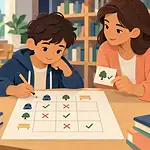
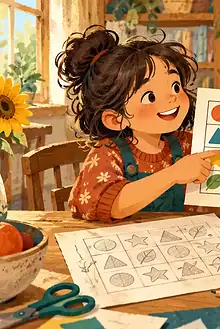
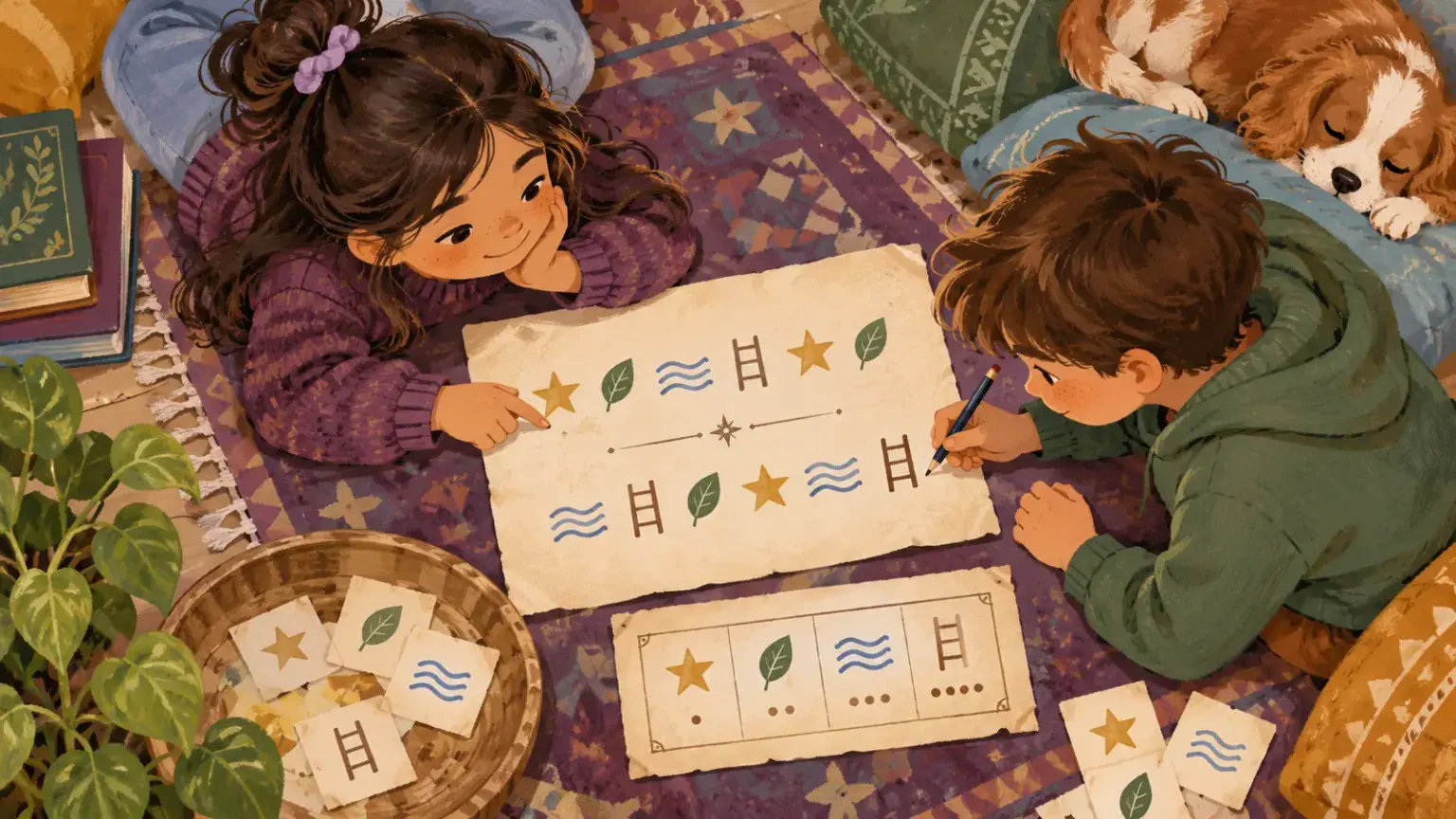
Start with eight to twelve letters rather than the whole alphabet. Match each letter with a clearly different symbol: circle, leaf, star, ladder, wave and so on. Avoid symbols that are almost identical when printed small.
Write the letter and symbol together in a key at the top of the page. Then create a short practice word. Check that every letter in the word appears in the key. Once the system works, add more letters.
Write the message safely
Choose a sentence of five to eight words about an imaginary situation, a household joke everyone has consented to share or a game instruction. Do not encode:
- real passwords, PINs or account details;
- addresses, school routes or travel plans;
- medical or family information;
- instructions to keep something from a safe adult;
- mean comments about a real person.
Say directly: “A puzzle can be private while we play, but nobody should ask you to hide something that makes you uncomfortable or affects safety.” The family’s online help-seeking agreement offers a related approach to uncomfortable secrecy online.
Encode and proofread
- Write the plain message on scrap paper.
- Replace one letter at a time using the key.
- Leave normal spaces between words.
- Check the symbols against the original sentence.
- Give the decoder the key and the coded message.
For the first game, do not remove the key or add decoy symbols. The challenge should come from using the system, not from withholding essential information.
Decode without pressure
The decoder writes a letter beneath each symbol. If a symbol is unclear, they can ask the designer to redraw it. When a word appears, use it to check nearby letters. A player can work with a partner, use a keyboard or point to letters while someone else records them.
If the puzzle stalls, reveal one word or mark repeated symbols in the same colour. Harvard’s activities guide frames games as age-appropriate practice with attention, working memory and flexible thinking; a hint is part of supportive practice, not cheating.
Try three variations
Picture code: use object pictures for a child who is not yet comfortable with letters. Colour-free code: rely on shape so the page works in black and white. Shared key: two players design half the symbols each, then encode a message for an adult.
Children who like changing familiar rules may enjoy Backwards Bingo. For a cooperative challenge with no secret message, try the Give-Only Puzzle.
Reflect on fair codes
Ask: “Which symbols were easy to confuse?” “Did the key include everything the decoder needed?” or “How could we make the next version accessible to someone who cannot distinguish colours?” Revise the key and save a clean copy.
A good family cipher is transparent about its boundaries. It creates a temporary mystery, gives the solver a fair route to the answer and never teaches a child that secrecy should override safety or trusted help.