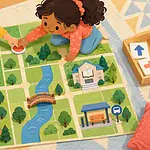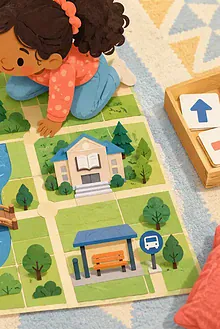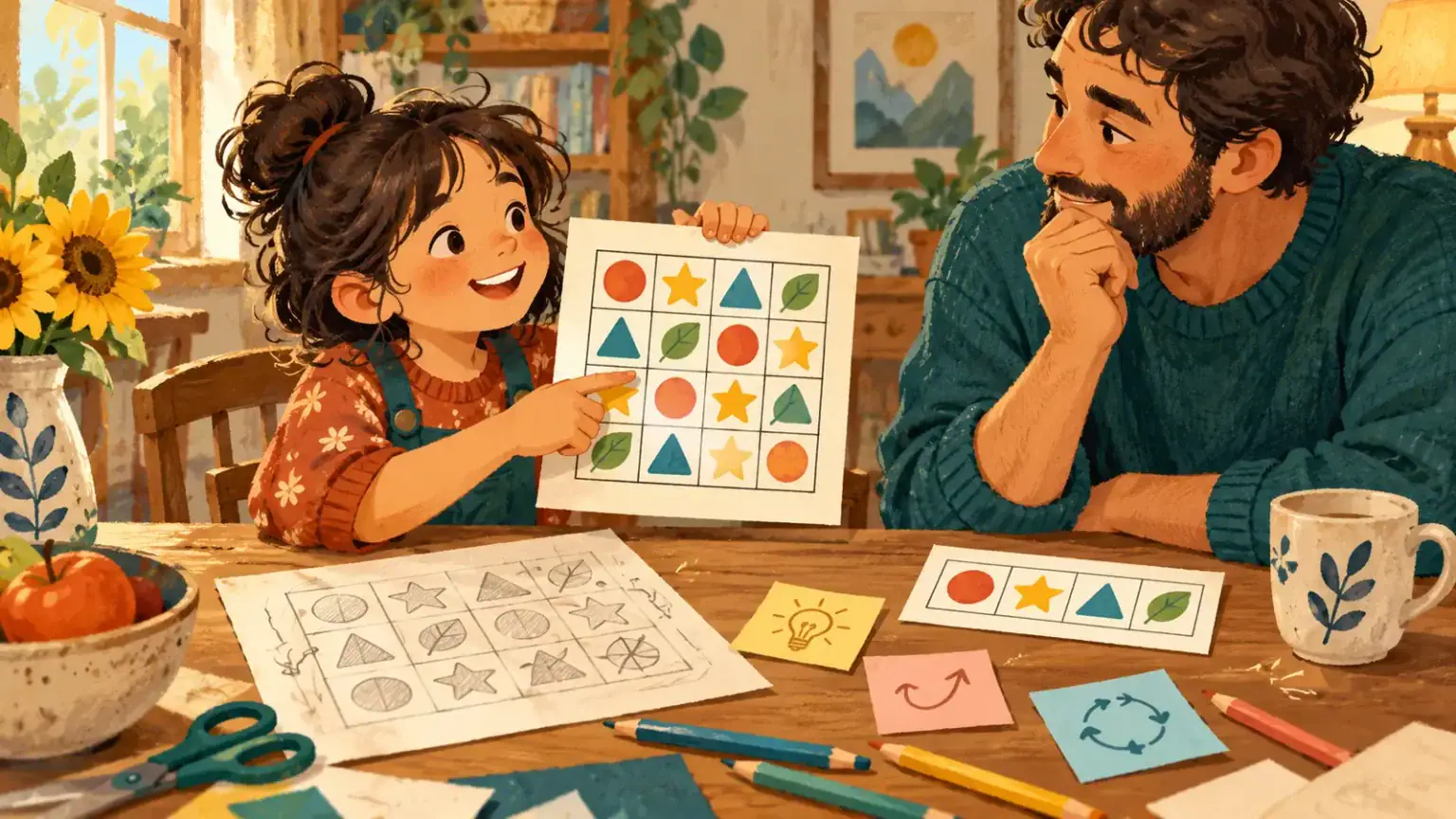
Solving a puzzle is one kind of thinking. Designing one adds a different challenge: the creator has to imagine what the player can see, make the rules clear and check that the answer is possible. Adults can support that process without quietly rebuilding the whole puzzle.
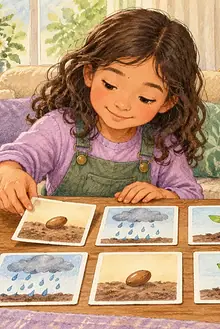
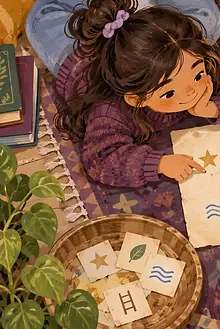
Start with a familiar format—matching, maze, code, ordering or “find the rule.” The child chooses the idea; the adult helps test fairness and safety.
Choose one puzzle promise
Ask the designer to finish this sentence: “The player will…” Examples include “match each animal to a habitat,” “find two routes to the library,” or “decode a five-word message.” A single promise keeps the page focused.
Then choose the intended player. A puzzle for a younger sibling needs different text, image size and challenge from one made for a teen or adult. Do not use the puzzle to expose what a real person finds difficult.
Make the answer key first
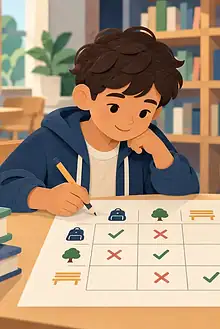
Before decorating the page, the child records the solution on separate paper. For a maze, trace the valid route. For matching, list every pair. For a code, write the plain message. For a logic puzzle, fill the completed grid.
The answer key is the designer’s test bench. It prevents a beautiful page from hiding an impossible or ambiguous task.
Write the smallest useful rule
Use one or two sentences. Include what the player does, whether there can be several answers and what materials are needed. Avoid tricks based on tiny print or missing instructions.
Try: “Connect each tool to the job it can safely do. More than one tool may match.” Avoid: “You should know what to do.” A fair puzzle gives enough information to begin.
Build a rough prototype
- Sketch the page in pencil.
- Add only the clues needed for the puzzle promise.
- Use readable spacing and contrast.
- Check every clue against the answer key.
- Mark where a player might need a hint.
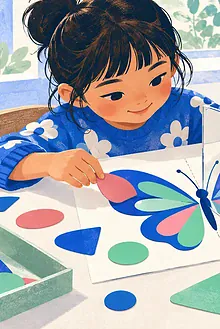
Keep the first version rough. Revision is easier when the child has not spent an hour colouring it. If drawing is difficult, use cut-out shapes, stamps, typed words or partner-assisted placement.
Test it on an adult
The adult solves aloud without pretending confusion: “I see three paths. The rule says there may be two answers, so I will test both.” When something is unclear, describe the page rather than judging the child: “These two symbols look the same at this size.”
Do not correct the puzzle mid-test. Note the point where the player became stuck, then return authorship: “What do you want to change?” The brain-teaser guide offers ideas about choosing manageable challenge. The cooperative story-path game shows how a shared goal can replace elimination.
Use a fairness checklist
- Can the player read or access the instructions?
- Does every clue appear clearly?
- Does the answer key actually work?
- Are there accidental extra answers?
- Is a hint available?
- Can the player pass or stop without ridicule?
For colour-vision differences, use shape or pattern as well as colour. For motor needs, enlarge targets and allow pointing. For reading differences, add pictures or offer the rule aloud.
Publish only with care
If the child wants to share the printable, remove names, faces, school details and private information. An adult checks copyright and privacy; do not copy a branded character or somebody else’s commercial puzzle. A home-made page can use original shapes, fictional characters and ordinary objects.
Reflect on revision
Ask what changed after testing and why. Praise the design decision specifically: “You enlarged the key because the first player could not tell the symbols apart.” That feedback values empathy and revision, not just a polished page.
The American Academy of Pediatrics and Harvard play resources describe games as useful contexts for planning, communication and flexible thinking. A child-designed puzzle is practice, not a score of intelligence. The best result may be version two—with visible evidence that the designer listened to a player and made the rules fairer.