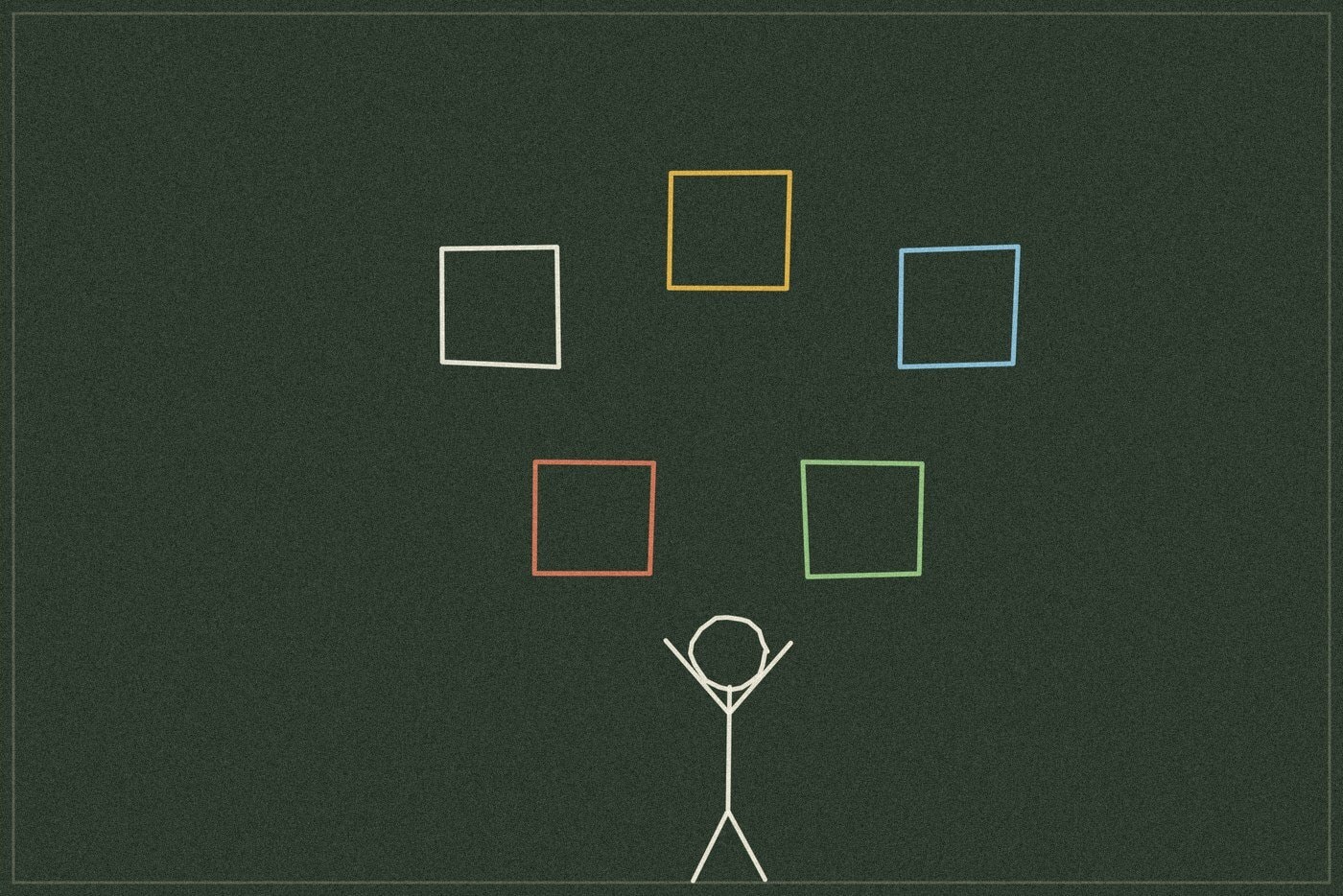
Five cardboard squares, cut into oddly shaped pieces, scrambled, and handed out one envelope per person. The task sounds simple: reassemble five complete squares as a group. The catch, and the entire point of the exercise, is a single rule: you may give a piece to someone else at any time, but you can never ask for one. This small constraint turns an ordinary puzzle into a genuinely revealing lesson in cooperation.
What you need
Five squares of cardboard or stiff paper, each cut into several irregular pieces that, when correctly distributed and reassembled, form five complete squares of equal size (a template is easy to make yourself: draw five equal squares, then cut each into two or three pieces along different lines, mixing the pieces so no single envelope contains the pieces for only one square). Five small envelopes per group, one larger envelope to hold them all. This works best with groups of five, so prepare one set per group of five participants.
How to run it
Before starting, ask the group an open question: “What do people need to do to cooperate well on a shared task?” Give them a few minutes to discuss, then explain they are about to find out in practice.
Split participants into groups of five, with any extra people taking on an observer role (useful for younger or larger groups, since the observers get to watch group dynamics unfold from outside). Give each group their large envelope, and have each person take one small envelope without opening it.
Explain the task and the two rules clearly:
- The group’s job is to end up with five complete squares, all the same size, by exchanging pieces.
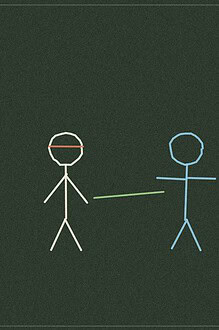
- You may give any piece you have to anyone else in your group, at any time. You may never ask for, or signal for, a specific piece. If you want something, you must wait until it is freely offered.
Let the group work until they finish, or until it becomes clear they are genuinely stuck, which is itself useful material for the discussion afterward.
What tends to happen
Groups almost always start by someone quickly grabbing the pieces that obviously belong to their own envelope, assembling as much of their own square as possible, and only then, often with some visible frustration, realising that cooperation requires giving pieces away before receiving anything back. Watching a group shift from individual focus to collective problem-solving, often triggered by one person’s willingness to give away a piece they could have used themselves, is the real content of the activity.
The conversation afterward
- Did your group finish? How long did it take?
- Was everyone equally involved, or did some people lead while others waited?
- What strategies did you try? Which ones actually worked?
- What did the observers notice that the people inside the group might have missed?
What this is actually teaching
The rule against asking is the whole lesson. It forces every participant to notice what other people need, rather than simply advocating for their own situation, and it rewards generosity in a way that is immediately, visibly useful, since a group member who holds onto an unneeded piece out of habit slows the entire group down. Children tend to grasp this quickly and viscerally, in a way that a verbal lesson about sharing rarely achieves on its own.
A note on facilitation
Give clear, complete instructions before starting, demonstrated with one group of volunteers if possible, since confusion about the rules undermines the activity more than almost anything else. If a group gets completely stuck, resist jumping in to solve it for them. A stuck group, discussed honestly afterward, often teaches more than an easy success does.
Adapting it
For younger children, replace squares with simple cut-out circles or shapes that are easier to visually match, which keeps the cooperative mechanic intact while lowering the puzzle difficulty. For a family setting with fewer than five people, scale down to three squares and three people, keeping the same two rules. The number of pieces matters less than the single, strict rule: you may give, you may never ask.