By EdCaptain editorial desk · Published · Updated
General educational guidance. No qualified clinical review is recorded for this article. Health and safety information.
A soft, intact squeeze toy can introduce a conversation about getting support after a small setback. Returning to shape is only a metaphor: people do not have to recover quickly, return to exactly how they were, or handle difficult experiences alone.
What you need
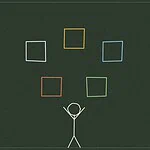
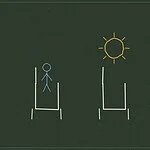
Use one large, intact, age-appropriate soft object held by an adult, or simply draw a curved line that becomes straight again. Avoid sticks that may splinter and elastic bands that may snap, catch skin or be put in mouths.
How to run it
Show the object gently changing shape, without stretching it toward anyone’s face. Ask what children notice. Explain that support and time can matter after a setback; the object does not prove anything about how a person should feel.
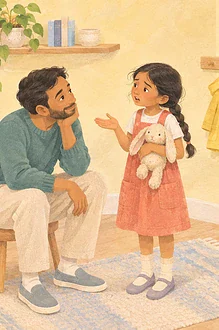
Ask everyone to find a partner and sit facing each other. Give them a quiet moment first, asking them to think of a time they “bounced back” after something difficult: a loss in a game, an unkind comment, a disappointment, a mistake. Ask them to think specifically about what helped them get through it, not just what happened.
In each pair, nominate one person A and one person B. Person B shares their bounce-back story first, while A listens without interrupting. After a couple of minutes, swap roles.
If time and group energy allow, combine pairs into groups of four, and ask each group to choose one of their stories to turn into a short, simple drama to act out for the others.
The conversation afterward
- How did it feel to share your story? How did it feel to listen to someone else’s?
- What did you notice other people’s bounce-back stories had in common with yours?
- Which did you enjoy more, telling your story or listening? Why?
Why the physical demonstration matters
An object can give the conversation a shared starting point. It is optional: a child can talk about an invented character, draw an idea or pass without explaining why.
What this is actually building
The activity offers practice in listening and identifying help that was useful. It is not an assessment of resilience, and we do not claim that one story-sharing exercise produces lasting emotional changes.
If everyone wants to, collect general ideas on a poster: asking for help, resting, trying again or changing the plan. Do not put anyone’s personal story on display without permission.
A note on what to share, and what not to push
Make clear, explicitly, that everyone chooses what they are comfortable sharing. “Bounced back from” can mean something genuinely small, like a disappointing grade or a tough sports loss, and does not need to mean anything more serious than that. Nobody should feel pressured toward a heavier story than they are ready to tell, and the facilitator’s job is to keep the tone light and genuinely optional, not to probe for something deeper than a child has offered.
Adapting it
For younger children, skip the drama step and keep it to the paired sharing alone, which is plenty on its own. For a family setting, this works well around a dinner table with a shared object passed between people as each person takes their turn, adults included, since a parent sharing their own small bounce-back story often does more to open a child up than any amount of encouragement.