- Stop the playback before starting the reassurance
- A short explanation for the unfamiliar sound
- Change the question from “Do I sound good?”
- Offer one small, optional recording attempt
- Respond to the self-insult without arguing about beauty
- Take teasing and wider distress seriously
- Sources and further reading
By EdCaptain editorial desk · Published
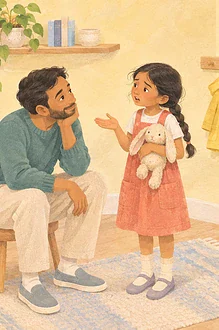
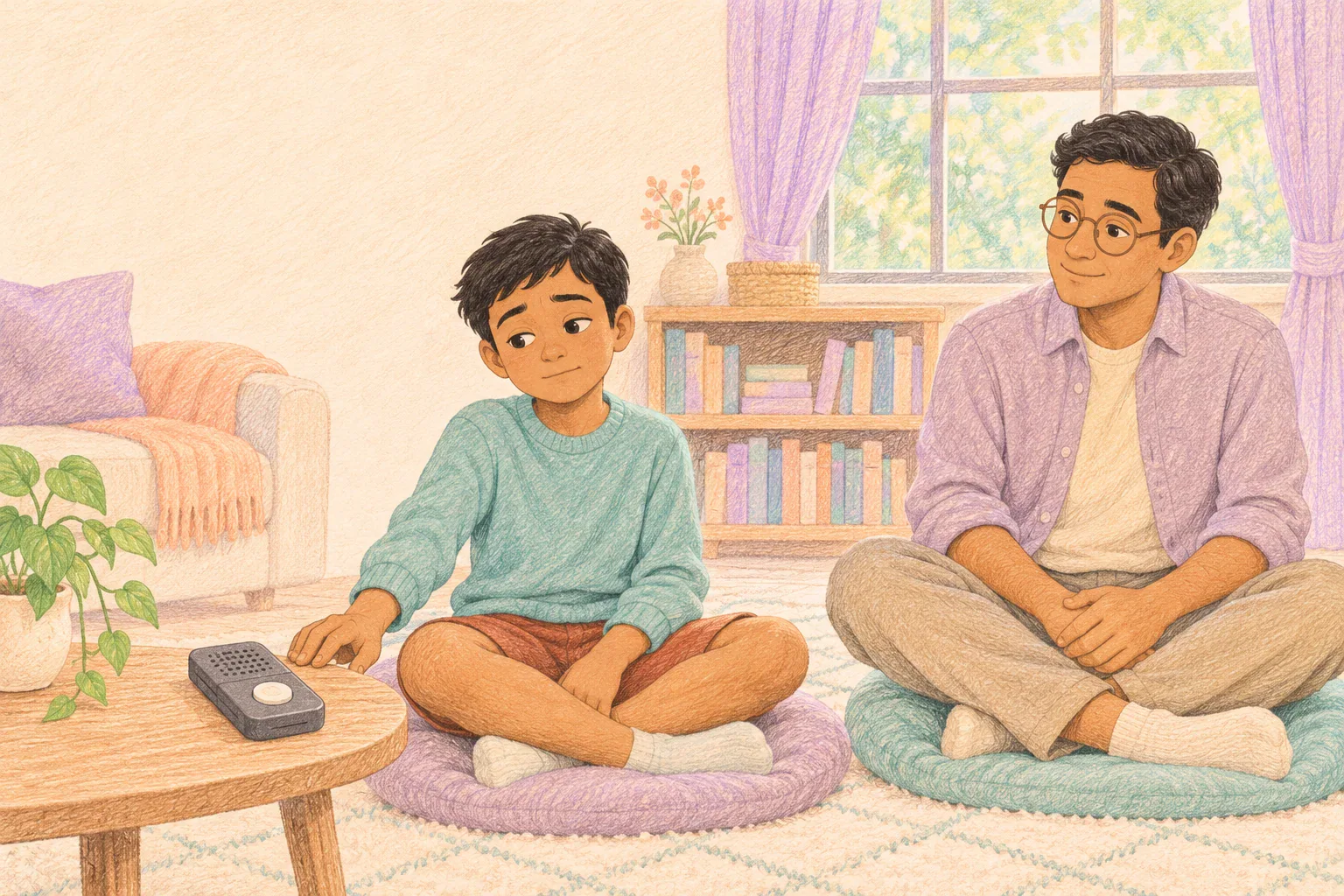
Your child finishes recording a short school message, presses play, and reaches for the stop button. “That can’t be me. My voice is horrible.” The words were clear, but listening back has become the hardest part of the task.
For children aged 6–12, this is a chance to separate an unfamiliar sound from a judgment about themselves. You can explain why playback may sound different, listen to what is bothering them, and decide together whether another listen would actually be useful. They do not have to learn to love every recording.
Stop the playback before starting the reassurance
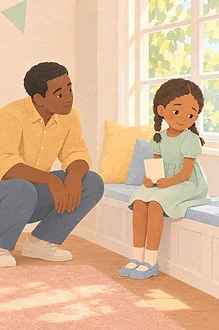
If your child asks you to stop, stop. Try, “That sounded different from what you expected. Do you want to tell me what felt uncomfortable, or leave it for now?” Avoid replaying the clip to prove that they sound fine.
Do not imitate the voice, call siblings over or send the clip to a relative for a second opinion. Even enthusiastic reassurance from an audience can turn a private worry into a performance. Ask before listening yourself, too.
A child may be concerned about the sound, a stumble, who will hear it, or something a classmate said. Those need different responses. “What bothers you most about this particular recording?” is more useful than assuming they need speaking practice.
A short explanation for the unfamiliar sound
When we speak, we hear sound through the air and through vibrations conducted through our head. Playback does not recreate that same listening experience. Imperial College London’s explanation of bone conduction describes how it contributes to the way we recognise our own voice.
For ages 6–9, you could say, “You hear your voice from inside and outside while you’re talking. A recording reaches you differently, so it can sound unfamiliar.” There is no need for an experiment involving blocked ears, louder playback or changing how they speak.
For ages 10–12, add, “Not matching what you expected is different from being bad.” Avoid describing the clip as the one perfectly accurate version of their voice. It is a recording to use for a purpose, not a verdict on the person speaking.
Change the question from “Do I sound good?”
If the recording is for a real task, identify that task before trying again. Is the listener meant to understand a fact, hear a story or receive a clear question? Choose one useful check, such as “Can the listener understand my main idea?”
That gives feedback somewhere to go. “The last word was hard to hear; shall we move the recorder a little closer?” offers a practical choice. “Make your voice less weird” gives the child a personal defect to search for.
You do not need to praise every detail. Try a truthful observation: “I understood which book you were recommending.” If they ask for feedback, agree on one point to discuss. Accent, a stammer or the natural pitch of a voice should not become a family correction project.
For help with the message itself, our guide to planning a short speech keeps the focus on what the audience needs to understand.
Offer one small, optional recording attempt
If your child wants to experiment, use a familiar recorder that an adult has checked for storage and sharing settings. Choose a quiet, private place and a comfortable playback volume. You need only the device and, if helpful, a few words on paper.
- Agree on the audience. Decide who may listen and whether this test clip will be kept or deleted. Do not promise privacy until you have checked how the recorder saves files.
- Choose a tiny message. Ages 6–9 might invent one sentence about a dragon finding a hat. Ages 10–12 might use the opening sentence of their project. Leave out names, locations and other private details.
- Record once. Keep it short enough to feel manageable. Your child can choose whether to play it, ask you to check the agreed point, or stop for the day.
- Use the one check. Ask whether the message was understandable, rather than inviting a score for their voice. Make one practical change only if it serves the task.
- Close the attempt. Follow the storage decision and ask, “What would make this easier next time?” A decision not to listen again is an answer, too.
This is an optional way to explore a task, not a treatment or a challenge to endure discomfort. There is no required number of listens. A child can also rehearse live with a trusted adult or plan their words without making a recording.
If recording is required for school, contact the teacher early. Ask what must be demonstrated, who will hear the file, and what support or alternative format may meet the learning goal. Avoid promising an exemption before discussing it. Our private family audio guide covers the separate choices involved in keeping and sharing a recording.
Respond to the self-insult without arguing about beauty
“I sound horrible” does not need a debate about whose opinion is right. You might reply, “You really dislike this clip. We can talk about what you heard without calling you horrible.” Offer a more precise sentence: “I’m not used to hearing myself,” or “I feel embarrassed listening back.”
Harvard’s Making Caring Common guidance on self-talk encourages noticing harsh inner language and responding with greater compassion. Your child does not need a forced affirmation such as “My voice is amazing.” A believable, neutral statement can be enough: “I can share an idea even when I don’t enjoy hearing the playback.”
Let them use their own words, write a response or point to a choice. Do not turn naming the feeling into another test they can fail.
Take teasing and wider distress seriously
If someone mocked the recording or shared it without agreement, address that problem with the relevant adult or school. Do not use repeated playback as a way to teach your child to tolerate ridicule. Ask what was shared and who can help stop further circulation; be honest that you may not be able to retrieve every copy.
A dislike of one recording does not tell you that your child has an anxiety disorder. If worry becomes persistent, intense or starts interfering with school, friendships or activities they usually enjoy, seek advice from a healthcare professional or school support service. The NHS guidance on anxiety in children explains when everyday worries need more help.
The useful ending is a decision, not a perfect take: keep this clear-enough message, make one practical edit, ask for support, or pause. Your child’s voice can carry something worth hearing without being something they want to replay.