By EdCaptain editorial desk · Published
General educational guidance. No qualified clinical review is recorded for this article. Health and safety information.
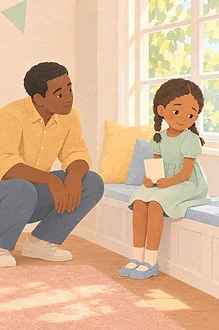
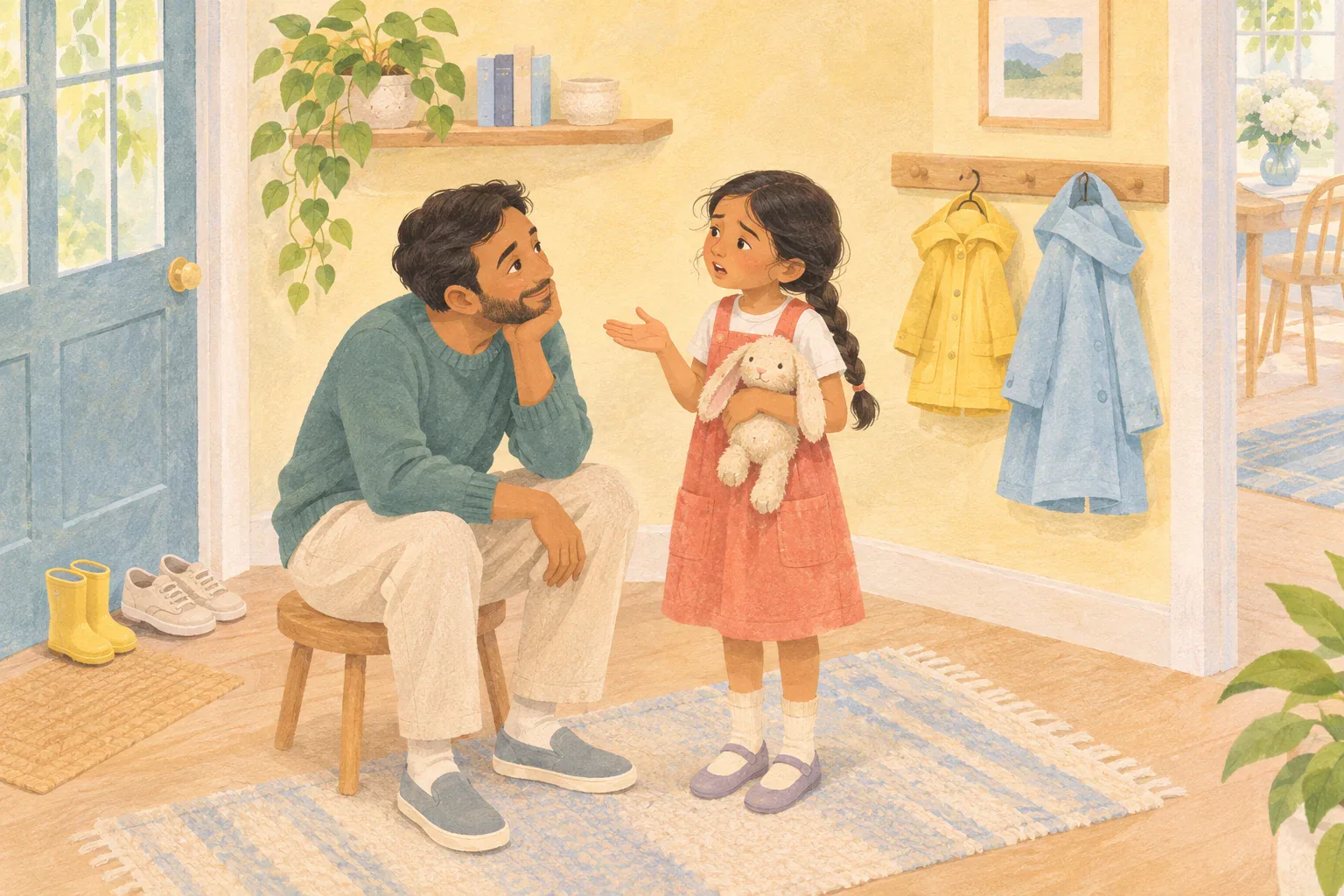
“I don’t want to grow up.” You may hear it while buying the next size of shoes, discussing a new school year or talking about a birthday. Before answering with the exciting things older children can do, find out what your child thinks growing up will take away.
This guide is for caregivers of children aged 6–12. A child might fear losing play, closeness, help or familiar routines. Another might be worried about a particular change. Those possibilities call for different responses, rather than a speech about how wonderful adulthood will be.
Ask what “growing up” means to them
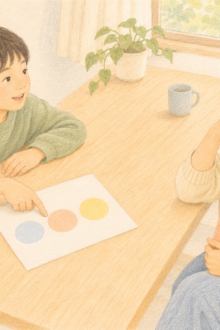
Choose a quiet moment and start with one question: “What do you imagine will happen when you’re older?” Wait. If the question feels too broad, try, “Is there something you think you won’t be allowed to do anymore?”
Listen for the actual prediction. “I’ll have to give away my toys” is different from “I’ll have to leave home” or “People won’t help me.” Avoid supplying a long list of possible disasters. Let your child correct a guess, point, write or use their usual communication aid. They do not have to explain everything in one conversation.
The Canadian Paediatric Society advises taking children’s fears seriously, asking questions and avoiding ridicule. “That’s silly—you’re only eight” can make it harder to learn what the child means.
Answer the worry they actually named
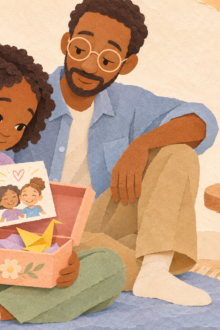
- “I’ll lose the things I like.” Try: “Getting older doesn’t mean you have to stop enjoying your stories or your rabbit. We can decide what to keep when there’s a real reason to sort things.” Keep product safety and appropriate use separate from embarrassment about an interest.
- “You won’t help me anymore.” Say what support remains: “You’re learning to pack your bag. I can still help when a step is difficult.” Independence does not need to mean doing every task alone.
- “I’ll have to do grown-up jobs.” Be concrete: “Your job this week is putting your clothes in the basket. Adults are arranging the bills, meals and care.” Check whether someone has actually handed over too much responsibility.
- “I’ll have to leave home soon.” Explain the real next step: “Your birthday isn’t a moving-out date. Next week you’ll still come home from school as usual.” Avoid promises about living arrangements decades ahead.
If the concern is a genuine upcoming change, do not deny it. “Yes, the classroom will be different. Let’s find out where it is and who can help” is more useful than “Nothing will change.” If the child mentions bullying, threats or an unsafe expectation, investigate and protect them rather than treating the problem solely as anxiety.
Remove the birthday deadline
Notice phrases such as “You’re too old for that now,” “Big children don’t need cuddles,” or “Once you’re ten, no more help.” Adults may mean encouragement while a child hears a sudden loss of care or permission to play.
Replace a sweeping rule with the actual reason for a decision. A coat needs replacing because it no longer fits. A bedtime routine changes because the present plan is not working. A new task needs teaching because the child is learning it. None of these requires a verdict on whether they are sufficiently grown-up.
Before a birthday, agree on language with relatives if needed: “Please skip jokes about being nearly an adult. We’re celebrating her, without adding new expectations on the day.” There is no need to hide the child’s age or pretend time has stopped. You can keep the celebration ordinary and let them decide whether they want a fuss.
Name what continues, and practise one real change
Talk about three concrete things: something continuing, something changing soon and something that does not need deciding yet. For example: “We’ll keep reading together. You’ll learn the route to your new classroom. Choosing a job is not a decision for this week.”
Offer a small, supported step only when there is a genuine skill to learn. A child worried about ordering for themselves could choose the words beforehand, speak with you beside them or ask you to begin. Afterwards, ask, “Which part would you like help with next time?” Do not turn every outing into an independence test.
For siblings, check that “you’re the oldest” has not become a reason to surrender rest, friendships or adult support. Our guide to keeping sibling help separate from adult caregiving responsibility explains that boundary.
The American Academy of Pediatrics describes emotional development as gradual, supported by trusted relationships and everyday care. It is reasonable to teach a new skill while remaining available.
Make room for wanting and not wanting change
For ages 6–9: use what is happening today. “You wanted the bigger bicycle, and you miss the little one.” Let them say which part matters. Keep familiar play and connection available without insisting that they feel excited about growing.
For ages 10–12: ask privately which expectations feel heavier. They might welcome more choice while disliking comments about becoming a teenager. Agree on one specific expectation to clarify with school or family, rather than asking them to design their entire future.
At either age, avoid “Enjoy being little—adult life is awful” and “Don’t grow up; I’ll be lonely.” Those comments can put adult feelings into the child’s worry. You can miss an earlier stage while keeping responsibility for your feelings with adults.
A child can look forward to something and feel sad about leaving another stage. Our article on understanding mixed feelings offers ways to listen without choosing one emotion for them.
Notice when the worry is taking over
Check back gently after making an agreed change: “Has anything about getting older felt different since we talked?” Keep ordinary routines and avoid repeatedly asking the child to prove they are no longer worried.
The NHS recommends support when anxiety is severe, persists or interferes with everyday life. Speak with your child’s doctor or a qualified child mental-health professional if the fear disrupts sleep, school, friendships or activities, is worsening, or concerns you. Discuss recurring physical symptoms with a clinician rather than assuming they are caused by worry. Seek urgent local help if anyone is unsafe.
The useful promise is modest: “We don’t have to solve your whole future tonight. Tell me what feels hard now, and we’ll work out the next step together.”
Sources and further reading
- Canadian Paediatric Society: helping children deal with fears
- American Academy of Pediatrics: supporting mental and emotional development
- NHS: childhood anxiety and when to get help
Read our editorial policy and review methodology.