By EdCaptain editorial desk · Published
Your child points to a short haircut and says, “That’s what I want.” You picture the long hair you love, remember the effort of growing it, or anticipate a relative’s disapproval. It is worth pausing before those adult feelings become an automatic no.
For a child aged 6–12, an ordinary haircut can be a concrete opportunity to express a preference and help make a decision. Parents still handle practical arrangements and safety. The useful conversation is about what the child wants, what the cut involves and which limits are real.
Separate your taste from a practical concern
Ask yourself what makes you hesitate. “I prefer it long” is a preference. “We cannot afford appointments that often” is a practical constraint. “Grandad says girls should have long hair” is a family expectation, not a safety requirement.
You can acknowledge your taste without asking the child to protect it: “I’ve always liked your long hair, so I need a moment to get used to the idea. I want to hear what you like about this cut.” Avoid “You’ll ruin your beautiful hair” or “You won’t look like yourself.”
UNICEF’s guidance for ages 6–10 encourages children’s self-expression and advises against limiting hair choices according to what is supposedly for boys or girls. A hairstyle request does not require a child to explain or adopt an identity label.
Find out what “short” means
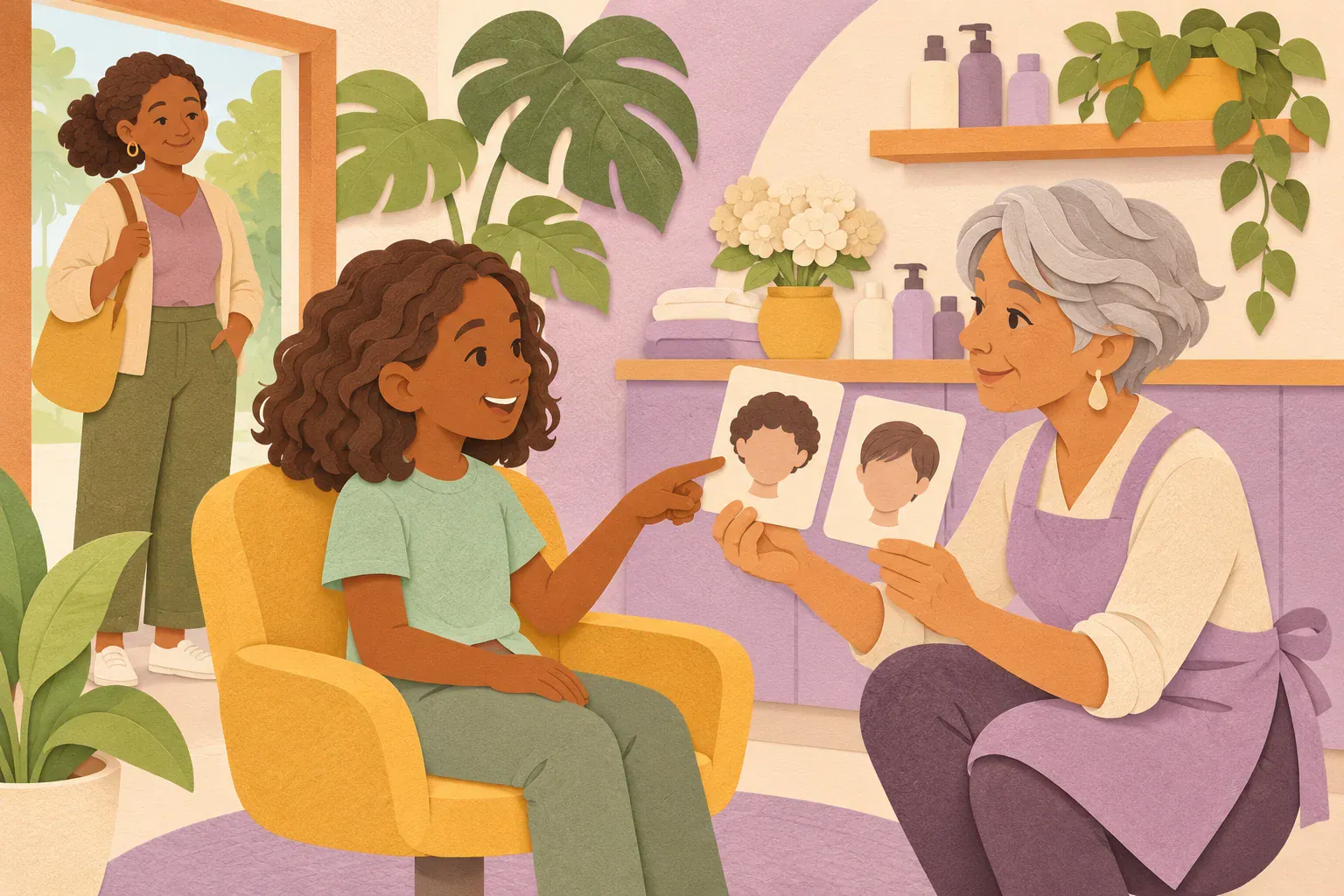
Let your child show you the length with a picture or point on their own hair. Ask one useful question: “Is it the shape you like, having less hair on your neck, or something else?” They do not need an impressive reason; liking the look is information too.
Check whether someone has pressured them. If a child says, “They keep laughing at my hair,” address that treatment separately. Do not assume the new style is either a cure for bullying or proof that their preference is false. Ask what they would choose if the comments stopped.
Our guide to changing style or interests to fit in helps when peer pressure is central. Here, keep the immediate task clear: understand the requested haircut rather than argue about whose taste is better.
Agree on the appointment before booking
Choose a stylist or barber experienced with your child’s hair texture and the kind of cut requested. Ask about the initial price, likely maintenance and whether a consultation is available. A reference photo starts a conversation; it cannot promise an identical result on different hair.
Discuss practical boundaries openly. “We have this much available for the appointment” or “We need a style we can manage with the time and tools we have” leaves room to solve a problem. Do not offer two options and then reject both because you hoped the child would choose neither.
If school has a hairstyle policy, read the current written wording rather than rely on rumours. Ask the school to explain any unclear restriction. Where a rule seems discriminatory, seek the school’s review process or appropriate local advice; do not make the child handle that dispute alone.
If hair has religious or cultural significance in your family, explain that meaning without turning the child’s request into a test of loyalty. Listen to their view and arrange a calm conversation with the relevant caregivers. A child should not have to defend their appearance before a roomful of relatives.
Make the plan visible to the person cutting
At the consultation, invite the stylist to address your child directly. You can help explain, but avoid agreeing to one length at home and privately instructing the stylist to do another.
- Show the intended length: ask the stylist to demonstrate where the finished hair is expected to sit, including how its texture may affect the result.
- Clarify the parts that matter: for example, length around the ears, fringe or whether the child still wants to tie some hair back.
- Agree on a pause signal: a raised hand, spoken word or their usual communication method. Stop cutting safely before discussing what needs to change.
- Check before a major next step: if the proposed cut changes during the appointment, explain it and ask again.
Your child may choose a staged change if they are unsure, but do not use endless “small trims first” to postpone a clear request indefinitely. They can also change their mind before cutting begins. Explain that hair already cut cannot be put back during the appointment, without using regret as a threat.
Humber NHS’s hair-care guidance describes how touch, head position and loose hair can make appointments uncomfortable for some children. Ask about a stable seat, a quieter time and explaining tools before use. If sensory barriers are the main difficulty, our sensory-friendly hair-care guide offers more preparation. Do not press ahead with sharp tools while a child is struggling or moving unpredictably.
Adapt the child’s role to their age and communication
Ages 6–9: use a few clear pictures and one concrete question at a time. Let them point to length and practise the pause signal before the appointment. Keep adult explanations brief enough that the child can still participate.
Ages 10–12: let them help ask about upkeep and describe the cut to the stylist, with backup available. Discuss how much they want you to speak and whether they want photographs afterwards. Agree before sharing any picture with relatives.
At either age, accept writing, pictures, signing or a communication device. A child who cannot describe a hairstyle fluently still has preferences. The AAP’s self-esteem guidance identifies meaningful, age-appropriate choices and supportive family relationships as important; it does not require a polished speech.
Keep relatives’ reactions with the adults
Set the tone before the visit: “This is the haircut we agreed on. Please don’t make jokes about whether it suits a boy or a girl.” If someone comments, respond yourself: “You prefer long hair. We’re not asking them to defend their choice.” Then move the conversation along.
Avoid demanding a delighted reaction from the child afterwards. If they are unsure, try, “What feels different? Is there something practical we should ask the stylist about?” Skip “I told you so,” and do not rush into another cut while everyone is upset.
The aim is a child who was heard, understood the plan and had support through the decision. Whether they keep the style or choose something different next time, that respectful process remains useful.
Sources and further reading
- UNICEF: positive parenting, preferences and gender expectations for ages 6–10
- American Academy of Pediatrics: building blocks for healthy self-esteem
- Humber NHS: understanding children’s hair-care sensations
Read our editorial policy and review methodology.