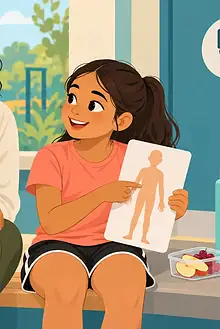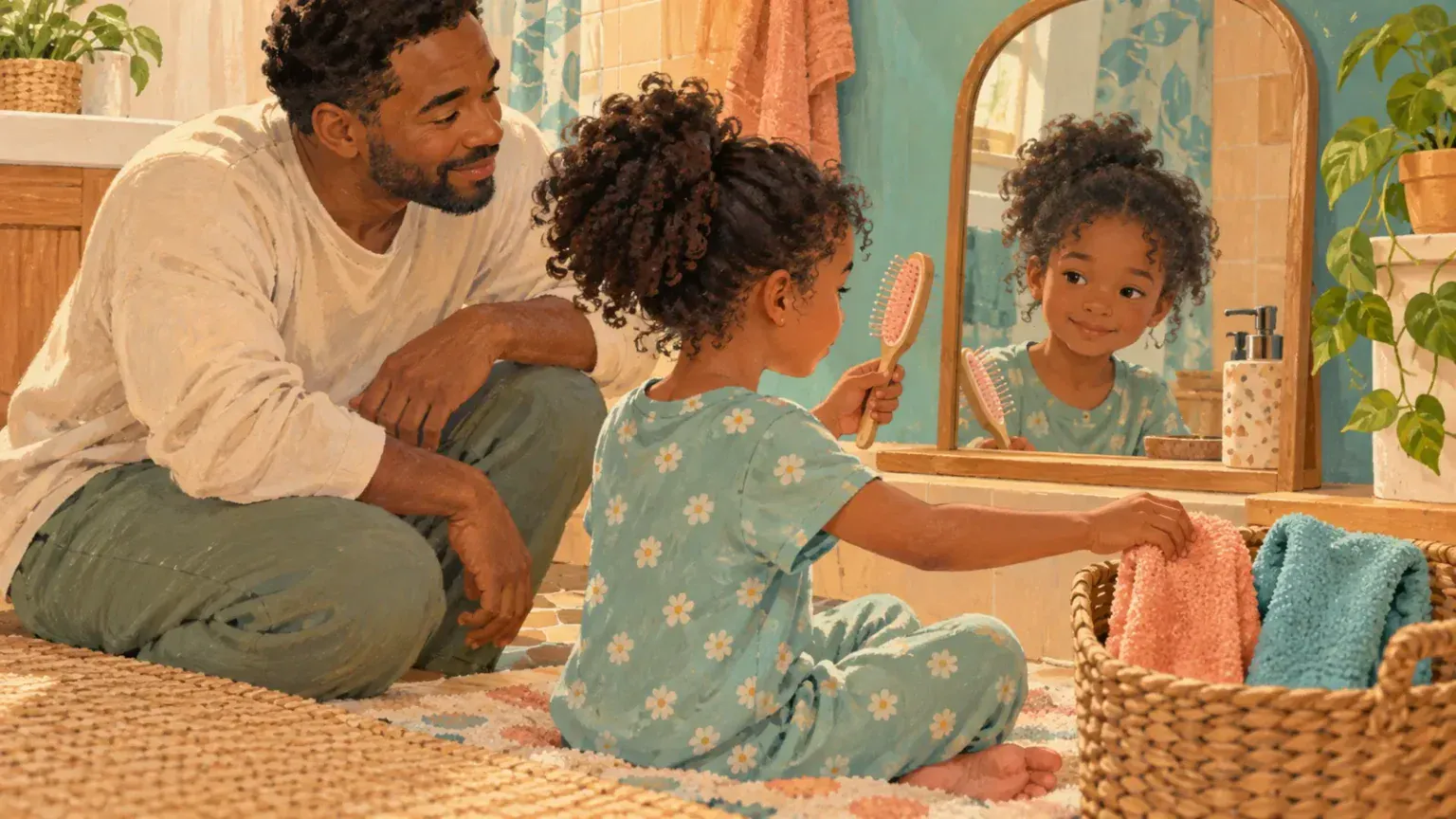
Hair care can bundle several difficult sensations into one task: a brush pulling at the scalp, water near the face, a tilted head, the buzz of clippers, strong product smells and loose hairs on the neck. If your child resists, freezes or bolts, begin with curiosity rather than force. The aim is clean, manageable hair while protecting trust—not making a child tolerate every sensation.
Find the hardest part
Observe one routine before changing it. Does distress begin when the brush appears, when hair gets wet, when the head tips back or when cut hair touches skin? Ask a child who can answer: “Which part is worst?” Offer pictures, gestures or two choices if words are difficult. One child may prefer firm brush pressure but hate spray; another may tolerate water yet struggle with the sound of a salon.
Check ordinary causes too. Tangles, scalp irritation, eczema, lice, a sore ear or a too-hot dryer need practical or medical attention. Sudden pain, rash, hair loss or a scalp wound deserves advice from a health professional.
Build a predictable routine
- Preview: show the tools and the short sequence—“wet, shampoo, rinse, towel, finished.”
- Offer control: let your child choose the brush, towel, scent-free product or whether to sit or stand.
- Agree on signals: “pause” stops the action; “done” ends it when safely possible.
- Count small units: five brush strokes, one section, or a ten-second rinse is clearer than “nearly finished.”
- Close consistently: remove loose hair, dry the face and do a familiar calming activity.
For toddlers, keep the sequence very short and use the same simple words each time. School-age children can help make a picture checklist. Teens should choose products and styles wherever possible; privacy and dignity matter as much as technique.
Make brushing gentler
Detangle the ends first, then work upward while holding the section near the scalp so pulling is not transferred to the skin. Try a wide-tooth comb, detangling brush or fingers and compare—not every “sensory” product suits every child. Brush when the child is regulated, not at the doorway when everyone is rushed. A shorter style or protective style may reduce daily work, but it should be the child’s choice when they can participate.
Change the washing setup
Some children prefer leaning forward over a basin; others feel safer upright with a handheld cup. A dry washcloth over the eyes, ear protection away from water, a stable footrest and comfortably warm water may help. Unscented products reduce one source of input. Tell the child before touching each area: “Water on the back now.” Never pour water unexpectedly or hold a struggling child under the spray.
Hair does not always need a full wash on the same schedule as someone else’s. Choose a realistic frequency based on hair type, activity, skin needs and professional advice. Between washes, a damp cloth at the hairline or a carefully chosen protective style may be enough.
Prepare for a haircut
Visit the salon briefly before the appointment, watch a trusted adult get a trim, or practise with an unpowered tool at home. Ask for the first or quietest appointment and explain what helps without discussing the child as if they are absent. Bring a familiar cape or shirt, a tablet or book, and a clean top for immediately afterward. Scissors may be easier than clippers—or the reverse. A home haircut by a competent adult can be an option, but use proper tools and never cut when a child is moving unpredictably.
If the routine starts escalating, use the family’s sensory-overload recovery plan rather than pushing through. The same observation-and-choice approach can also help with sensory-friendly dressing.
When to ask for help
Seek support from a paediatrician, family doctor or occupational therapist when hair care prevents hygiene, causes frequent injury, or creates distress that is not improving. A professional can help separate sensory barriers from pain, skin problems, motor difficulties or anxiety and build an individualized plan. Progress may mean fewer steps today, more communication and a quicker recovery—not a perfectly calm haircut.