A bathroom can be a concentrated sensory challenge: echoing water, slippery surfaces, changing temperatures, bright lights, strong scents and touch all arrive together. A child who avoids bathing is not necessarily being oppositional. Start by reducing the load and making the sequence understandable, while keeping health and safety non-negotiable.
Map the routine before fixing it
For several days, note when distress starts. Is it entering the room, undressing, the sound of the tap, water on the face, soap, drying or the transition away from play? Also check for eczema, painful skin, constipation, urinary symptoms, an ear infection or fear after a slip. Pain and sudden changes need medical attention, not a sensory workaround.
Ask what feels better: bath or shower, morning or evening, washcloth or hands, warm room or cooler room. A child can point, gesture or choose between two pictures. Treat “stop” as communication. Hygiene may still need to happen, but the route can change.
Set up before the child enters
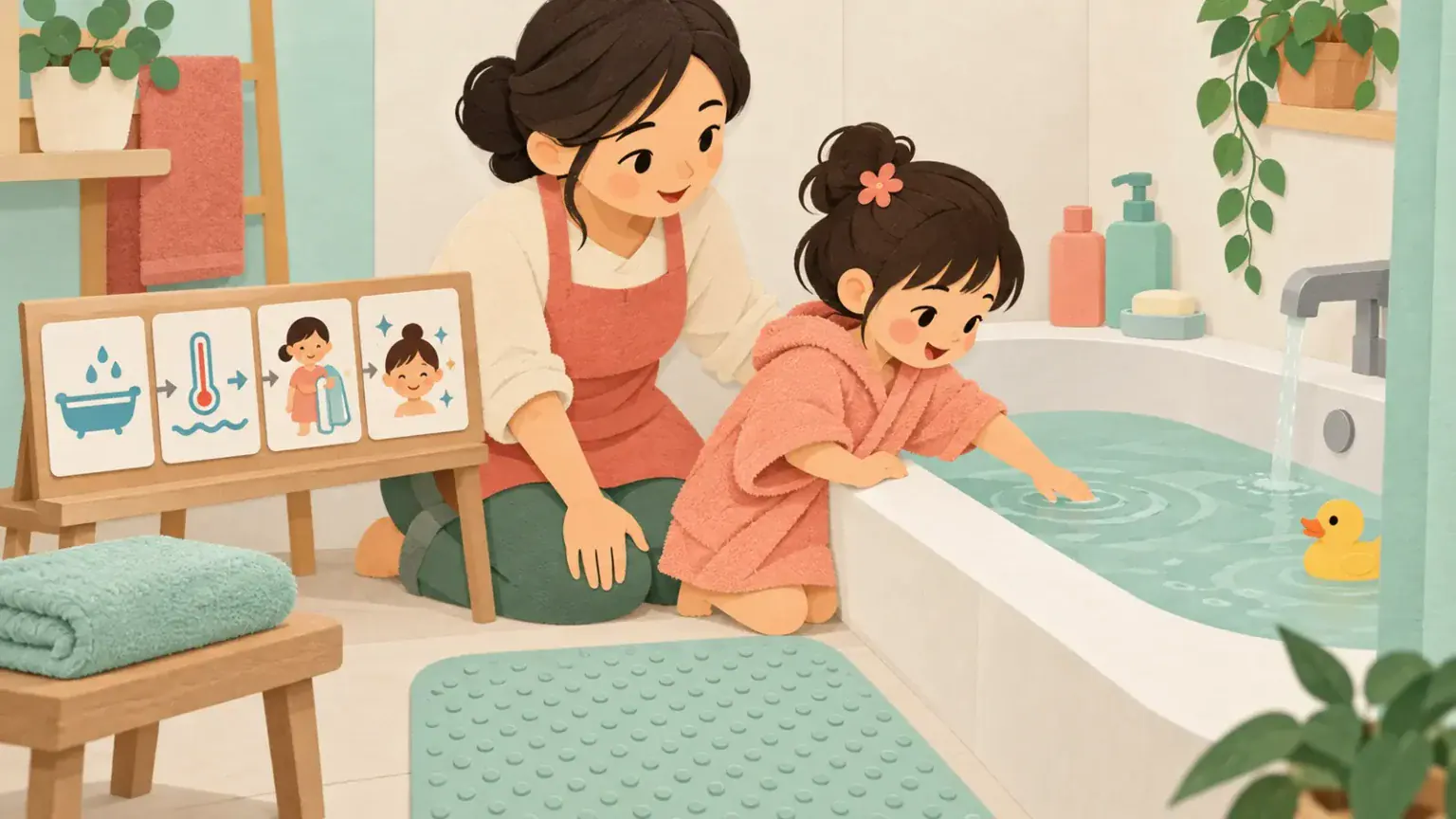
- Run water in advance if the noise is difficult, and check temperature with an adult hand or bath thermometer.
- Use a non-slip mat and a stable seat or foot support where appropriate.
- Remove scented diffusers and try an unscented product.
- Dim harsh lighting if safe, and keep everything needed within reach.
- Lay out a preferred towel and clean clothes so the cold, wet transition is brief.
Never leave a baby or young child alone in or near water. Empty the bath after use, store electrical items away and supervise according to the child’s safety skills rather than age alone.
Use a short, visible sequence
Show four to six steps, such as “clothes off, water, wash body, rinse, towel, clothes on.” Cross off or remove each picture. A timer can show the endpoint, but it should not be used to rush a distressed child. For a toddler, narrate the next action in one phrase. Older children and teens can help decide the order and which parts they will do independently.
Tell the child before contact: “I will wash your left arm.” Use the pressure they prefer; firm touch helps some children but is unpleasant or triggering for others. Let the child hold the shower head, squeeze the sponge or pour water where possible. If a shower feels sharp, try a cup or shallow bath. If immersion feels unsafe, a seated shower or wash at the sink may work better.
Choose a minimum workable wash
On a hard day, identify what is essential: perhaps face, hands, armpits, genital area and visibly soiled skin, followed by clean clothes. A full bath can wait if there is no urgent hygiene need. This is not abandoning hygiene; it is separating the goal from one rigid method. Ask a clinician for advice when skin conditions, menstruation, continence or medical devices change what is required.
Keep hair care separate if combining it overwhelms the child. EdCaptain’s sensory-friendly hair-care plan offers a smaller sequence. After bathing, use the same calm recovery steps described in the sensory-overload guide.
Build independence without removing support
Teach one step at a time. Your child might first turn off the tap, then later wash one arm. Use a visual prompt, demonstrate, and wait before helping. Fade only the support that is no longer needed. Teens deserve a private plan: knock before entering, agree when help is available and use adaptive equipment if balance, reach or motor planning are barriers.
Review after two weeks. Which change reduced distress? Which added work without benefit? Keep what helps and drop the rest. If bathing remains unsafe, hygiene is consistently missed, or distress affects family life, ask an occupational therapist or health professional to assess the whole task.