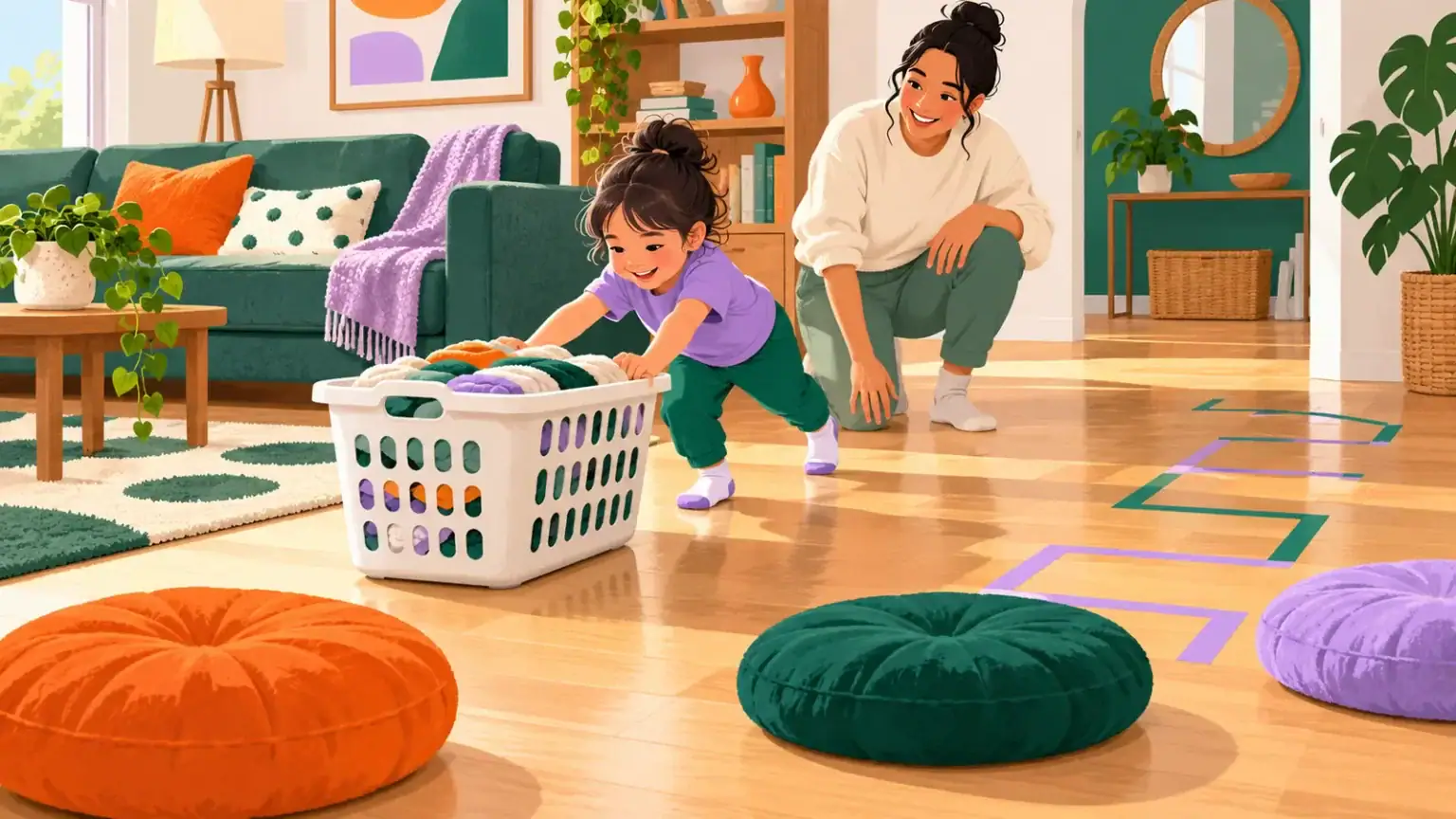
A child who jumps, spins, crashes, chews or pushes may be seeking strong movement or body-awareness input. The behaviour may help them feel alert, organized or calm. It can also collide with furniture, learning and other people’s boundaries. The goal is not to stop all movement. It is to offer safer, predictable choices and investigate other reasons the child cannot settle or stay safe.
Describe the pattern precisely
Notice what the child does, when, for how long and what happens afterwards. Is movement most intense after sitting, during transitions, when tired, or in a noisy room? Does pushing and carrying help more than spinning? Is the child seeking play, escaping a demand, managing pain, or lacking an accessible activity?
Movement seeking is not a diagnosis. Similar behaviour can relate to age, attention, anxiety, sleep, communication, medication effects or other health needs. Share persistent or risky patterns with an appropriate health professional.
Offer a menu, not a compulsory “sensory diet”
- Push a loaded laundry basket across a clear floor.
- Carry light shopping bags or books suited to the child’s ability.
- Use wall pushes, animal walks or a short taped jumping path.
- Cycle, skate or use playground equipment with correct protective gear and supervision.
- Build a cardboard fort, dig in soil or pull a wagon.
NHS occupational therapy guidance suggests regular movement breaks and purposeful tasks. Treat these as ideas to trial, not a prescription. Ask “Push, jump or quiet break?” and watch the response. An activity that calms one child may excite or distress another.
Put safety boundaries around intensity
Choose a clear area away from stairs, glass and traffic. Use equipment only as designed and follow age, weight and supervision guidance. Stop with dizziness, pallor, pain, nausea, unusual breathlessness or distress. Do not encourage spinning until a child is sick or use crashing as a substitute for safe physical play.
“Heavy work” should use ordinary manageable resistance, not maximum lifting. Children with joint, heart, neurological, balance or other medical conditions may need individual advice. Weighted vests, blankets and specialist swings require careful assessment and are not universal calming tools.
Build movement into transitions
Offer a short predictable activity before times that usually involve unsafe climbing or crashing: carrying the school bag to the door, pushing chairs in, then sitting for breakfast. Use a clear finish—three trips, one song, or five wall pushes—and follow it with the next visible step.
At school, movement can be purposeful rather than punitive. The child might deliver books, stand for part of a lesson, use a brief movement break or access an agreed safe space. Removing every break because work is unfinished often increases the barrier.
Teach consent and alternatives
Strong hugs, crashing into people and rough play need consent. Teach an alternative: squeeze a cushion, push the wall, ask “crash game?” or use a supervised mat. Adults should not provide deep pressure or hold a child tightly without clear agreement; stop immediately if the child resists.
Review function, not just stillness
After a two-week trial, ask whether the child is safer, more able to participate and better able to choose a strategy. If movement needs remain extreme, cause injury, disrupt sleep or suddenly change, seek professional assessment. A pediatric occupational therapist may help identify functional supports.
Track what happens after each option. A child who appears more organized after pushing may become dizzy after spinning; another may need a quiet pause after vigorous play. Use that information to refine the menu. Build choice over time by teaching body clues such as “fast heart,” “wobbly,” “need to push” or “need to stop.” Interoception develops differently, so adults may need to model without insisting the child name sensations they cannot yet identify.
Related EdCaptain guides cover sensory overload, everyday sensory needs and support through big emotions.