By EdCaptain editorial desk · Published
General educational guidance. No qualified clinical review is recorded for this article. Health and safety information.
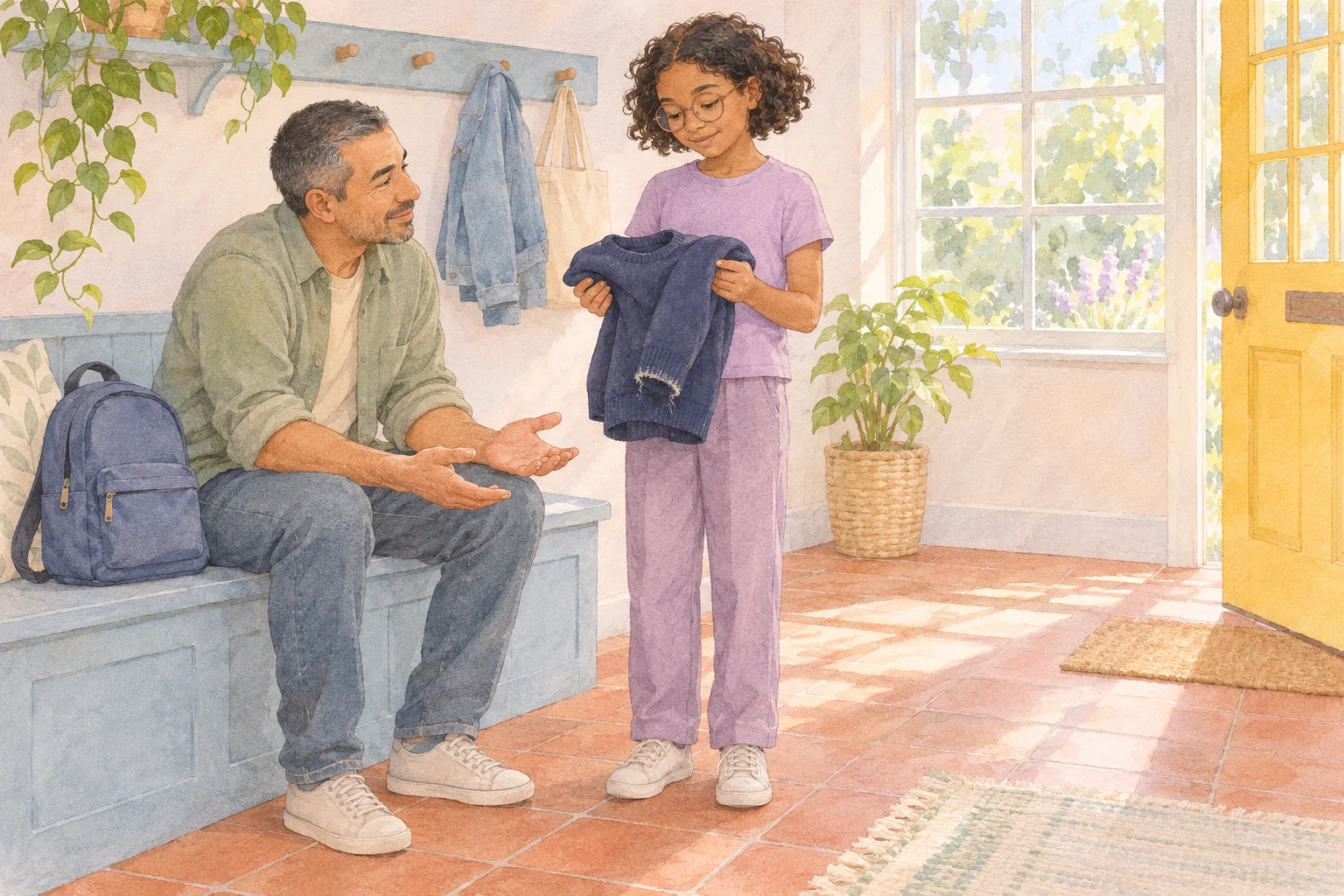
A school jumper comes home with another wet cuff. You replace the pencil, then notice tooth marks on the new one. Repeating “Stop chewing!” may interrupt the moment without telling you what your child needs—or whether pieces are coming off.
For children aged 6–12, begin with safety and curiosity. Chewing a sleeve, damaging it and swallowing its threads are different observations. They need different responses. A child should be able to tell you what happened without fearing a punishment for ruined clothing.
Check for swallowing before treating it as a habit
Get urgent medical help if your child may have swallowed a battery, magnet, sharp or large object. Do not wait for symptoms. If they are choking, struggling to breathe or becoming difficult to wake, call your local emergency service immediately.
NHS Healthier Together guidance on swallowed objects also flags drooling, gagging or vomiting, refusing food, severe pain and blood in stools as reasons for urgent help after suspected swallowing. Tell the medical team what may have been swallowed and when. If the object is unknown, seek prompt advice rather than assuming it was harmless.
This is especially relevant when a pencil end, toy part or piece of fabric is missing. Do not let a routine appointment or a plan to watch chewing delay urgent advice.
Notice what chewing does for this child
NHS Fife’s occupational therapy guidance explains that some children chew clothes or toys for sensory input that may help them feel more settled or focused. That is one possible explanation, not proof of why your child is doing it.
For a few ordinary days, jot down the situation without making the child feel watched all the time. Was it during difficult homework, a noisy lesson, waiting or quiet reading? What was chewed? Was it intact afterwards? What did the child say about the sensation? Stop gathering notes and get help if a safety concern appears.
Ask in a calm moment: “Does chewing help your mouth feel comfortable, help you think, or is it something you notice after it happens?” “I don’t know” is a useful answer too. Avoid declaring that it must be anxiety, autism, ADHD or a nutritional problem.
If the pattern coincides with overwhelming noise or crowded transitions, reducing that demand may be worth trying. Our sensory overload plan offers broader ways to adjust the setting without asking a child to hide discomfort.
Eating non-food material needs a health conversation
The Northamptonshire Healthcare NHS pica guide describes pica as eating non-food substances. Chewing a cuff does not, by itself, establish that diagnosis. Repeatedly swallowing paper, fabric or other non-food material is a reason to contact your child’s doctor, even if they also eat ordinary meals.
The guide explains risks including poisoning, gut blockage, infection and damage to teeth or gums. A clinician can consider medical and nutritional needs; do not start supplements because an internet post says chewing proves a deficiency. Seek dental advice for damaged teeth, sore gums or mouth pain as well.
Useful appointment information is concrete: “Two cuffs have holes, and we are unsure where the threads went,” rather than “She has a bad habit.” Mention changes in eating, bowel symptoms and any known swallowing difficulty. Bring a photograph or the damaged object if safe, without delaying urgent care.
Make the immediate surroundings safer
Check the items the child actually reaches: fraying cuffs, loose pencil erasers, pen caps, broken toys, accessible batteries and small magnets. Remove damaged items and secure dangerous ones. Apply the same precautions at school and other homes; relying on a child’s promise to remember is not enough.
Use a neutral response: “That end is coming apart. Let’s put it away and work out what you need.” A private change of clothing may help when fabric is wet or damaged. Do not coat sleeves or objects with a bitter household substance, attach improvised chewing strips, or replace them with another object whose safety is unknown.
A quieter place, a manageable pause or an agreed movement break may address part of the situation. They are options to observe, not substitutes for assessment when material is being swallowed. For movement needs, see our safer movement-seeking plan.
Ask about an alternative before buying one
There is no single chew product suitable for every child. Ask an occupational therapist or relevant health professional whether an oral alternative is appropriate, taking account of chewing strength, dental condition, swallowing ability and supervision. A dentist or feeding/swallowing professional may need to contribute.
Ask: “What exact product and size would suit this child? How do we inspect, clean and store it? When should it be replaced? What signs mean stop?” NHS Fife stresses matching suggestions to ability, supervising use, hygiene and manufacturer instructions. Do not share mouth-contact items.
Avoid jewellery marketed for teething or sensory chewing. AAP HealthyChildren reports the FDA’s warning about choking and strangulation from teething jewellery, including products marketed for sensory stimulation. A necklace is not an automatic safe swap for a sleeve. Nor does a “sensory” label establish that a handheld product is safe or effective for your child.
Do not improvise a harder-food challenge, thick-drink exercise or chewing-gum routine. If eating or swallowing is difficult, get individual advice rather than using food as a replacement exercise.
Agree on discreet support at school
For ages 6–9, an adult may need to notice wear, offer a quiet check-in and help the child explain what happened. Try: “Your cuff is wet. Would you like to change it, or tell me what your mouth needs?” Offer help without repeatedly correcting them across the classroom.
For ages 10–12, agree a private word or signal and let the child help decide which observations to share. They might say, “It happens most while I’m waiting for help.” An adult can then check whether instructions or waiting arrangements need changing, while keeping responsibility for hazards and any prescribed support.
Put the agreed response in a short note for relevant staff: what to notice, whom to contact, where a spare garment is kept, and how any professionally recommended item is supervised. Keep classmates out of monitoring the child.
Review whether the child is safer, comfortable and able to participate—not simply whether the jumper looks better. If chewing persists, causes injury or damage, or leaves uncertainty about swallowing, seek professional advice. Calm attention and a clear safety plan can protect both your child and their willingness to ask for help.
Sources and further reading
- NHS Fife: Supporting children who chew everyday items
- Northamptonshire Healthcare NHS: Pica parent and carer guide
- NHS Healthier Together: Swallowed a foreign object
- AAP HealthyChildren: Jewellery choking and strangulation warning
Read our editorial policy and review methodology.