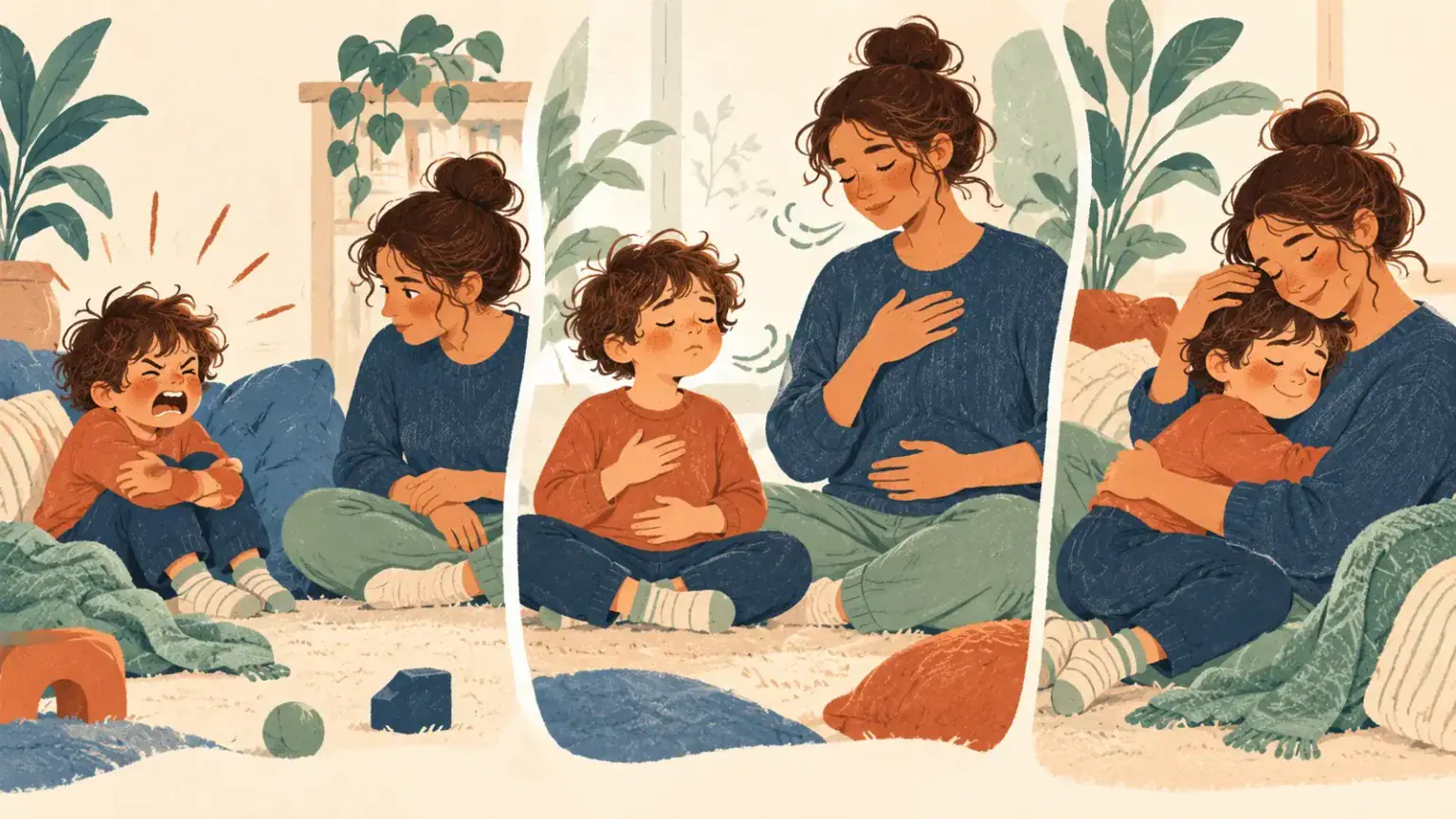
A child with ADHD may move from frustration to shouting, tears or impulsive action very quickly. Big emotion does not excuse hurting someone, but shame rarely teaches control. Children build regulation through repeated experiences of an adult helping the body become safe, setting a clear limit and practising a usable skill after the storm.
Regulate before you reason
During high arousal, working memory and flexible thinking are limited. Lower your voice, reduce language and move away from an audience. Try: “You are very angry. I won’t let you hit. I’m moving the chair and staying nearby.” Manchester CAMHS describes co-regulation as the support one person gives another to help manage emotional state; children gradually develop self-regulation through these experiences.
Offer one simple option at a time: space, water, pressure against a wall, a walk, headphones or sitting nearby. Not every child finds breathing exercises calming, and demanding eye contact can add stress. Use what the child has practised and prefers.
Keep the boundary short and steady
Separate emotion from action. “Anger is allowed; throwing the tablet is not.” Remove dangerous objects, block harm with the least intrusive response possible and give siblings space. Avoid threats, debates and a list of past mistakes. If anyone is in immediate danger, use local emergency support.
A child who runs, becomes unreachable or talks about wanting to die needs an individualized safety plan with qualified professionals. Statements about self-harm or suicide should always be taken seriously and responded to promptly.
Afterward, prioritize recovery and repair
Do not demand a detailed explanation or apology the instant the child becomes quiet. The nervous system may still be recovering. Offer food, drink, rest and connection. Later, keep the review brief:
- What happened just before the feeling got huge?
- What did your body notice?
- What helped even a little?
- What can we change or try next time?
- Is there something to repair—checking on someone, replacing an item or making a sincere apology?
Repair should restore safety and responsibility, not humiliate. Adults can model it too: “I shouted. That was not okay. Next time I will pause before I answer.”
Teach skills outside the crisis
Build a small shared vocabulary for body signals: hot face, tight hands, fast talking, buzzing legs or blank mind. Use a simple scale or colours if the child likes visual tools. Pair each early signal with one action. A younger child may stomp safely or push a wall; an older child may message a code word, leave the room or use music.
Practise when everyone is calm. Role-play losing a game, receiving a correction or changing plans. Keep it playful and stop before it becomes overwhelming. Notice early use of a skill: “You asked for space before you shouted.”
Change predictable triggers
Track patterns for a week or two: time, hunger, sleep, medication timing, sensory load, transitions, homework and social demands. Prevention might mean a snack after school, fewer instructions at once, a visual warning, planned movement or a quieter place to recover. This is not removing all expectations; it is making success possible.
Evidence-based ADHD care may include parent training in behaviour management, school support and medication when appropriate. The CDC explains that parent training teaches positive reinforcement, structure and consistent discipline. Discuss treatment with qualified professionals; do not change prescribed medication without the prescriber.
Know when to seek more support
Consult a clinician when emotional episodes are frequent, dangerous, suddenly worse or significantly affecting school and family life. Ask about sleep, anxiety, depression, trauma, autism, learning differences and other contributors rather than assuming every difficulty is ADHD. Support should fit the whole child.
EdCaptain’s related guides cover when to seek developmental assessment, how to prepare useful observations and support after a diagnosis. The long-term aim is not a child who never feels intensely; it is a child who is safe, understood and increasingly able to choose what helps.