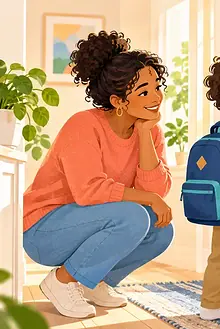
Friendship can be complicated for any child. ADHD may add challenges with waiting, noticing cues, remembering rules in the moment, interrupting or reacting quickly to disappointment. It can also bring humour, energy, creativity and intense loyalty. The aim is not to make a child perform a perfect social script. It is to help them find reciprocal, safe relationships and repair mistakes without shame.
Find the point where friendship gets difficult
“Social skills” is a broad label. Observe a specific pattern. Does the child struggle to join a game, stay with a shared idea, cope when someone says no, notice that a friend wants a turn, or reconnect after conflict? Ask the child what feels confusing. School staff may see different moments from family.
Do not assume every friendship problem is caused by ADHD. Check for bullying, exclusion, language differences, anxiety, autism, hearing difficulties or a group that is simply a poor fit. A child should not be coached to tolerate cruelty in order to appear socially successful.
Create smaller chances to succeed
One friend, one familiar activity and a defined end time may be easier than a large unstructured gathering. Choose activities with a shared focus—building, art, skating, cooking or a game—so conversation is not the only task. Prepare the child privately: what will happen, how long it will last and how to ask for a break.
The American Academy of Pediatrics notes that children may need different kinds of friendship coaching and that adults can model listening, empathy and conflict repair. Stay available without narrating every interaction. Step in for safety, persistent exclusion or a conflict the children cannot resolve.
Practise one usable skill
- Joining: watch briefly, then ask, “Can I build the next part?”
- Interrupting less: hold up one finger or jot the thought down while the other person finishes.
- Checking impact: “Are you still having fun?”
- Handling no: pause, choose another option or ask when the activity might be available.
- Leaving safely: “I need a break. I’ll come back in five minutes.”
Role-play briefly when everyone is calm. Let the child play both roles and invent alternatives. Avoid rehearsing so much that a visit becomes another test.
Help with repair after an impulsive moment
First regulate. Later, separate intention from impact: “You were excited and grabbed the controller. Your friend felt pushed out.” Ask what repair would help—returning the item, checking on the friend, replacing something damaged or offering a sincere apology. Do not force immediate eye contact or a scripted apology that the child cannot yet mean.
Respect the child’s friendship style
Some children prefer one close friend, mixed-age groups or friendships built around an interest. They may need more recovery after social time. Quantity is not the goal. Watch for mutual enjoyment, consent, respect and the freedom to disagree.
Online friendships need the same safety boundaries as other online contact: adults should know the platform, privacy settings and who the child is communicating with. A friend who pressures the child for money, images, secrecy or personal information is a safety concern, not a social-skills lesson.
Keep siblings and peers out of the role of unpaid therapist. They can be kind and clear, but adults remain responsible for safety and coaching. Praise both children when they communicate directly, take a break or repair a misunderstanding, without making one child responsible for managing the other’s ADHD.
When to seek more support
Talk with school and healthcare professionals if rejection is persistent, conflict is dangerous, or loneliness, anxiety or low mood is growing. CDC guidance includes peer and behavioural interventions among possible supports for school-age children with ADHD. Support should target the child’s actual difficulty and protect dignity.
Related EdCaptain resources cover big emotions, classroom participation and online friends who ask for money.