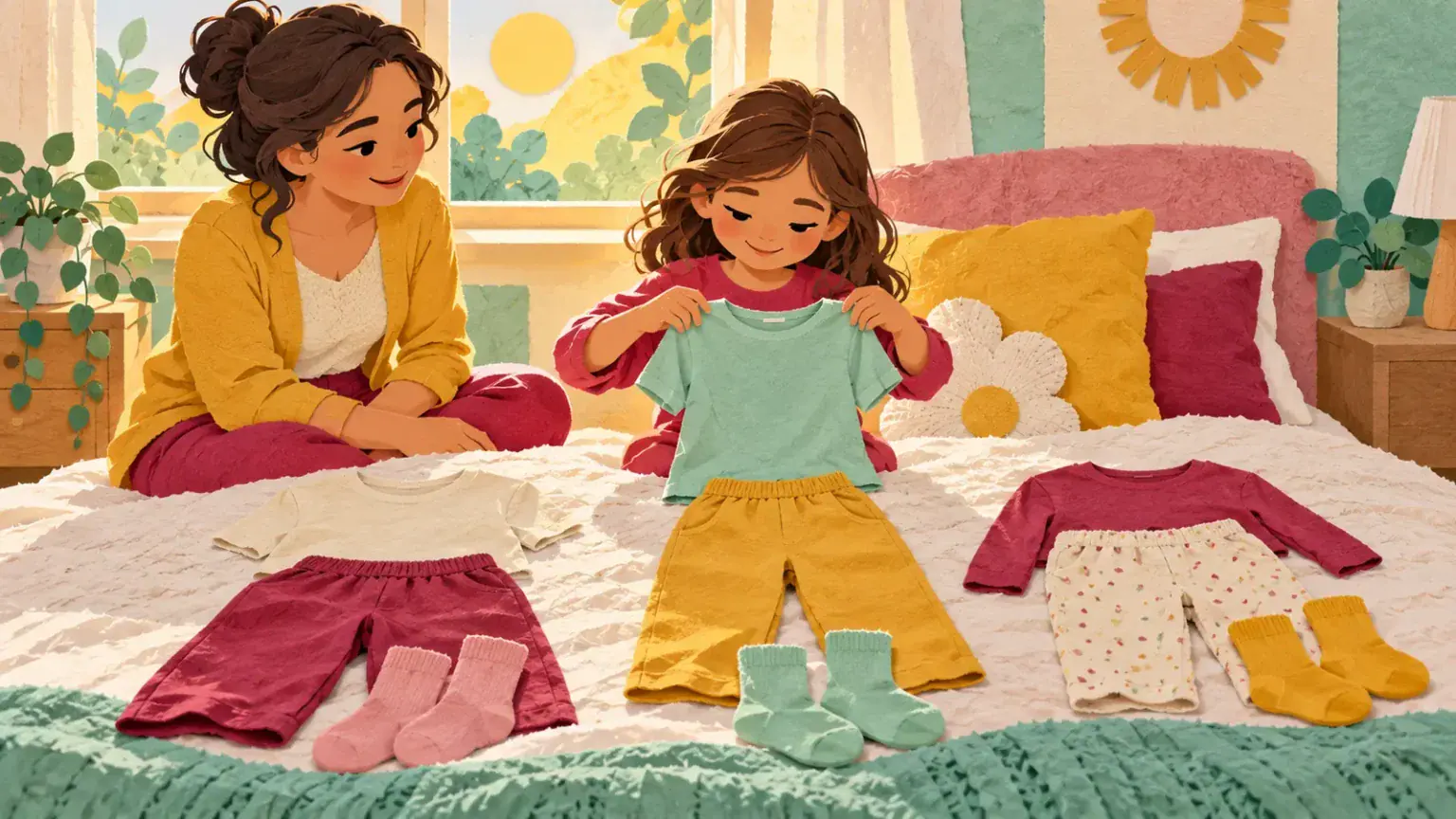
A seam that seems tiny to an adult can feel sharp all day to a sensory-sensitive child. Labels, waistbands, socks, temperature, tight sleeves and the movement required to dress may each create a barrier. Calling the child fussy does not make the sensation disappear. The aim is a safe, workable wardrobe and growing participation—not winning a morning battle.
Find the exact problem
Ask what feels wrong and observe when words are unavailable. Is the difficulty the fabric, fit, smell, static, dampness, temperature or change from familiar clothing? Does standing on one leg feel unstable? Is the bathroom cold or brightly lit? Does distress start only when time pressure begins?
Make a short “works / maybe / no” list. Photograph tolerated items and note fabric, seam, waistband and size. Preferences can change, so treat the list as current evidence rather than a permanent rule.
Build a small reliable wardrobe
- Buy duplicates of genuinely comfortable basics when practical.
- Remove labels carefully and check that the cut edge is not sharper.
- Try flat seams, seamless socks, soft waistbands or wearing some items inside out.
- Wash new clothes before an important day and avoid strongly scented products if smell is a trigger.
- Keep one accepted backup outfit clean and accessible.
NHS occupational therapy guidance emphasizes comfort over appearance. A mismatched outfit that lets a child learn and participate is usually more useful than fashionable clothing they cannot tolerate.
Reduce the morning load
Choose two acceptable outfits the night before. Dress in a warm, uncluttered place with enough time. Sit for socks and trousers if balance is difficult. Use a picture sequence only if it helps; a long checklist can become another demand.
Some children like firm pressure or movement before dressing, while others do not. Offer, do not impose: “Wall pushes or straight to clothes?” Stop any strategy that increases distress. Never use brushing protocols, weighted clothing or compression products without appropriate individualized guidance and safety review.
Teach skills without flooding
Practise one part when the family is not rushing: pulling a sleeve through, finding the front, or fastening one button. Let the child choose the easiest step and help with the rest. Gradually increase participation. Dressing independence is not worth repeated panic.
For required uniforms, meet the school before term begins. Ask about alternative fabrics, looser cuts, footwear, removing a tie, wearing a soft layer underneath or changing after an activity. Put agreed adjustments in writing so the child does not have to negotiate with every adult.
Keep health and safety in view
Clothing must still match weather and activity. If the child does not notice heat or cold reliably, use external cues and adult checks. Seek medical advice for rashes, pain, sudden changes, skin infection or persistent itching. Occupational therapy may help when dressing limits school, sleep, toileting or family life.
As children grow, include privacy, body autonomy and style. A teenager should help select discreet supports and should not be discussed publicly as difficult. Related EdCaptain articles cover a sensory overload plan, everyday sensory needs and preparing for changes.
Prepare for unavoidable clothing changes gradually. Before a wedding, trip or seasonal change, let the child see, touch and briefly try options over several days. Keep an accepted layer underneath when possible and bring the backup outfit. For swimming, sport or medical care, explain which parts are required for safety and where flexibility remains. Collaboration does not mean removing every boundary; it means solving the real access problem with the child.
Keep successful solutions written down for travel, school trips and handovers between caregivers. A brief note about tolerated fabrics, backup items and the child’s own words for discomfort prevents adults from restarting the same conflict.