Need a game that works the moment cousins arrive for a visit, or when a birthday party has that awkward first ten minutes where nobody knows what to do with their hands? ‘Switch If…’ earns its place in the family game rotation because it needs no equipment, works for almost any group size, and quietly answers the question every new gathering is really asking: who else here is like me?
The game in one breath
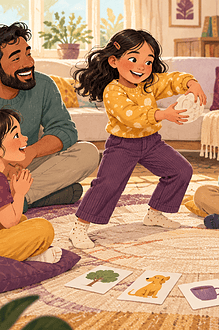
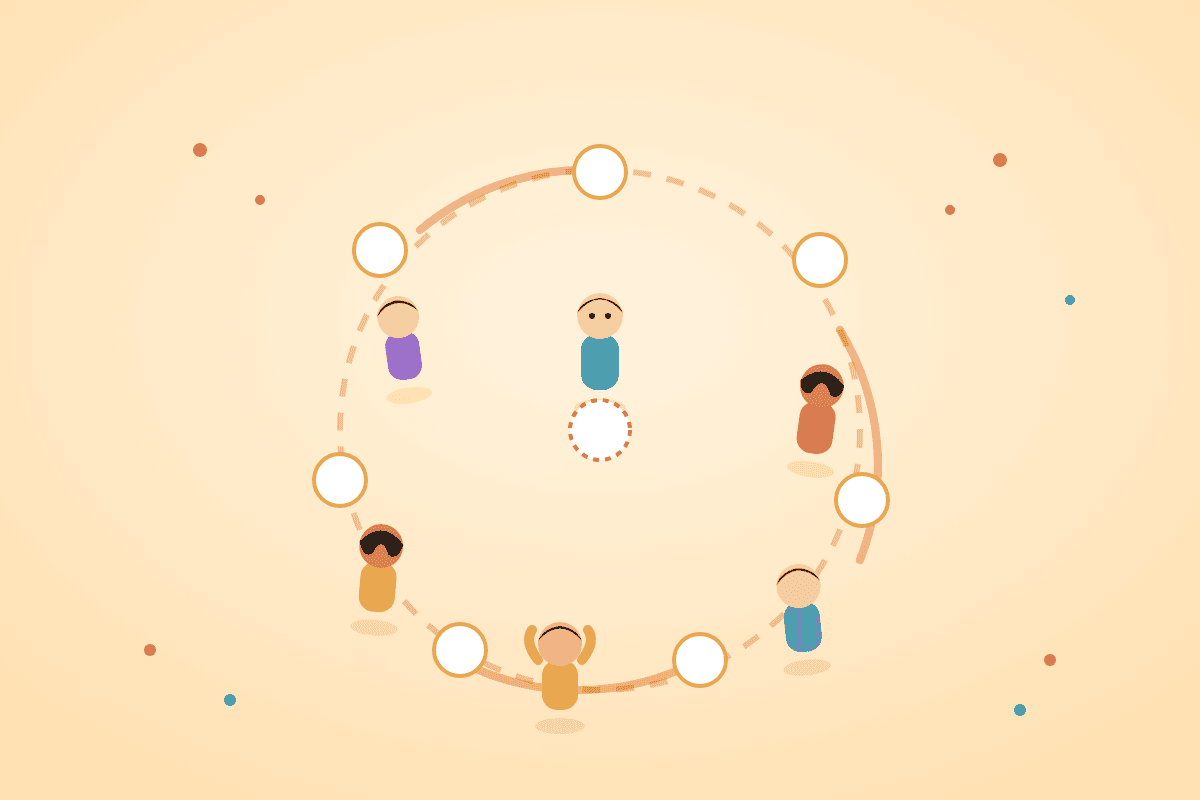
Everyone sits or stands in a loose circle, one person short of enough chairs or floor spots, so there is always one person in the middle. That person calls out ‘Switch if you…’ and finishes the sentence with something true about themselves: ‘switch if you have a pet,’ ‘switch if you hate getting wet socks,’ ‘switch if you have ever cried during a movie and pretended you had not.’ Everyone for whom that is also true has to get up and find a different spot, including the person who called it. Whoever ends up without a spot becomes the new caller.
That is the whole game. The rest of this article is about what to do with it. If you want a more competitive, elimination-style option for the same kind of gathering, Musical Chairs is the classic next door neighbour to this one, though ‘Switch If…’ keeps everyone in the game the whole time.
Why the middle part matters more than the moving part
The physical scramble is fun, but it is not really the point. The point is the half-second after someone calls a statement, when everyone in the circle looks around to see who else stood up. A kid who has just moved schools, or is meeting a new stepfamily for the first time, or is simply the youngest at a table of older cousins, gets a quick, low-pressure signal: three other people also hate olives, or also have a little brother who will not stop talking, or also still sleep with a particular stuffed animal and do not care who knows it.
This matters more than it sounds like it should. Guidance from the American Academy of Pediatrics notes that play helps children build empathy and practise the give and take of real social interaction, and that this kind of social learning tends to happen more naturally through play than through being told directly to ‘go make friends.’ A game built entirely around discovering overlap is, underneath the silliness, doing exactly that.
Running it well
Start the first few rounds yourself so everyone sees the shape of the game, and keep your opening statements easy and a little silly: switch if you are wearing socks, switch if you had cereal today, switch if you can wiggle your ears. This gives nervous or younger players something low-stakes to practise on before anyone has to say something more personal.
Once the group is warmed up, nudge the statements toward genuine common ground rather than just trivia: switch if you have ever been scared of the dark, switch if you have ever been the new kid somewhere, switch if you have a food you secretly do not like but eat anyway to be polite. You will not need to push hard. Once one child discovers that admitting something slightly embarrassing gets three other people on their feet laughing in recognition, the rest of the group follows without any coaching from you.
Set one rule before you start and hold to it: nothing said during the game gets repeated or teased about later, by anyone, including the adults. The entire value of the game depends on it feeling safe to admit something true, even something small like still being scared of the dark at age nine. Break that trust once and the game becomes useless for the rest of the afternoon.
Keeping everyone safe while they are moving
This is a physical game, so run it somewhere with a clear floor, no rugs that slide, no low furniture in the scramble zone, and enough space between spots that elbows and chairs do not collide. If you are using chairs rather than floor spots, make sure they are stable and spaced out, and remind everyone that walking fast beats running. For a mixed-age group, pair a younger child loosely with an older one so nobody gets knocked over in the shuffle, or run a seated version where ‘switching’ just means swapping places with someone across the circle rather than sprinting.
Making room for every kind of player
Not every child wants to sprint across a room in front of relatives they do not see often, and that is fine. A shy or anxious child can be the one who calls out the statement from a stationary spot for a round or two, which gives them the fun of the game, and a say in its direction, without the physical pressure of the scramble. A similar warm-up idea, The Partner Interview, shifts the spotlight the same way for a child who is not ready to speak to a whole group yet. For a child who uses a wheelchair or has limited mobility, ‘switching’ can mean raising a hand or waving a scarf instead of moving seats, with everyone else adjusting the rule to match rather than the other way around. The statements themselves are infinitely flexible, so you can also steer them toward things that let a particular child shine: a kid who is nervous about schoolwork but loves a particular show will light up the moment ‘switch if you have watched every episode of…’ gets called.
A few favourite rounds worth keeping in your back pocket
- Switch if you have ever laughed so hard you cried.
- Switch if you have more than one sibling.
- Switch if you have ever been afraid to ask a question in class.
- Switch if you have moved house, school, or country.
- Switch if you have a talent nobody in this room knows about yet.
That last one tends to end the game early, because somebody always wants to prove it on the spot.
After the game ends
When the energy settles, it is worth a quick, casual question rather than a formal debrief: ‘What surprised you?’ is usually enough. Children will often mention the unexpected overlaps, the cousin who turns out to also be scared of the dentist, the quiet kid at the party who turns out to share their exact taste in snacks, far more readily than they would volunteer that information in a normal conversation. That is the whole game doing its real job, just a little after the fact.
Keep a short list of your family’s best statements somewhere you will actually find it again, a sticky note on the fridge works fine, because the second time you play, the group will already know the rhythm and move straight to the good, revealing rounds. By the third or fourth time, you will likely find the children running the game themselves, which is usually the clearest sign that it has become genuinely theirs rather than something the grown-ups organised. For more ideas along the same lines, Friendly games for new playmates and nervous first meetings is a good next stop.
Sources and further reading: The Power of Play: How Fun and Games Help Children Thrive, HealthyChildren.org (American Academy of Pediatrics).