Public speaking practice does not have to begin with one child standing alone in front of a silent room. A game can make the audience friendly, the topic temporary and mistakes part of the fun.
These activities practise different skills: describing, sequencing, adapting a message and noticing what helps a listener. None requires scoring. Let children pass, take a non-speaking role or use gesture, writing, sign or AAC. Participation is more useful when it is chosen and accessible.
1. The changing object
Best for: ages 6 to 12. You need: nothing, or one soft object to pass.
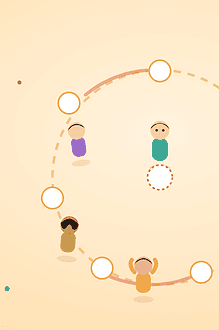
Sit in a circle. The first person mimes using an imaginary object, perhaps brushing their hair. The next person receives it, changes it into something else and shows that new use. A pretend brush might become a microphone, then a torch, then a paint roller.
In the first round, use actions only. In the second, each person adds one sentence: “This is the torch I use to explore caves.” Older children can add a beginning, problem and ending across three turns. Keep the pace relaxed and allow a child to ask for an idea.
2. Picture-path talk
Best for: ages 6 to 12. You need: three to five picture cards, family photos or safe magazine cut-outs.
Lay the images in any order. The speaker connects them into a short explanation or story. One child might explain how a lost umbrella, a bus and a birthday cake belong in the same day. Another might simply describe why they chose each picture.
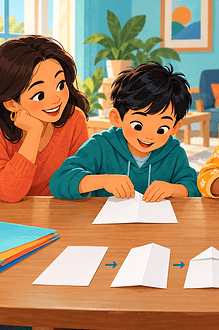
Let the child point, pause and rearrange the sequence. A listener can ask one genuine question afterwards. For a child who prefers not to invent a story, use photos of a familiar task and explain the steps instead.
3. Teach it badly, then fix it
Best for: ages 8 to 12. You need: small topic cards, optional.
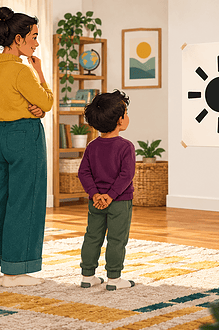
Choose one presentation habit, such as speaking too fast, hiding an object before the audience can see it, giving steps in the wrong order or putting far too much information on a visual. An adult models an exaggerated 20-second “bad” talk. The group guesses what made it hard to follow and suggests a better version.
Children can demonstrate the repaired version, but do not ask them to imitate a speech difference, accent, disability or anxious behaviour. The joke should be about an adjustable presentation choice, never about the person. If your group will give peer comments, agree on respectful feedback first; this EdCaptain guide offers a practical approach.
4. One-minute expert
Best for: ages 9 to 12. You need: paper and pencils, optional.
Each person chooses something they know or enjoy: a game, local animal, song, recipe, sports move or way to care for a plant. Give two minutes to plan three points. The speaker then has up to one minute to teach the group something.
Listeners name one thing they learned and ask one question. The speaker may say “I don’t know.” To lower the pressure, two children can present together, a child can show an object, or the group can skip the timer entirely.
Create a safer speaking space
- Explain the activity before choosing a speaker.
- Offer a clear way to pass without teasing or persuasion.
- Keep turns brief and predictable.
- Do not demand eye contact, still hands or a particular speaking style.
- Stop mocking immediately, including jokes about voice, language, accent or communication aids.
- Notice the message and the strategy, not whether a child looked confident.
If a child wants to contribute without taking a speaking turn, they might choose the pictures, keep the order cards, demonstrate the object or ask the closing question. EdCaptain’s advice on helping a quiet child contribute without being put on the spot has more options.
Talk about what changed
After a game, ask one or two questions rather than delivering a lesson. What helped you know what came next? Which picture or gesture made an idea clearer? What did a listener do that made speaking easier? If you played again, what would you keep?
The aim is not to remove every pause or turn spontaneous talk into a performance. It is to give children repeated experiences of having an idea, shaping it for someone else and being heard. Families who want more rehearsal-based activities can also explore four different ways to use role-play.