By EdCaptain editorial desk · Published
“Their house is much nicer. I don’t want them coming here.” A child’s words about the family home can land painfully, especially when you work hard to keep everyone housed and cared for. Before defending the home, find out what your child fears will happen if a friend visits.
For children aged 6–12, the concern might be a smaller room, a shared bedroom, worn furniture or having fewer things to show. It might also be noise, privacy, a particular person’s behaviour or a past unkind comment. Listening does not mean agreeing that the home is inferior. It helps you understand the actual problem.
Start with the imagined moment
Ask, “What do you think they would notice or say?” Give your child time to answer. If they say, “Everything,” narrow it gently: “Which part would feel hardest when they arrived?” They can write, point or use their usual communication method instead of explaining aloud.
Try reflecting the concern: “You’re worried they’ll compare our homes,” rather than “You’re ashamed of us.” Avoid a gratitude lecture, comparisons with people who have less, or reminders about how much you sacrifice. Those responses can turn a difficult feeling into a duty to protect the adults.
The American Psychological Association’s guidance on financial strain notes that children can feel embarrassed about having fewer possessions and worry about teasing. That is one possibility to explore, not an explanation to impose on every child who dislikes hosting.
Check whether the worry has a history
Ask, “Has someone said something about our home or things, or are you wondering what might happen?” Listen without cross-examining. A child who heard a classmate mock somebody else’s flat may have a specific reason to hesitate.
If there has been repeated ridicule, exclusion or threatening behaviour, address it with the responsible adults. Do not invite the child doing the targeting into your home as a test of your child’s confidence. UNICEF’s bullying guidance recommends calm listening, reassuring the child that the bullying is not their fault, and working with the school.
Equally, one awkward question from a friend is not automatically a bullying pattern. Ask about the words, context and what happened afterwards before deciding what support is needed.
If your child describes danger, frightening adult behaviour or another genuine safety concern at home, deal with that concern first. A playdate cannot make an unsafe situation acceptable. Meeting elsewhere may be the appropriate choice while adults arrange support.
Separate home, money and personal worth
Give a short, truthful response: “Homes have different sizes and arrangements. Ours doesn’t have a separate bedroom for everyone. That doesn’t tell anyone how much you matter or whether you can be a good friend.”
Avoid promising that nobody will notice or that a “real friend” will never say anything clumsy. You cannot guarantee another child’s reaction. You can promise to listen and help if something uncomfortable happens.
If money is part of the question, answer what affects your child without handing over adult worries. “We’re not buying a games console to match theirs. We can plan something you both enjoy with what we have.” Our guide to talking about family money stress offers language for a wider conversation when it is needed.
Do not insult the friend’s family as materialistic or boast about being morally better because you spend less. The aim is room for different circumstances, not a new competition.
Offer a visit that has a clear purpose
If your child wants to try hosting and the household can accommodate it, plan one manageable visit together. They might choose one friend they already feel comfortable with, an ordinary activity and a clear finishing time.
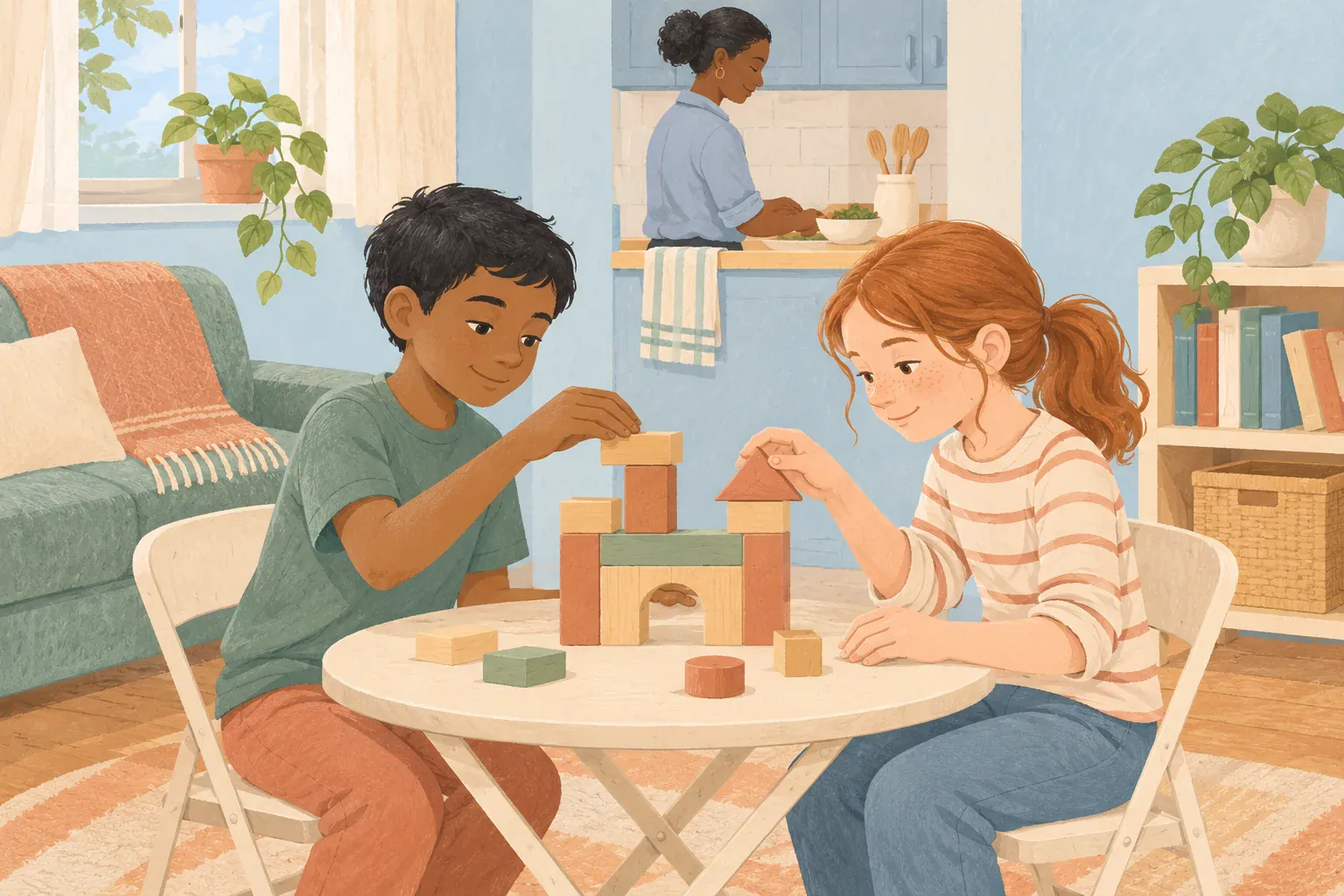
- Choose what to do: draw together, play a familiar game, build with existing materials or read comics. The activity does not need to impress.
- Choose where: use an agreed shared space. A bedroom tour is optional, and other household members’ spaces remain private.
- Agree the practical details: adults confirm supervision, arrival and collection, access needs and any food-allergy or other essential care information.
- Make a simple backup: have another familiar activity available if the first one falls flat, without turning the afternoon into a production.
The AAP’s friendship guidance supports adult involvement in social plans and expecting visitors to respect household rules. Let your child help plan while adults keep responsibility for safety and arrangements.
Clear a usable surface and address ordinary safety or hygiene needs. You do not need new furniture, a borrowed console, costly food or a frantic whole-house makeover. If space or circumstances make hosting impractical, a suitable free community space can be another way to spend time together, subject to adult arrangements and local rules.
Give privacy a few ordinary words
Practise only if your child wants to. Keep the language brief:
- “We share a room. Let’s play in here.”
- “That cupboard is private.”
- “We don’t have that game. Want to try this one?”
- “Please don’t take pictures in our home.”
Your child does not owe visitors financial details or a defence of the household. If siblings share a room, agree beforehand which possessions and areas are available. Our shared-bedroom privacy guide can help protect everyone’s space.
Be available to step in if a guest becomes unkind: “We don’t make fun of people’s homes. You can ask respectfully, or we’ll change the activity.” Support your child afterwards and reconsider future visits if the behaviour continues.
Match the support to their age
Ages 6–9: use a concrete plan: who is coming, where they will play, which adult is nearby and when the visit ends. Let your child choose between two activities and one sentence for a question they expect.
Ages 10–12: discuss the concern privately and ask how much adult involvement they want during the visit. Agree on photo boundaries and a discreet way to ask for help. Do not announce their worry to the other family or ask the visitor to provide reassurance.
At either age, avoid a surprise invitation intended to prove that everything is fine. If your child does not want a home visit now, keep conversation and other appropriate friendship opportunities open.
Afterwards, ask about connection
Try, “What did you enjoy, and was anything uncomfortable?” Skip “See, there was nothing to worry about.” A good afternoon does not require the child to admit their earlier feeling was foolish.
If worry keeps restricting friendships or everyday activities, or you notice persistent distress or changes in sleep or eating, talk with school support staff or a qualified child health professional. Ask for help sooner if concerned. Your child’s comfort and relationships matter more than successfully hosting a visit.
Sources and further reading
- American Psychological Association: supporting children through financial strain
- American Academy of Pediatrics: supporting school-age friendships
- UNICEF Parenting: recognising and responding to bullying
Read our editorial policy and review methodology.