This is a near-silent game, and that silence is doing most of the work. No talking, no asking, no explaining, just colour, eye contact, and the simple act of finding where you belong. It sounds almost too simple to matter, and then it quietly becomes one of the more memorable things a group does together.
What you need
Five different colours of small stickers or sticky dots (or, failing that, five different colours of marker or chalk to draw a small dot on each forehead). You need enough so every participant can be marked with one colour.
How to run it
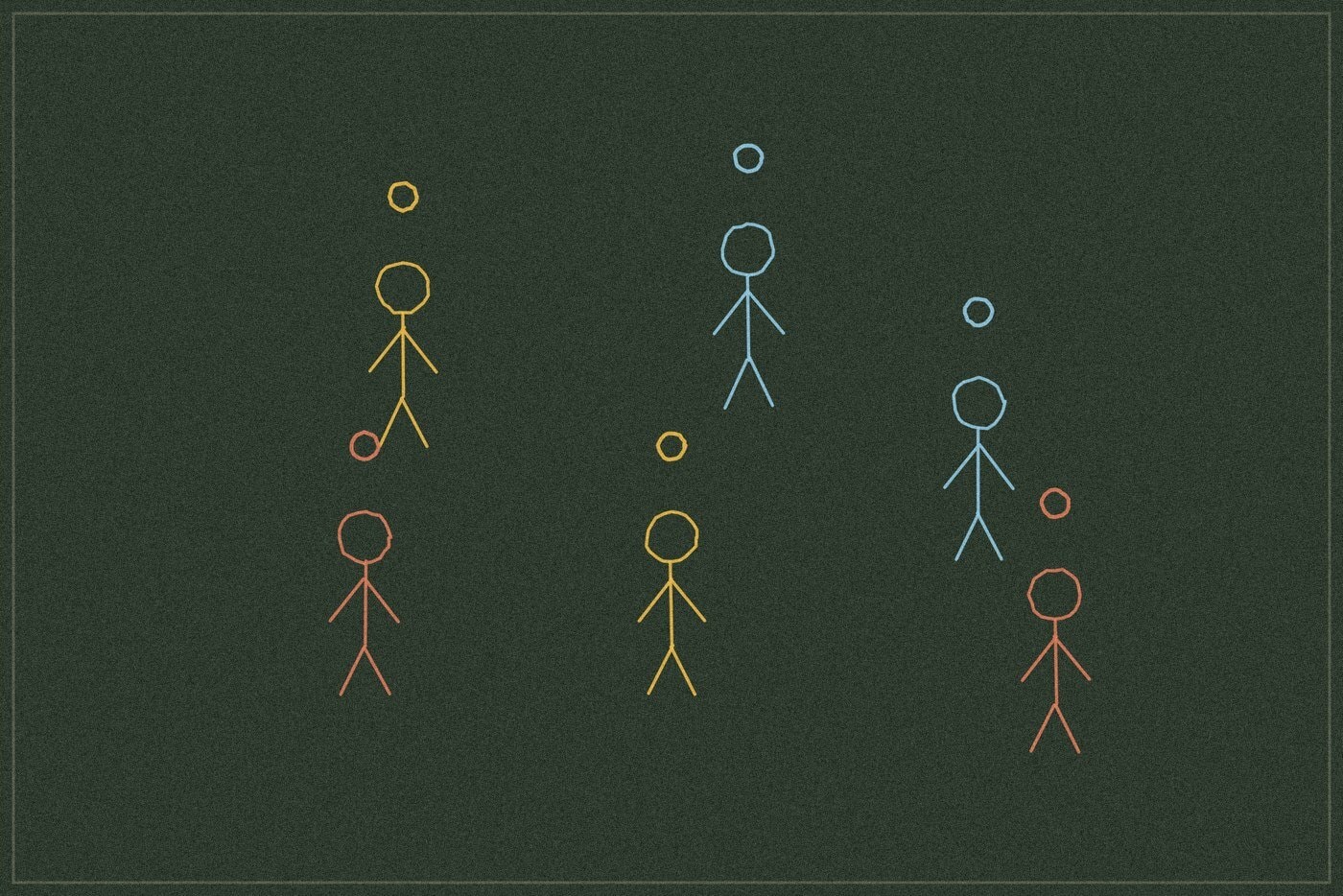
Ask everyone to stand in a circle with their eyes closed. While eyes are closed, place one coloured dot on each person’s forehead, distributing the five colours roughly evenly around the group. For two people in the group, place two different coloured dots on their foreheads instead of one, so they genuinely do not belong clearly to any single colour group.
Tell everyone the two rules before they open their eyes: no talking, and do not touch or remove your own sticker. Then ask everyone to open their eyes.
Without speaking, each person needs to find the other people who share their colour, and group together. The two people with mixed colours will need to work out, without words, which group feels like the better fit, or whether they end up on their own.
Anyone who would rather not take part can become an observer instead, which is worth offering openly rather than only to whoever looks hesitant.
What happens, and why it matters
What tends to unfold is genuinely interesting to watch: children pointing, miming, physically guiding each other by the shoulder toward a group, a few moments of confusion, and almost always, a flicker of real empathy toward the two people who do not have an obvious group to belong to.
The conversation afterward
Once everyone has settled into groups, or given up trying, bring the group back together and ask:
- How did you find your group?
- How did you feel before you found where you belonged, and after?
- What was it like to be one of the two people with two colours? (Ask this directly of those two, if they are comfortable answering.)
A few minutes of quiet individual reflection, writing or simply thinking about the questions, tends to deepen what comes out of this, especially for children who find it easier to process feelings privately before sharing them with a group.
What this is actually about
Underneath the simple mechanics, this game is really about belonging, and what it feels like to not obviously fit anywhere, even briefly and even in a completely safe, low-stakes setting. The two children with mixed colours experience, in miniature, something that children who are genuinely different from their peers, new to a school, from a different background, living with a disability, often experience on an ongoing basis: the discomfort of not having an obvious group, and the particular kind of relief when someone else notices and makes room.
This is worth naming directly afterward, gently: “Some of you didn’t have an easy place to go today. Is that how it sometimes feels to be the new person somewhere, or different in some way from everyone else?” You do not need a long discussion. Planting the connection is usually enough.
A note on who to pick for the mixed colours
Choosing the two mixed-colour participants thoughtfully matters more than it might seem. Picking a child who is already confident and well-liked tends to produce a lighter, more playful version of the activity, useful for a first run with a group that does not know each other well yet, or for a younger age group. Deliberately exploring themes of genuine difference and exclusion with an already-vulnerable child is not the goal here, and this activity works far better as a gentle, universal lesson in empathy than as a pointed exercise aimed at any one child’s actual situation.
Adapting it
For a smaller family group, two or three colours work just as well as five. For children too young to sit quietly with closed eyes, a version using coloured wristbands handed out openly, rather than stickers placed while eyes are closed, keeps the spirit of the activity while removing the part that depends on patience and stillness.