By EdCaptain editorial desk · Published
A small bird hops under a hedge, and your child is already planning a bedroom nest. “We can’t just leave it!” For a child who cares about animals, walking away can feel like doing something wrong.
You can take that concern seriously without agreeing to a rescue. For children aged 6–12, the useful lesson is that helping starts with finding out what the animal needs. Sometimes that means giving it space. Sometimes it means an adult contacting a wildlife professional promptly. It does not mean a child picking it up.
Meet the feeling before explaining the bird
Begin with, “You’re worried about it. I’m glad you told me. Let’s stop here while I work out who can advise us.” Keep your voice ordinary rather than describing the bird as abandoned, dying or lonely. Those are conclusions you may not be able to draw.
If your child reaches forward, calmly bring them back beside you. Say, “Hands stay with us. We can care without touching.” Do not turn it into a test of bravery or tease them for being upset. Their concern is real even when their first solution would be unsafe.
Make the first response small and safe
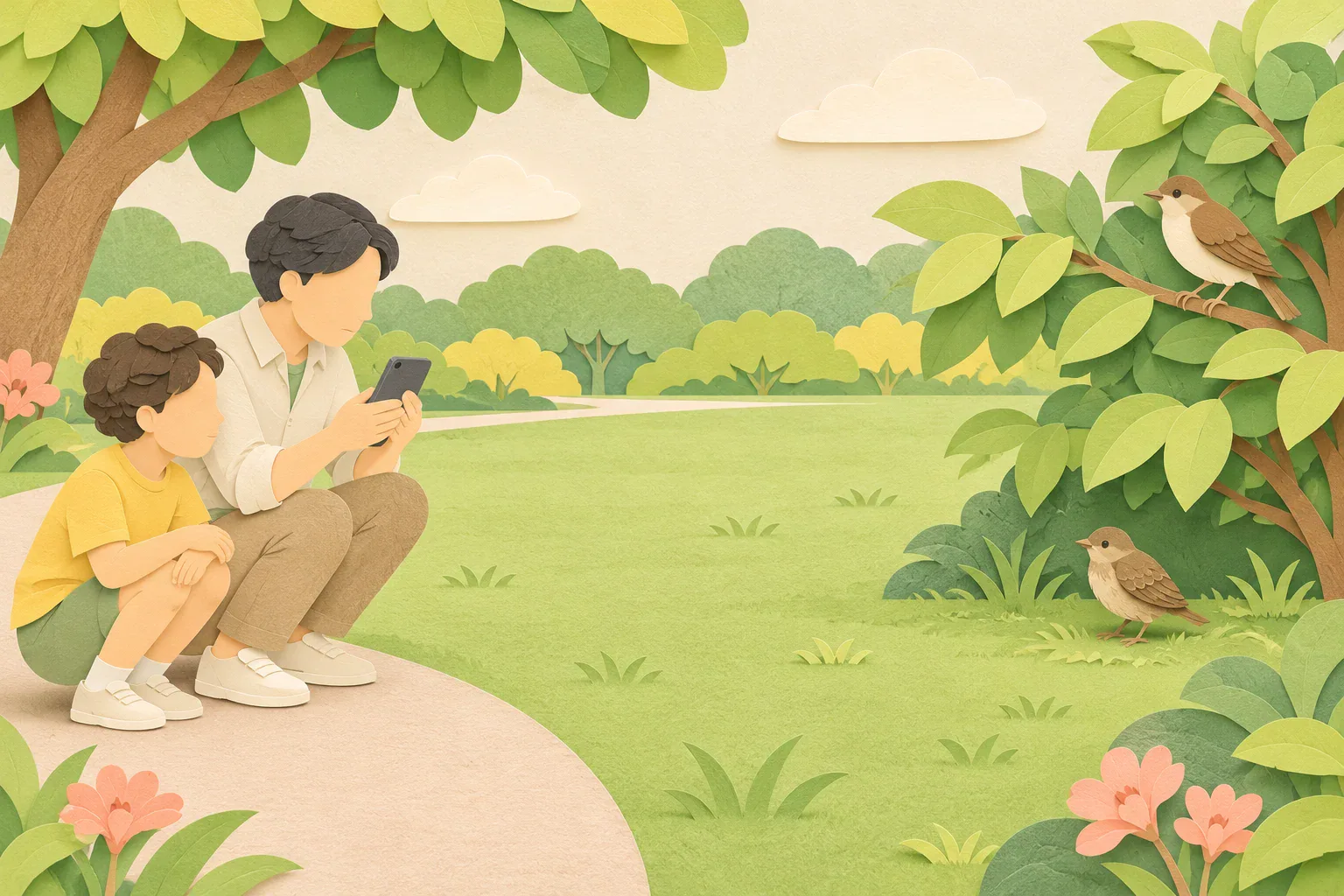
- Stop at a distance. Keep your child away from the bird, nearby nests and droppings. Do not crowd it for a closer look or photograph. Stay away from roads, water, steep edges and other hazards.
- Keep pets and other children back. An adult manages this. Your child should not approach an unfamiliar dog or chase a cat to protect the bird.
- Notice without testing. From where you are, note the location and anything already visible: feathers, hopping, bleeding or an obvious injury. Do not touch a wing, make it move or search bushes for its parents.
- Let an adult seek advice. Contact a local wildlife rescue or appropriately authorised rehabilitator, a vet who advises on wildlife, or site staff who can direct you. Describe what you saw and follow local instructions.
Do not put out bread, milk or other food, pour water into its beak, or take it home while deciding what to do. The US Fish & Wildlife Service’s sick or injured wildlife guidance advises against feeding wildlife and attempting capture or transport without professional guidance. Handling and rehabilitation are adult and specialist decisions, not a child’s job.
Why a bird on the ground may not need rescuing
The RSPCA’s baby-bird guidance explains that feathered fledglings can leave the nest before they fly well. Their parents may still be feeding them nearby. Bringing such a bird indoors can separate a family that was already caring for it.
A bird with no feathers or very few feathers is a different situation, as is a visibly injured bird. Seek advice promptly rather than assuming every grounded bird should be left alone. Different species also behave differently. Your child does not need to identify the species or decide whether it is healthy.
If there is immediate danger, tell the professional exactly what it is. Do not send your child into a road, up a tree or after the bird. Ask for instructions suitable for the species, location and current disease precautions. This guide is not a handling or home-rehabilitation plan.
Give your child a role that does not involve contact
For ages 6–9: Use a short sequence: “Stop, step back, tell an adult.” At home, rehearse with a drawing of a bird on paper. Place it across the room, practise stopping well away, and let your child choose the words they would use to tell you. No live animal is needed for practice.
For ages 10–12: Invite a factual report while you make the call: “It was beside the bench. It had feathers and was hopping.” Your child can help remember the location or write down instructions you receive. They should not independently arrange collection, share their location publicly or meet someone claiming to be a rescuer.
A child who uses pictures, signs or a communication device can practise a message such as “Bird needs adult help.” A child with limited mobility can describe what they can see from an accessible path; nobody needs to enter the grass or get closer to have a useful role.
Ask, “What did we do that gave the bird space?” rather than “Did we save it?” For everyday outings, our guide to enjoying wildlife without disturbing it offers other ways to look and remember.
If your child has already touched the bird
Do not scold or ask them to demonstrate what they did. Stop further contact and help them wash their hands with soap and water. The American Academy of Pediatrics recommends handwashing after bird or dropping exposure and teaches children not to touch or move sick or dead birds.
If the bird was sick or dead, contact your local health authority or a healthcare professional for exposure advice. Tell them what contact occurred. If your child becomes ill after suspected exposure, including eye redness, fever or respiratory symptoms, seek advice promptly and mention the bird contact. Follow any monitoring instructions; the CDC’s exposure guidance concerns birds known or suspected to be infected, not a diagnosis based on seeing a bird. Severe breathing difficulty needs emergency help.
When your child is still worried afterwards
Avoid promising that the bird will live or that a rescue centre will send updates. You can say, “We asked someone who knows about birds. We followed their advice. We may not find out what happens.” If it dies, use clear, gentle words and let your child be sad without making them responsible.
Later, they might draw the bird or learn about its habitat. Keep the focus on care, not a reward for being a hero. The same principle appears in offering help without taking over: a kind impulse becomes more useful when we pause to consider what help is actually needed.