By EdCaptain editorial desk · Published
You want to fill a couple of family plant pots, and the shop has bags labelled “organic”, “multi-purpose” and “peat-free”. They may look much the same. Choosing well starts before you lift a bag: what are you growing, and what will the mix be used for?
This is a buying and care guide for adult caregivers. It is not an invitation to use potting mix as sensory-play material or a recipe for making your own blend. You can make one manageable purchase without turning a small family garden into another complicated project.
First, name the job
Write down the plant and task. “Sowing seeds” is a different job from “moving an established plant into a container”. A mix intended to improve a garden bed is not automatically a suitable growing medium for a pot.
The Royal Horticultural Society’s compost guide distinguishes homemade garden compost, generally used to improve soil, from seed and potting composts designed as growing media. The word “compost” on its own can therefore be confusing.
Take the plant’s label or a photograph to the nursery. Ask: “Which peat-free mix suits this plant and this stage?” A seed-sowing product, a general potting mix and a specialist mix are not interchangeable simply because all three are peat-free. Acid-loving plants, for example, have particular requirements.
If you are still deciding what to grow, first consider your space, light, water access and local climate. Our container-garden planning guide covers those choices. Buying the bag first can leave you trying to find a project to use it up.
Look for an explicit peat-free statement
According to the RHS, “organic” and “environmentally friendly” do not necessarily mean peat-free. Read the actual product information rather than relying on the colour of the packaging, a leaf picture or a general green claim.
Peat-free is a useful specification, not a complete growing instruction. Photograph the exact product name, its intended uses and its care directions. If the wording is unclear, ask the supplier to confirm the ingredients and whether it contains peat. A similar-looking bag from the same brand may be a different formulation.
Why make this choice? The RHS explains that peatlands store carbon and provide wildlife habitat. Leaving peat in these habitats is the reason for choosing alternatives. That does not mean every peat-free product has an identical environmental footprint, or that one family must replace all its plants to prove it cares.
Buy for the pots you will actually use
Before shopping, list the containers you plan to fill and their approximate capacity. If you do not know how much mix they need, take their measurements to the retailer and ask for help estimating. Do not judge a bag only by its price; compare its stated volume and suitability too.
A large discounted bag is less helpful if you cannot carry or store it safely. Ask about smaller packs, delivery or help loading. If you share a purchase with another gardener, agree on the exact product first so neither person receives a mix unsuitable for their plants.
The RHS’s peat-free growing tips recommend fresh compost and aiming to use it during the growing season in which it was bought. Some bags show a production date. Ask about older stock rather than assuming an unopened bag keeps indefinitely.
Keep the directions with the remaining product and follow its storage instructions, beyond children’s reach. Save bagged potting mix for its intended container use; it need not be spread across a garden bed as a general environmental improvement. If you want to make ordinary garden compost, our family composting guide addresses that separate process.
Expect to learn the mix’s care needs
Do not carry an old watering routine over unchanged. The RHS notes that some peat-free mixes can look dry on top while remaining moist lower down. Check below the surface rather than watering solely because the top looks pale. For a small pot you can safely lift, its weight can also give a clue about moisture.
Follow the plant and product instructions for watering and feeding. There is no useful universal rule such as “water every peat-free pot twice a day”. Your plant, container, weather and mix all matter. More water or fertiliser is not an automatic answer to disappointing growth.
Keep a simple note for the first pot: product name, plant, location and what you changed. A photograph can help you ask a nursery for advice if the plant struggles. Change one thing thoughtfully rather than buying several additives at once. Poor growth is a reason to investigate, not proof that all peat-free mixes fail.
Plan safe handling before opening the bag
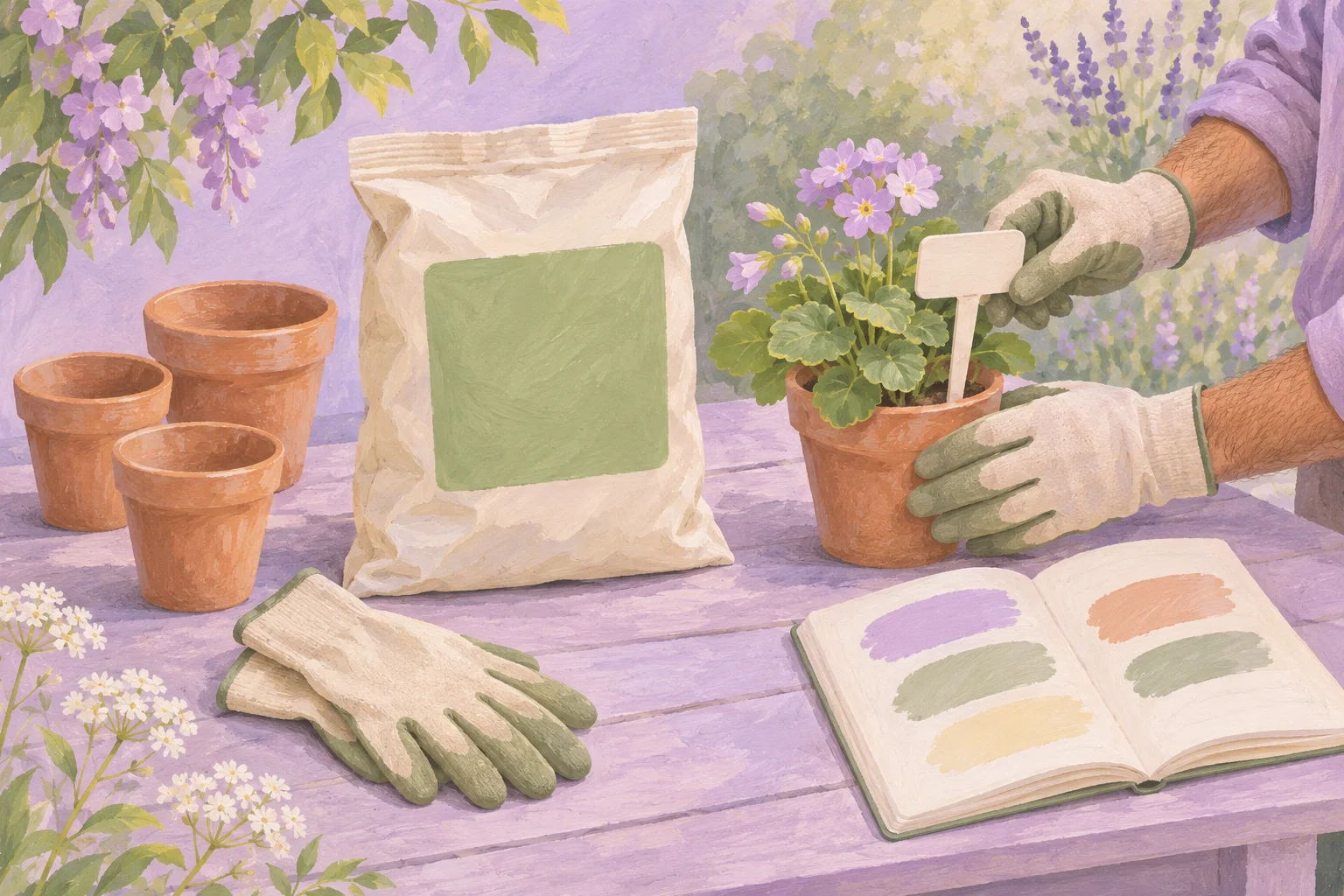
Peat-free does not mean risk-free to handle. NSW Health warns that potting-mix dust can contain bacteria that cause Legionnaires’ disease. It advises wearing a face mask and gardening gloves before opening and handling mix, dampening it to reduce dust, following bag warnings, and washing hands thoroughly with soap even after wearing gloves.
Keep children away while an adult opens and handles the mix. Do not let anyone taste it or play in it. Arrange the task so you can follow the safety directions without rushing; if you cannot manage the bag or precautions, ask for assistance rather than improvising.
If you develop ongoing or worsening illness after handling potting mix, seek medical advice and mention the exposure. Severe breathing difficulty needs urgent medical help. These precautions concern potting products generally, not just alternatives to peat.
Keep the family explanation small and honest
If your child asks why you are reading the bag, try: “We’re looking for something that suits this plant and leaves peat in its habitat. Then we need to learn how to care for the plant.” You do not need a climate lecture at the checkout.
Availability and budgets differ. If a suitable product is unavailable, ask a local nursery about realistic alternatives or postpone filling another pot. Keeping the project small is a valid decision. The useful outcome is a suitable mix you can use and care for safely, with enough information to make the next purchase easier.
Sources and further reading
- RHS: choosing a peat-free compost.
- RHS: peat-free advice for gardeners and the reasons for avoiding peat.
- RHS: caring for plants in peat-free mixes.
- NSW Health: safer handling of potting mix and compost.
Read our editorial policy.