Composting can turn peels and dry leaves into something useful, but it is not simply a bucket of leftovers. A workable home system needs the right materials, air, moisture and adult oversight. Children can help with observation and sorting while adults manage tools, pests, temperature and local rules.
Choose a system that fits your home
A backyard pile or enclosed bin suits some families. Others may use worm composting or a municipal collection service. If you have no outdoor space, do not improvise a damp indoor pile; find out what a local service accepts. Check tenancy, community and public-health rules before placing a bin.
Put an outdoor system on well-drained ground where an adult can reach it in all weather. A secure lid and small openings help deter animals. Keep it away from play equipment and make clear that children visit only with an adult.
Teach greens and browns
EPA guidance describes nitrogen-rich ‘greens’ such as fruit and vegetable scraps and coffee grounds, and carbon-rich ‘browns’ such as dry leaves, untreated twigs and shredded uncoated cardboard. A useful home pattern is two to three volumes of browns for one volume of greens, with scraps covered by a layer of dry material.
For a child, use two containers during supervised sorting. Ask, ‘Is this a fruit or vegetable scrap, or a dry brown?’ Adults make the final decision. Produce stickers, plastic, glossy paper, pet waste, treated wood and cat litter do not belong in a backyard pile. EPA also advises against meat, fish, bones, dairy, fats and grease in typical backyard systems because they can attract animals and may not break down safely.
Give children safe jobs
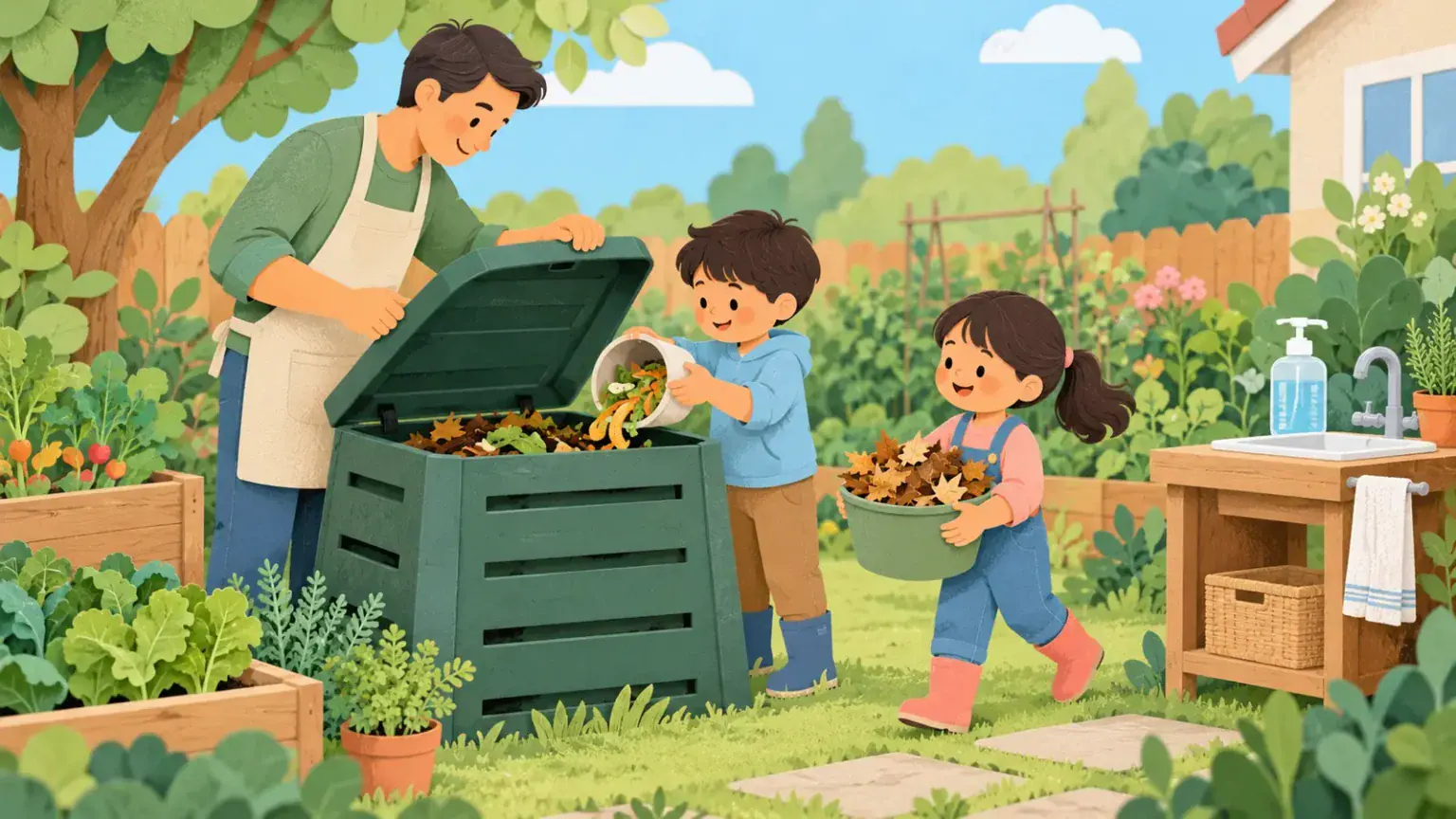
- Preschoolers can carry a small bowl of approved scraps with an adult.
- School-age children can add dry leaves, notice whether the pile smells earthy or unpleasant, and record changes.
- Older children can help measure approximate proportions or check local collection rules.
Adults should use garden forks, cut tough materials, turn the pile and handle anything mouldy or unfamiliar. Everyone should wash hands with soap and water after handling compost materials. Cover cuts, use gloves when appropriate and keep hands away from faces while working.
Troubleshoot calmly
A strong rotten smell often suggests too much moisture or too little air. Add browns and have an adult turn the pile. A dry, inactive pile may need a little water and mixing. Exposed scraps attract pests, so bury or cover them. If rodents appear, stop involving children and correct the enclosure and materials before continuing. Do not use pesticides around the pile without following local professional guidance and the product label.
Finished compost should look dark, loose and crumbly and smell like soil, with recognizable food scraps gone. Time varies with conditions. Do not promise children that it will be ready by a particular date.
Keep the project emotionally light
Children will occasionally put a peel in the wrong place. Correct the system, not the child: ‘That goes in the other bin; I’ll move it.’ Adults still decide what food is bought and served. Composting should never become a reason to pressure a child to eat. Pair this project with our guide to cutting food waste without a clean-plate rule. If water use is the next family project, try a low-pressure water audit.
Use finished compost carefully
Adults decide where finished compost is suitable. Follow local advice before using it around edible crops, and do not use unfinished material where children play. Wear gloves when handling it, wash produce grown in amended soil and store tools safely. If the pile has contained prohibited material, animal waste, chemicals or diseased plants, seek local expert advice rather than spreading it. Children can scoop finished compost with supervision, but the adult checks that the material is mature and the destination is appropriate.