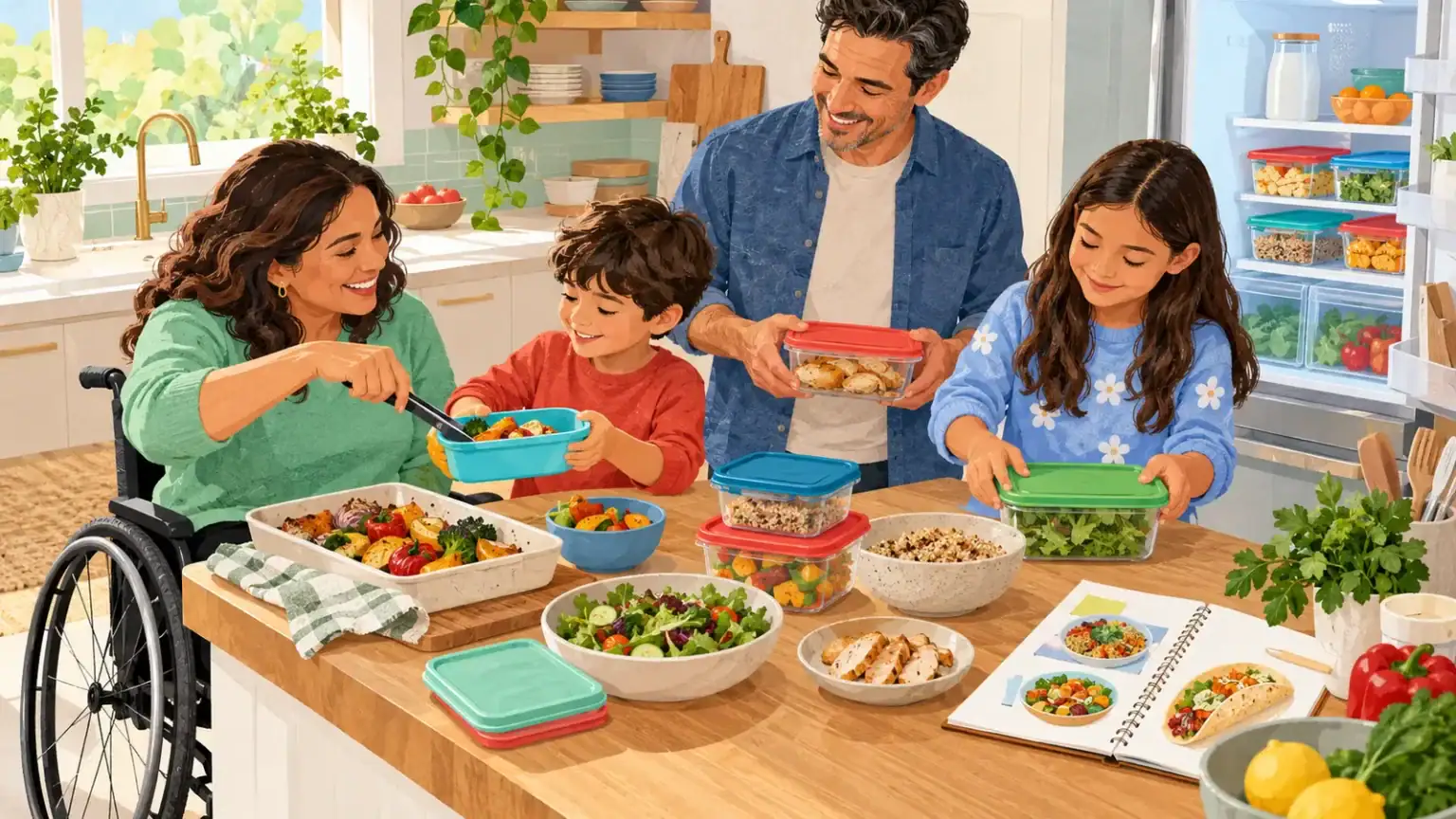
Food waste matters, but asking a child to eat past fullness does not teach sustainability. The useful work happens before food reaches the plate and after the meal: planning realistic portions, storing food safely and learning which leftovers the family will actually use.
Keep two messages separate
Tell children, “You can listen to your body, and our family can learn to waste less.” Avoid “Think of the planet and finish everything.” A child should not be shamed for hunger changing from day to day or for needing time with unfamiliar foods.
Adults decide what and when food is offered; children need room to decide whether and how much to eat from what is available. Waste reduction should change purchasing and preparation, not override body cues.
Run a three-day observation
Use a bowl or note—not a public scoreboard—to see what is repeatedly discarded. Separate unavoidable scraps such as peels from edible food. Ask neutral questions: Were portions too large? Did plans change? Was food forgotten in the fridge? Did nobody like this recipe?
Do not name the person who left each item. The goal is to redesign the system, not identify a family “waster.”
Plan from what you already have
- Check the fridge, freezer and pantry before making a list.
- Choose one or two meals that use ingredients needing attention.
- Buy a smaller amount of foods often discarded.
- Keep flexible staples for changed schedules.
- Let children choose one “encore meal” that turns safe leftovers into soup, wraps or another familiar dish.
The US Environmental Protection Agency recommends involving children in planning, shopping, cooking, labeling leftovers and age-appropriate food-waste activities. Match the job to the child rather than making a young child responsible for the household.
Serve small first portions
More can remain available. Use a serving bowl where practical so a child can ask for another spoonful. For packed lunches, notice what returns and adjust with the child and school constraints. Do not remove needed food to achieve an impressive empty container.
Create a visible use-first place
Put foods needing attention on one fridge shelf or in a clear container. Label leftovers with contents and date. Follow local food-safety advice for cooling, refrigeration, reheating and discarding; smell and appearance alone cannot confirm food is safe.
Older children can rotate as reminder person, but adults remain responsible for safety. A reminder is “The soup needs using today,” not policing what everyone eats.
Make the next meal easy
Freeze appropriate portions before everyone is tired of them. Store components separately when that increases reuse. Keep a short list of reliable transformations on the fridge. If a family never eats a particular leftover, cook less next time instead of repeatedly saving and discarding it.
Connect this work to family meals without pressure. For a hands-on activity, My Plastic Parcel helps children notice packaging without collecting unsafe rubbish.
Compost only after prevention
Composting can return suitable scraps to soil, but it does not make unnecessary purchasing harmless. Prevent edible waste first. Learn what your local system accepts and keep meat, dairy, oils or compostable packaging out unless explicitly allowed. Supervise tools and handwashing.
Choose one change, then review
Try a smaller produce shop, a weekly leftovers night or a use-first shelf for two weeks. Ask what saved time or money and what became annoying. Discuss the experiment in a short family meeting.
Success is not a bin with zero scraps or a child who always clears a plate. It is a family that buys more realistically, stores food safely and uses more of what it chooses—while protecting a calm relationship with eating.