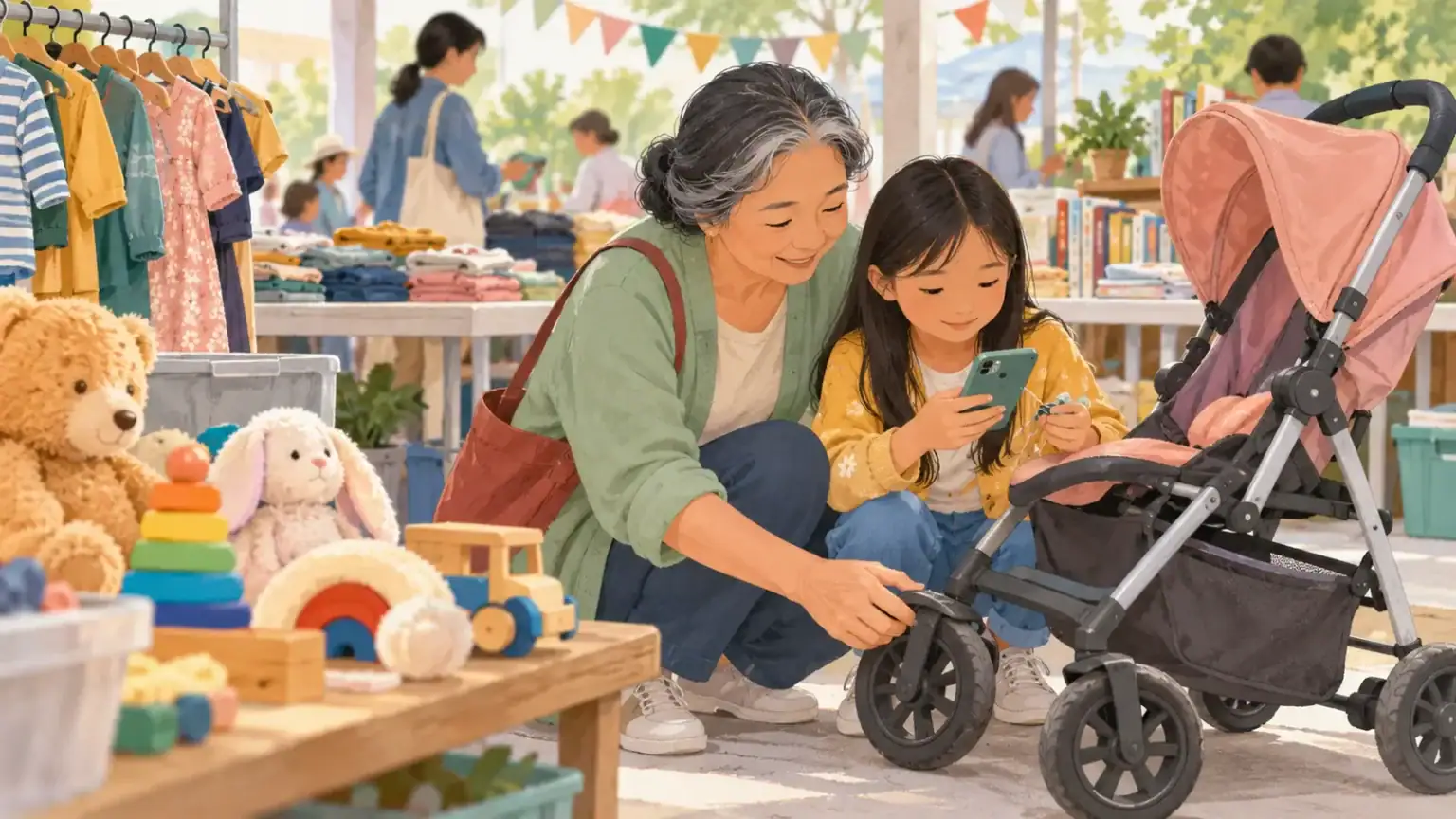
Secondhand clothes, books and toys can stretch a budget and keep useful items in circulation. But “gently used” is not a safety standard. A recalled product can look perfect, and missing hardware can turn an ordinary item into a hazard. Build the safety check into the bargain.
Identify the exact product
Find the manufacturer, model, date code and serial number where available. Ask the seller for a clear photo of the label before travelling. Search the recall database of your national product-safety authority; in the United States, that is the Consumer Product Safety Commission. A vague listing such as “popular baby seat” is not enough for a high-risk item.
If the item was recalled, confirm the official remedy has been completed. Do not rely on a seller saying it “never caused a problem.”
Ask about history
- Was it involved in a crash, flood, fire or serious fall?
- Has it been modified or repaired with non-original parts?
- Are the instructions, restraints and required hardware present?
- Why is it being sold?
- Can you inspect it assembled and operating?
For car seats and some protective equipment, hidden damage and expiration rules make history especially important. Follow the manufacturer and local road-safety authority; if reliable history is unavailable, choose another item.
Inspect before money changes hands
Check for cracks, rust, sharp edges, loose batteries, frayed cords, mould, peeling finish, unstable legs, damaged straps and gaps that could trap a head or finger. Test every brake, latch, wheel and adjustment. Count parts against the manual. Stop if a seller rushes you or refuses a basic check.
The CPSC warns that broken or wobbly nursery furniture and durable infant products with missing parts should not be resold or reused. Cribs and bassinets deserve particular caution.
Match the item to the child now
Check age, size, weight and developmental guidance. A product that suited the seller’s child may not suit yours. Consider disability, seizure risk, mouthing, climbing, sensory needs and whether siblings can access small parts. “Educational” does not guarantee appropriate.
Know which categories need extra caution
Be especially careful with sleep products, car seats, helmets, high chairs, gates, strollers, carriers, electrical products, magnets, button batteries and water-safety equipment. Follow current official standards rather than memories of what was common years ago. Do not improvise missing straps, mattress parts or fasteners.
For the wider home, childproofing a grandparent’s home helps spot risks after an item arrives.
Clean without damaging safety
Use the manufacturer’s instructions. Harsh chemicals, soaking or machine washing can weaken straps, remove treatments or damage labels. Discard items contaminated by mould, pests, bodily fluids or unknown chemicals when they cannot be safely cleaned.
Involve children without handing over the decision
Older children can check a model number, test whether puzzle pieces are present or examine clothing seams. Adults make the final safety call. Explain that walking away is not wasteful when an item is unsafe; preventing injury comes before reuse.
For ordinary play materials, compare the inspected item with a simple home play box; sometimes a safe cardboard box, paper and tape meet the need better than a complicated used toy.
Pass items on responsibly
Repeat the recall check before selling or donating. Include the manual and all parts, describe defects honestly and destroy recalled items when the authority instructs. Do not leave an unsafe product outside where another family may take it.
Use a pause rule
A bargain can create pressure to decide immediately. Agree that high-risk products require identification, recall search and full inspection before purchase. If an essential answer is missing, pause or walk away.
Secondhand parenting does not need to mean second-best. The sustainable choice is the product that can be identified, checked, cleaned and used safely—not simply the item that avoids the bin today.