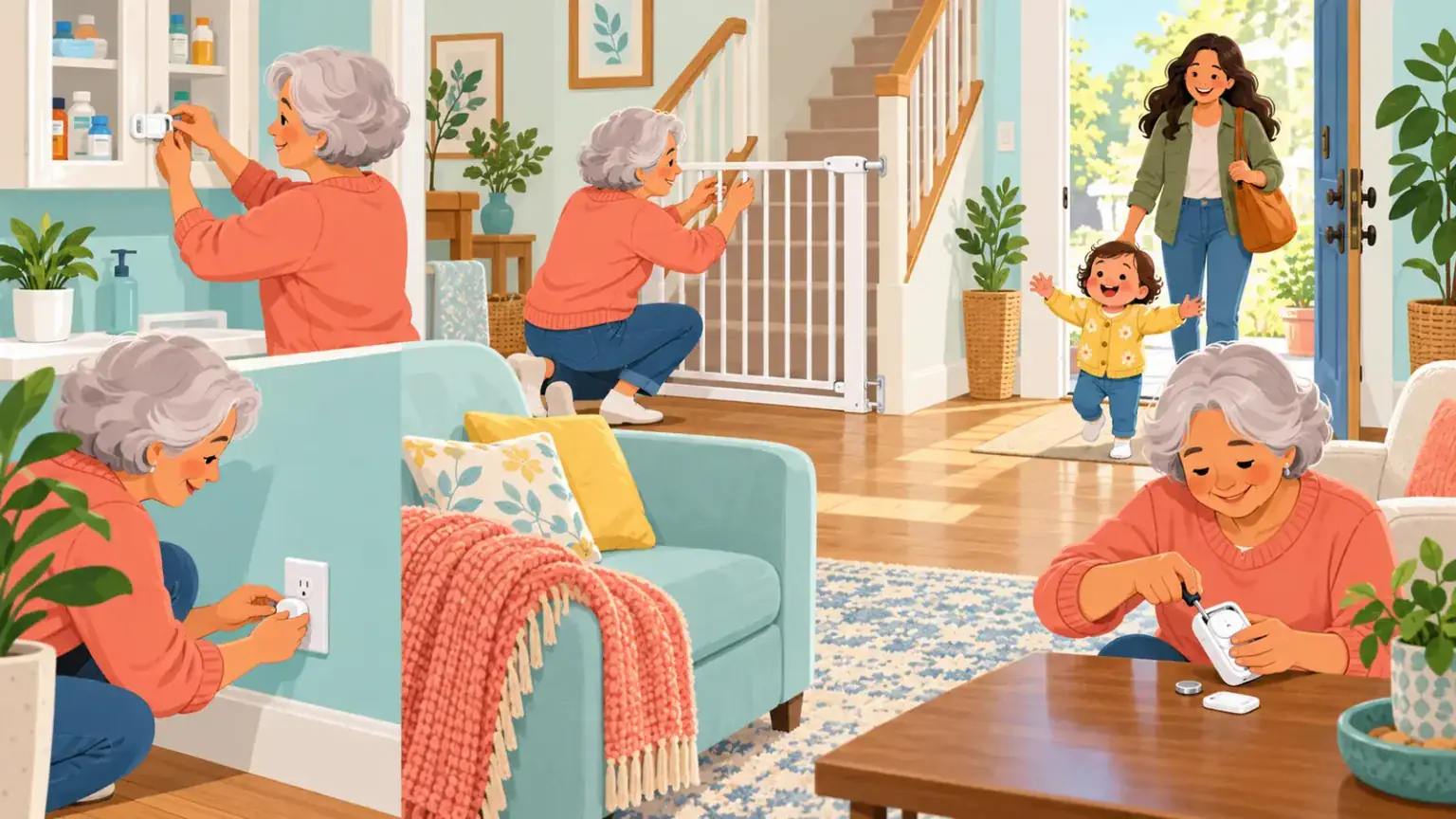
A home that is comfortable for adults can contain hazards at a toddler’s eye level: a handbag with tablets, a button battery in a remote, a hot drink near the edge or stairs without a gate. You do not need to rebuild the house for an occasional visit. You do need a deliberate walk-through before the child arrives and active supervision while they are there.
Begin at floor level
Get down to the height of a crawling child and scan each room. Look for cords, coins, magnets, batteries, plastic bags, pet food, unstable furniture, sharp objects and anything small enough to enter the mouth. Move hazards up and lock them away; “out of sight” is not enough once a child can climb.
Ask the parent what the child can do now. A baby who rolled last month may be pulling to stand today. Childproof for the next skill, not only the last one you saw.
Lock medicines, chemicals and dangerous objects
Keep all medicines, vitamins, alcohol, cannabis products, cleaning liquids, laundry pods, pesticides and toiletries in locked storage. Child-resistant packaging is not childproof. Handbags and visitor luggage may also contain medication, so give them a high, secure place.
Store firearms unloaded and locked, with ammunition locked separately, following local law and expert safety guidance. Secure knives, tools and matches. Keep the local poison information number and emergency contacts where every adult can find them.
Prepare stairs, windows and furniture
- Use securely installed gates at stairs; pressure gates are not suitable at every location.
- Anchor heavy furniture and televisions.
- Use window guards or stops appropriate to the window; insect screens do not prevent falls.
- Cover unused outlets and manage blind cords.
- Place breakable objects and hot drinks well back from edges.
Choose products that meet current local safety standards and follow installation instructions. Old equipment may not be safe simply because it worked years ago.
Make sleep current and simple
Ask parents to bring or approve a safe sleep space that meets current guidance. For an infant, use a firm, flat sleep surface with no pillows, loose blankets, bumpers or soft toys, and place the baby on their back unless a clinician has given different individual advice. Never improvise with a sofa, recliner or adult bed.
Grandparents can also support parents by understanding how care guidance changes. Share Newborn Night Care Without Keeping Score includes practical ways adults can coordinate tired-night routines.
Control water, heat and pets
Stay within arm’s reach around baths, pools, buckets, ponds and other water. Empty containers after use and isolate pools with appropriate barriers. Set hot drinks down before holding a child, turn pan handles inward and keep children away from heaters and fireplaces.
Supervise all contact with pets, even familiar ones. Give the animal a child-free retreat and separate them during feeding or when either seems stressed.
Check transport and the visit plan
Use the correct car seat for the child, vehicle and local rules. Have a trained person check installation if available. Never use a seat with an unknown crash history or missing parts. Confirm who may collect the child and keep emergency contacts, allergy information and any care instructions accessible.
For older children who can participate, practise a simple family plan using Build a Family Emergency Communication Plan Children Can Actually Use.
Supervision is still the main protection
Gates and locks reduce risk but do not replace an attentive adult. If you are cooking, taking medicine or answering the door, know exactly who is watching the child. Say the handoff aloud: “You have her now?” and wait for a clear yes.
Finish with a five-minute reset before every visit: medicines locked, floor clear, batteries secured, water emptied, sleep space checked and car seat ready. A prepared home lets everyone spend less time saying “don’t touch” and more time enjoying the visit.