Children notice patterns in who is praised, invited, photographed and forgiven. A grandparent may love every grandchild deeply and still develop an easier relationship with one child. Temperament, distance, age, disability, shared interests and family conflict all shape contact. Fairness begins by noticing those forces rather than insisting that favouritism could never happen.
Look for patterns, not identical gifts
Fair does not mean every child receives the same object or the same number of minutes on every visit. A toddler and teenager need different kinds of attention. The important question is whether each child has reliable access to warmth, curiosity and belonging.
Review recent months: Who gets one-to-one invitations? Whose events are remembered? Who is teased, corrected or compared most? Are gifts consistently more expensive for one household? Does the grandparent know each child’s current interests, or only the easiest child’s?
Stop comparison language
“Why can’t you sit like your cousin?” and “You’re the clever one” assign family roles that children carry for years. Even a flattering label can become pressure. Describe the individual child instead: “You worked patiently on that,” or “You found a way to include your brother.”
Do not compare bodies, grades, sociability, athletic ability, disability, eating or affection. A child who does not hug is not less loving. Offer choices: wave, high-five, smile or verbal greeting.
Build a separate relationship with each child
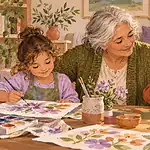
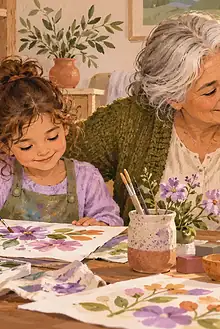
Learn one interest and one preferred way of connecting for every grandchild. One may like baking, another drawing, another a walk where conversation is optional. A child with communication or mobility differences may need an adapted activity, not exclusion.
Keep a simple calendar for birthdays, school events and planned check-ins. This is not artificial; it is a memory support. For a child far away, use the low-pressure rituals in building long-distance grandparent connection.
Parents should raise concerns with examples
Talk privately and avoid declaring “You have a favourite.” Try: “Lina has noticed that Sam is invited overnight and she is not. Can we talk about what makes those visits difficult and find a way she can have time with you?” Specific observations make room for explanation and change.
The University of Michigan C.S. Mott Children’s Hospital found that unequal treatment was among the disagreements parents reported having with grandparents. The poll describes US parents’ experiences in 2020; it does not prove how common the issue is everywhere. It does show that the concern is recognizable and worth addressing.
Consider the barrier behind unequal contact
A grandparent may feel unsure caring for a child with allergies, complex health needs or challenging behaviour. Solve the practical barrier where possible. Provide training, written information or shorter supported visits. The grandparent care plan can make responsibilities clearer.
Sometimes unequal contact follows adult conflict between the grandparent and one parent. Do not make a child pay for that relationship. Keep necessary adult boundaries while finding safe, neutral ways to include the child.
Make gifts and celebrations transparent
Agree on a budget or type of gift when differences could cause hurt. Experiences can be adapted without being identical. If one child receives help for a specific need, explain simply without disclosing private details: “Grandma is helping with something that costs extra. Each person gets help with different things.”
Avoid public rankings, “best grandchild” jokes and social media posts that repeatedly feature one child. Ask permission before sharing any child’s image or story.
Repair directly
If a child has been hurt, do not argue with their perception. A grandparent can say: “I spent much more time with your cousin and I see how that felt. You did not cause it. I want to make our time more dependable.” Then follow through consistently.
Parents should not force a child to accept an apology or instant closeness. Trust returns through behaviour. If favouritism remains severe or includes cruelty, humiliation or unsafe exclusion, reduce exposure and consider family counselling with a qualified professional.
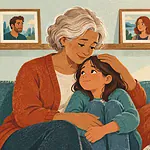
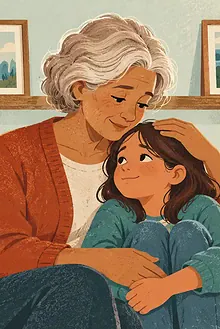
Children do not need grandparents to divide affection with mathematical precision. They need to know that no family label makes them less worthy of attention, respect and protection.