An emergency plan should reduce confusion, not give children a list of dangers to carry alone. The most useful family version is short, local and practised: who will collect each child, where people will meet, and how everyone will reconnect if phones or transport do not work normally.
Start with the emergencies that fit your area
Adults first check local authority, school and building guidance for the hazards that actually matter where you live. Flooding, wildfire, severe weather, earthquakes, civil disruption and building fires require different official instructions. Do not ask children to research frightening scenarios or improvise a rescue plan.
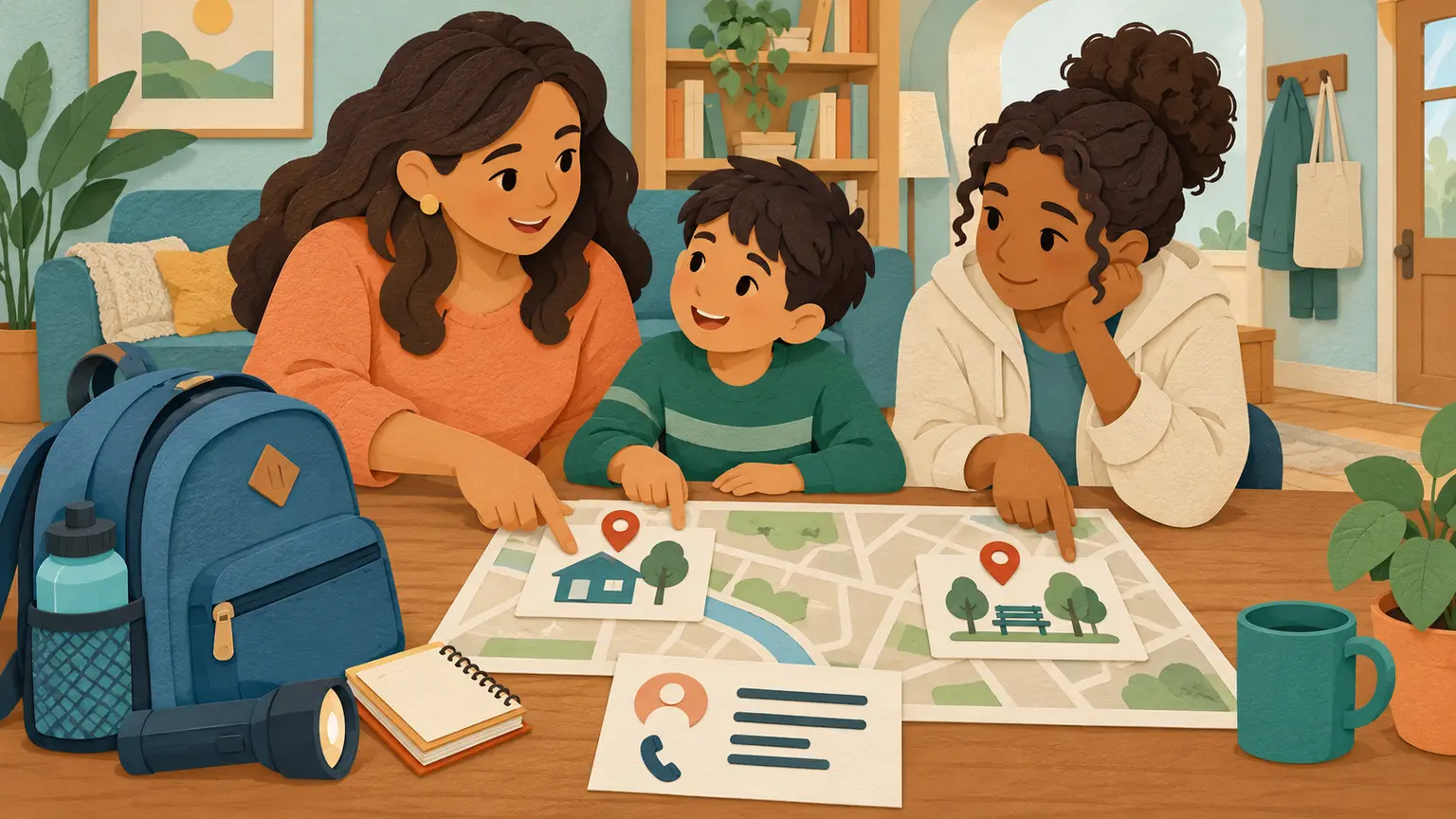
Make one communication card
- Child’s name and two caregiver numbers
- One trusted contact outside the immediate area
- School or childcare contact
- A nearby meeting point and a second meeting point
- Important communication or medical needs stated briefly
Keep private information off public photos and social media. A paper copy can go in a school bag if local safeguarding rules allow it; adults keep fuller details securely.
Give every person a simple role
A child’s role might be: stay with the responsible adult, go only to the agreed place, and use the contact card. Adults handle transport, official alerts, medication, younger children and decisions about evacuation. A child should never be sent back into danger to collect objects or find another person.
Practise without creating fear
- Explain that practice helps the family remember, just as practising a route or school routine does.
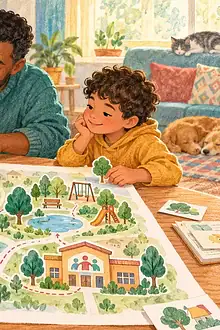
- Walk to the nearby meeting point during an ordinary day.
- Ask the child to point to the out-of-area contact.
- Role-play a phone network being busy: send a short text, then wait.
- End by returning to normal activity and reassurance.
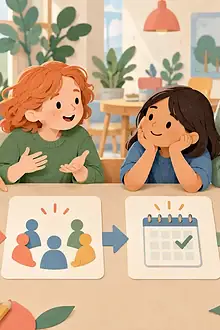
For a preschooler, use pictures of the trusted adult and meeting place. School-age children can read the card and rehearse one sentence: “I am with my teacher at the agreed place.” Teens can help check transport alternatives and official alert channels, but adults keep final responsibility.
Plan for access, not an imaginary average family
Include mobility aids, communication devices, sensory needs, medicines, service animals and accessible transport. Ask schools and care settings about their reunification process. If a child moves between households, both homes need compatible contact information rather than competing plans.
Know what the plan cannot do
A family card does not replace instructions from emergency services. Meeting points may become unsafe, networks may fail and routes may close. Teach the principle: follow the responsible adult and verified local instructions first; use the family plan when it remains safe.
Review twice a year
Check phone numbers, schools, caregivers, meeting places and medication needs. Practise after moving home or changing school. Notice whether the child can explain the plan without memorising every detail. If a drill causes persistent distress, slow down, use less detail and seek advice from the child’s school or clinician.
Continue the learning with EdCaptain guides on routing an issue to the right public service, running an inclusive community meeting, and writing a respectful civic request.
Rehearse two communication failures
First pretend that a child cannot reach the usual caregiver. They use the card to contact the agreed backup and stay with the responsible adult. Then pretend the meeting point is unavailable. The adult announces the second location through the channel named in the plan. Keep the exercise slow and predictable; surprise drills can frighten children and disadvantage people with sensory, mobility or trauma-related needs.
Ask each family member what part was hard to remember. A plan that works only when read aloud by one adult is fragile. Use fewer steps, larger print, translated language, audio or symbols where needed. Store copies where they are useful without exposing private data.