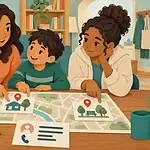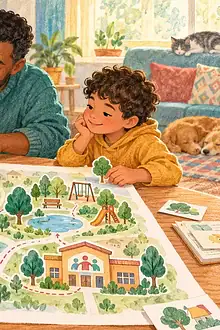
Public budgets are choices made within rules, responsibilities and limited resources. A family activity cannot reproduce a real municipal process, but it can make one civic truth visible: choosing one project often means delaying, reducing or redesigning another.
Set up a fictional neighbourhood
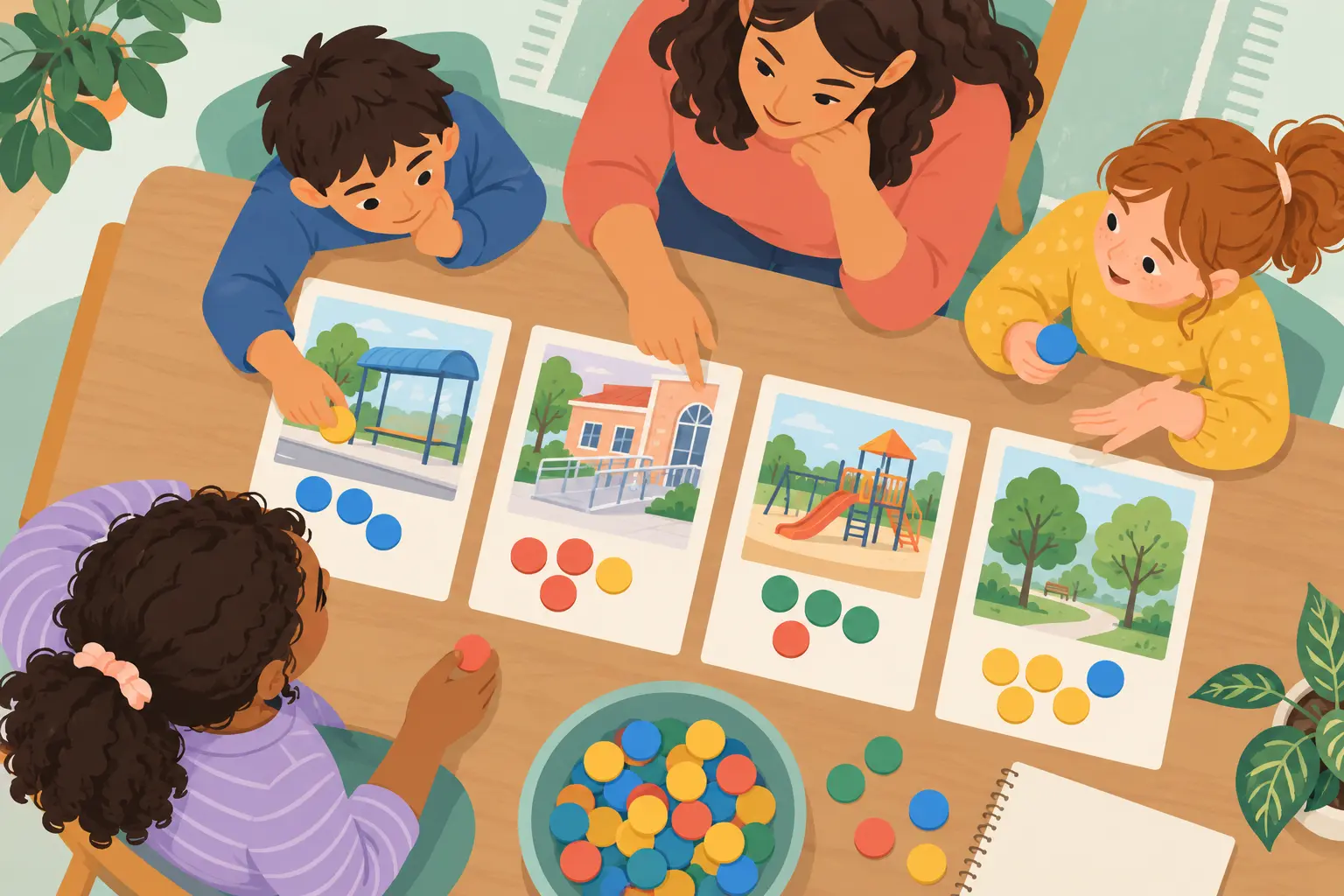
Give the group 20 tokens and five project cards. For example: repair a playground gate for 8, add shade at a bus stop for 6, improve a library ramp for 10, plant street trees for 5, or fund weekend youth activities for 9. State that the numbers are invented and that real budgets include staff, maintenance, procurement and legal duties.
Add people, not just projects
Each card should name who may benefit and who could still be excluded. A ramp may help wheelchair users, people with walkers and families with pushchairs. Shade may matter most to people waiting in heat. Ask children not to speak for a group they do not know. They can say, “We need to ask users,” rather than guessing.
Run the first budget
- Read every card and clarify unfamiliar terms.
- Let each person choose one priority and give a reason.
- Add the costs; the total should exceed 20 tokens.
- Look for combinations, smaller versions or projects that must not be delayed for safety.
- Record the final choice and the strongest reason against it.
A budget decision is stronger when it shows disagreement honestly. “Three people preferred the library ramp, but the group funded the gate and shade” is more accurate than “everyone agreed.”
Change one condition
Introduce a new fact: the gate is now an immediate safety hazard; a grant will cover half the ramp; tree maintenance costs were omitted; or the youth programme already has another funder. Let the group revise the budget. Changing a decision after new information is responsible, not cheating.
Make transparency part of the game
At the end, publish a one-page fictional budget: tokens available, projects considered, selection criteria, choices and what happens next. UNICEF guidance links understandable budget information and community consultation with stronger civic engagement. Children should see both the proposed allocation and later whether the promised work happened.
Adapt for age and ability
Younger children can use picture cards and counters. Older children can calculate percentages, recurring costs and a reserve. A child who does not want to speak can rank cards, draw an access concern or dictate a reason. Do not reward confident speakers with extra influence.
Debrief the power behind the tokens
Ask who set the menu of projects, who chose the costs, whose needs were missing and which decisions might be legally required rather than optional. Real public participation needs accurate information, responsible authorities and feedback. The activity is practice in reasoning, not a claim that children alone control a public budget.
Continue the learning with EdCaptain guides on routing an issue to the right public service, running an inclusive community meeting, and writing a respectful civic request.
Add maintenance and time
Run a second round where every project has a small yearly maintenance cost. A garden needs water, a ramp needs inspection and a programme needs staff. Children often discover that buying an object is not the same as sustaining a service. Let them reserve several tokens for upkeep rather than spending the full budget on launch day.
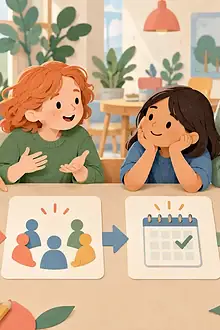
Then add a timeline. Which project can begin now, which needs consultation and which needs technical assessment? A slower project is not automatically less important. This round helps separate urgency, readiness and long-term value.
Finally, compare a universal project with a targeted one. A general park improvement may reach many people, while an accessible toilet may remove a severe barrier for fewer users. Counting beneficiaries alone does not measure fairness. Ask which rights, risks and exclusions the budget must consider alongside popularity.