By EdCaptain editorial desk · Published
A broken streetlight, overflowing bin, unsafe crossing and missing library book are all problems, but they do not belong to the same decision-maker. Civic literacy begins with a practical question: who has the authority and information to act?
Create fictional issue cards
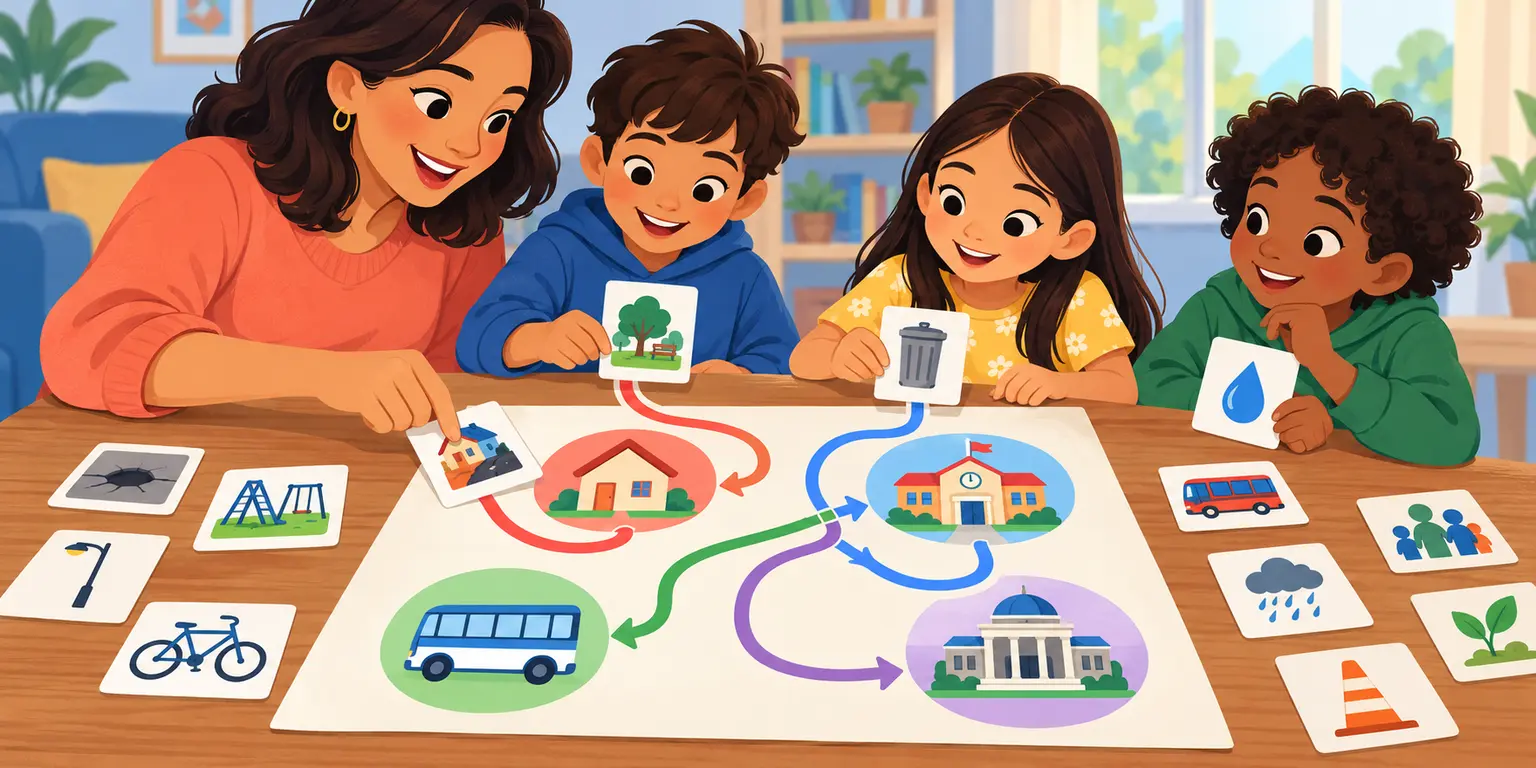
Write examples such as a playground gate that will not close, a school tap that leaks, a bus stop sign that is damaged, loud construction at night and a lost wallet. Include issues that belong to a household, school, business, transport provider and local authority. Do not send children to inspect danger.
Build a responsibility ladder
- Immediate safety: move away and tell a responsible adult or emergency service.
- Property or service owner: school, landlord, shop, utility or transport provider.
- Local public service: waste, roads, parks, water, public health or another verified office.
- Elected or oversight route: when a policy decision or unresolved pattern needs review.
- Not enough information: pause and find out who is responsible.
UNICEF’s Child Friendly Cities principles emphasise accountability, transparency, inclusion and respect for children’s views. The exact offices and powers differ across places.
Route one card
- Name the issue without exaggerating.
- Separate urgent danger from an ordinary service problem.
- Identify who owns or manages the place.
- Find the official contact route with an adult.
- List useful facts: location, date, what was observed and who may be affected.
A child should not collect names, confront workers or enter unsafe areas. Photos are optional and should not include identifiable people, private homes or security-sensitive details.
Compare plausible routes
Two offices may appear relevant. Check the official website, call a published number or ask at a public service desk. If redirected, record the correct route for next time. Being redirected is not failure; public systems are complex.
Adapt the activity
Younger children can match picture cards to home, school or community. Older children can research a service directory and write a one-sentence issue summary. Children who communicate differently can point to symbols or dictate to an adult.
Keep expectations realistic
Submitting a report does not guarantee the preferred outcome. Discuss limited resources, competing needs and the possibility of follow-up. Civic participation means making a clear, safe contribution and learning how decisions move.
Build the same habits through giving children a real voice in family decisions, guiding a group decision without taking over, and making a fair choice when needs compete.
Use a worked routing example
Imagine a public playground swing has a broken seat. It is not an emergency if the area is already safely closed, but it needs attention. The family identifies the park manager on an official page, records the park name and equipment location, and sends a short report through the published channel. If the equipment is open and could injure someone, the adult uses the urgent local safety route instead.
Now compare a leaking tap inside a school. The responsible route may begin with school administration, not the city water provider. The physical symptom looks similar, but ownership changes the route.
Notice the limits of each actor
- A service desk can record and route a report.
- Technical staff can inspect and recommend work.
- Managers may allocate schedules and resources.
- Elected bodies may set policy or budgets.
- Emergency services handle immediate danger, not routine maintenance.
Exact roles vary. Teach children to check rather than memorise a universal chart.
Make space for disagreement
People may disagree about priority, cost or the best fix. Ask what evidence would help and whose access may be affected. Avoid describing public workers as lazy when the family does not know the constraints.
Keep a small civic notebook
Record the issue, route, reference number, response and outcome. Do not include private data. Over time the child can see which reports were resolved, redirected or required another level. The notebook turns civic systems from an abstract idea into a sequence that can be observed and improved.