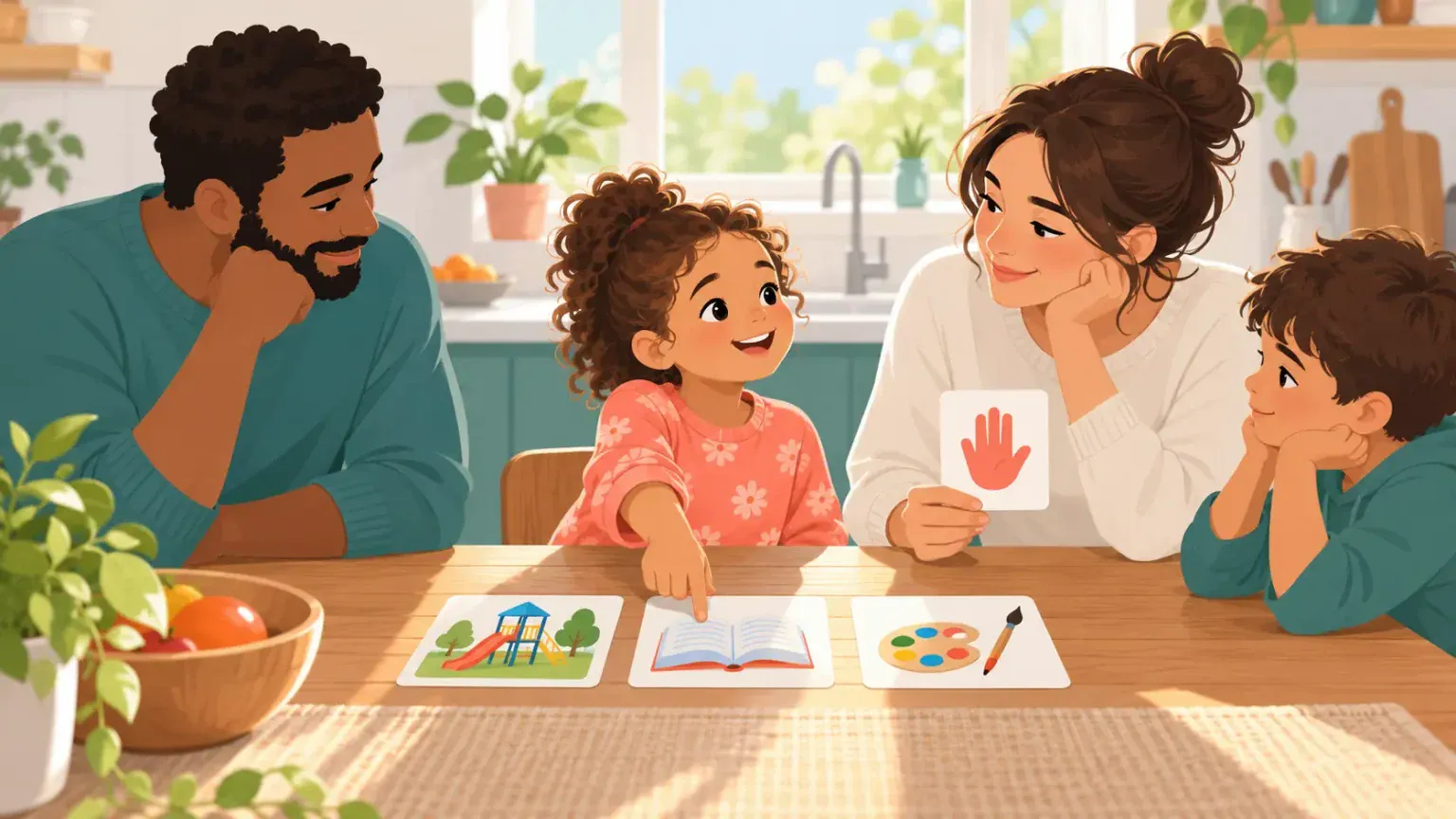
“Can I choose?” can be a surprisingly difficult question when the decision affects the whole household. A child may care deeply about where the family spends Saturday, whether they share a room or how a new routine works. Yet adults still carry responsibility for safety, money, time and everyone’s needs. The answer is not to hand over a decision you cannot genuinely give away. It is to offer a real voice, explain the boundary and show how that voice influenced the result.
That distinction matters. Asking for an opinion and then ignoring it teaches a child that consultation is theatre. Promising “you decide” and later reversing the choice creates a different kind of frustration. A clear process can protect trust even when your child’s preferred option is not the final one.
Start by naming who decides what
Before inviting ideas, sort the decision into three parts. Some parts belong to the adults: safety, legal duties, essential spending and commitments already made. Some parts are shared: timing, comfort, trade-offs and how the plan will work. Some parts may belong fully to the child: which book to bring, which acceptable activity to choose or how to arrange their own space.
Try: “We adults need to decide whether the trip fits our budget. Everyone can help choose between the two places we can afford.” This is more respectful than offering five possibilities when only two are realistic. It also builds on the same bounded-choice principle used in low-stakes decision practice.
Use a five-part family decision conversation
- State the question plainly. “We need a quieter homework routine. What would make it easier to start?” Avoid asking children to solve adult conflicts or carry information they should not have to manage.
- Explain the fixed limits. Name bedtime, cost, transport, health or other non-negotiables without a long defence. A limit can be kind and still be firm.
- Hear each affected person. Give younger children picture choices. Let an older child write a note, speak privately or take time before answering. Participation does not require confident public speaking.
- Reflect back what you heard. “You want more time with your friend, and your brother needs a calm ride home.” This is not agreement; it proves that you understood.
- Decide and explain the connection. Say what was chosen, why, and which suggestions shaped the plan. “We cannot stay until late, but your idea helped us move the visit to Sunday afternoon.”
When the child’s preference cannot win
Disappointment is not evidence that consultation failed. A child can be heard and still dislike the result. Resist trying to talk them out of that feeling. “You wanted the other option. I understand why this is disappointing. The final decision is mine, and I will help you with the change.”
If the decision has a repairable impact, build in a review date. “We will try this schedule for two weeks and check whether it is working.” Review does not mean reopening every limit each evening. It means adults remain accountable for noticing new information. The process in guiding a group decision without taking over can also help older children see how listening and authority can coexist.
Adjust the process to age and ability
For ages 3–5, offer two concrete, acceptable options and keep the explanation brief. For ages 6–9, ask for one benefit and one difficulty with each option. Children ages 10–12 can help list criteria such as cost, fairness and time. Teens can research options, propose a compromise and name what support they need. A child who communicates without speech can point, choose symbols, use a device or answer later. The goal is meaningful influence, not a particular communication style.
Do not make children vote on whether another child receives needed care, whether adults separate or other emotionally heavy adult decisions. They may share feelings and needs, but adults should carry the burden of the final choice.
Show that participation leaves a trace
Afterward, name one thing that came from your child’s input: “We packed a quiet activity because you told us the waiting was hard.” That simple follow-through demonstrates that speaking up can matter. Over time, invite children into decisions of increasing complexity while keeping the ownership honest. If a choice goes poorly, use a learning conversation such as responsibility after a poor choice, rather than using one mistake as a reason to remove their voice.
A child does not need the deciding vote in every family matter. They do need truthful information, a safe way to express a view and adults who can explain how the final decision was made.