“What will happen if you do that?” can sound like a warning with a correct answer already hidden inside it. Children may respond with “I don’t know,” guess what the adult wants or focus only on the immediate reward. Consequence preview works better as a concrete thinking tool: what is likely now, next and later, and who else might be affected?
- Use three time windows
- Ask for likelihood, not every imaginable disaster
- Include other people without demanding self-sacrifice
- Separate child-owned consequences from adult-owned safety
- Run a quick scenario practice
- After the choice, compare prediction with reality
- Keep the tool proportionate
- Sources and further reading
Use three time windows
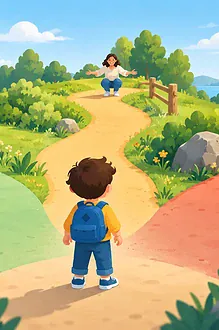
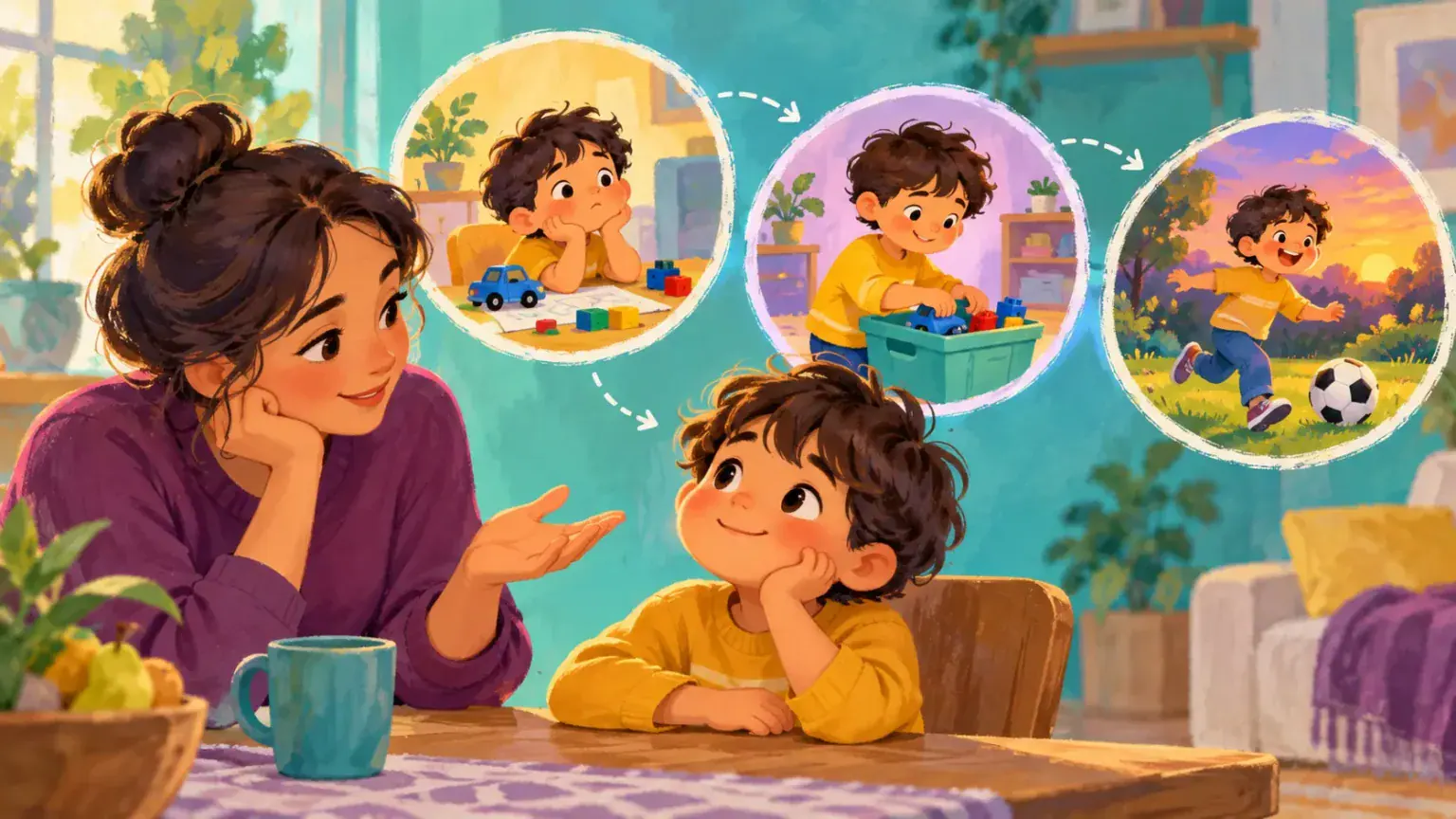
Draw three circles or point to three places on the table:
- Near: What is likely in the next few minutes?
- Next: What may happen later today or tomorrow?
- Later: Could this affect a goal, relationship, cost or opportunity further ahead?
For skipping preparation before sport, “near” might be more free time now, “next” might be missing equipment and “later” might be less trust with the team. Not every choice has a serious later effect. Saying “probably nothing important” is allowed; otherwise the exercise becomes a way to dramatize every decision.
Ask for likelihood, not every imaginable disaster
Children who worry easily can generate frightening possibilities. Narrow the question: “What is the most likely result? What is possible but unlikely? What could we do if it happened?” Use reliable information for health, travel or online safety. Do not make a child responsible for predicting adult behaviour they cannot control.
Older children can add confidence estimates—very likely, possible or unlikely—without pretending to know the future. The aim is a reasonable forecast, not certainty.
Include other people without demanding self-sacrifice
Ask, “Who else is affected, and how much?” Borrowing a sibling’s item without asking affects their access and trust. Choosing a different T-shirt usually does not require a family consultation. Children need to learn both consideration and the right to make personal choices.
When several interests genuinely conflict, use the process in making a fair choice between competing needs.
Separate child-owned consequences from adult-owned safety
Some low-risk natural consequences can teach: a forgotten nonessential item, using all a small agreed budget or choosing an activity that turns out less fun. Adults should not “let consequences happen” when the likely result is significant injury, abuse, exploitation, unsafe transport, a medical crisis or harm to another person. Those are adult-intervention situations, not learning experiments.
A useful family sentence is: “You can own the choice when the possible cost is safe and manageable. I step in when the possible cost is too large for you to carry.” The decide-or-ask safety ladder helps make that boundary predictable.
Run a quick scenario practice
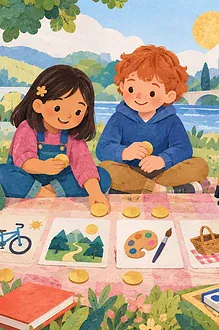
Choose ordinary situations: sending an annoyed message, agreeing to two activities at the same time, spending all available money, leaving a task until morning or sharing a friend’s photo. Let the child fill the three windows. Then ask, “Which outcome matters most to you?” and “Is there a version of the choice with a smaller downside?”
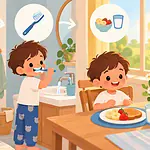
For ages 6–9, use pictures and one likely outcome in each window. Ages 10–12 can add another person’s view and a backup plan. Teens can examine probability, source reliability, opportunity cost and how consequences might spread online. Children with planning or language differences may benefit from a visual strip, fewer scenarios and extra processing time.
After the choice, compare prediction with reality
Review without scoring the child: “What happened that you expected? What surprised you?” A wrong prediction is useful information. If adults predicted badly, say so. This models intellectual honesty and keeps the exercise from becoming proof that adults are always right.
If the child ignored a likely consequence and someone was affected, move to facts, impact, repair and a future plan using the responsibility-after-a-poor-choice process. Avoid stacking unrelated punishments on top of the natural result.
Keep the tool proportionate
Consequence preview is not needed for every choice. Overuse can make a child anxious or dependent on adult analysis. Practise occasionally, then shorten it to “near, next, later” when needed. Over time, the questions should become the child’s own internal pause.