
By EdCaptain editorial desk · Published
“They only need me to feed the cat.” Your child sounds delighted: a neighbour has offered a small pet-sitting job. Before anyone promises a week of visits, find out what “only” includes. An animal still needs dependable care when a young person is ill, a door will not open or the owner cannot answer a message.
This guide is for families with children aged 10–18 who want to help someone they already know. It is a conversation before accepting, not an age-based permission slip for independent pet care. The caregiver must agree to the arrangement, assess the actual tasks and make sure a capable adult can take over.
Make the first answer a pause
Give your child a sentence that preserves their interest: “I’d like to help. I need to check the details with my parent before I can say yes.” A friendly request can still be too much for your family. Payment, a neighbour’s confidence or a child’s enthusiasm does not settle that question.
Ask privately whether your child actually wants the job. They may like the animal but dislike entering an empty home, managing a key or being asked to stay longer than expected. “Which part feels comfortable, and which part would you rather an adult handled?” is more useful than “You aren’t scared, are you?”
Arrange a walk-through before the owner leaves
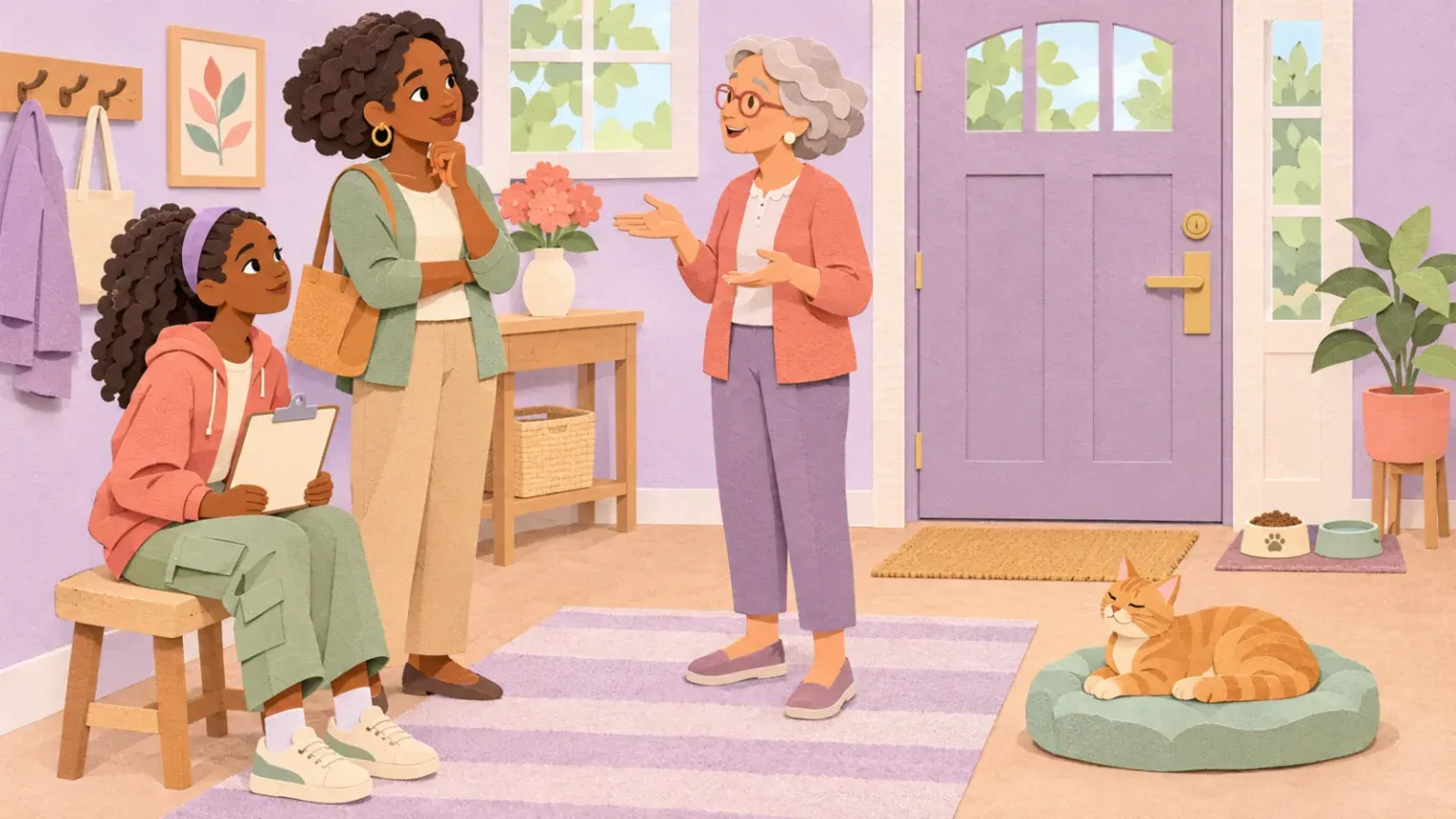
Visit together with the owner present. Watch the normal routine instead of relying on “You’ll work it out.” Ask about this particular animal, including any history of biting, scratching, escaping, guarding food or becoming distressed when people enter.
Have the owner demonstrate the task without making the child handle an anxious animal. Meeting a pet once is not a guarantee of safe care. For a dog, do not use the visit to test whether your child can restrain it. A job involving strength, specialist handling or behaviour your family cannot safely manage needs a different carer.
Keep a short written handover. PDSA’s holiday-care guidance recommends clear care instructions, adequate supplies and emergency contact arrangements. Your family’s note should settle:
- The exact dates, visit times and tasks, including who covers the final visit.
- The animal’s usual food, quantities, water, exercise and cleaning routine, demonstrated by the owner.
- Where supplies are kept and who will replace anything that runs out.
- Owner and backup contacts, the veterinary practice and out-of-hours number.
- What the adult should do if the owner is unreachable and veterinary help is needed, including transport, authorisation and payment arrangements.
If medication or a health condition is involved, the adults need an appropriate veterinary plan and a carer competent to follow it. Do not make a child responsible for guessing doses, deciding treatment or learning an unfamiliar procedure after the owner has gone.
Check the doorway, not just the food bowl
Home access is a separate decision. A caregiver should know the owner, see the setting, approve who will be present and agree whether the child will enter at all. Do not accept requests for secrecy, unexpected overnight stays, private transport or contact that bypasses the caregiver.
Practise the lock and any alarm with the owner there. Decide who holds the key and how it will be returned securely. Keep addresses, access codes and the owner’s absence private; a pet photograph online can reveal more than your child intends. Do not attach the house address to a key.
Plan the route and an adult check-in. If access fails, the child contacts their caregiver; they do not climb a fence, force a window or improvise with a spare key found outside. An unexpected person in the home is a reason to stop and contact the caregiver from a safe place.
Try the timetable against an ordinary hard day
Put every agreed visit beside school, travel, meals and existing commitments. Include the time to reach the home, complete the routine and return. Then ask, “What happens on the day you have a headache or your school event finishes late?”
Name the adult who will actually cover each gap. A person who might be available is not confirmed cover. If you cannot provide reliable support, say no before the owner travels. Our guide to an independence agreement with a teen can help make the boundaries explicit.
For ages 10–12, use an accompanied helper arrangement: the adult attends and owns the care while the child notices supplies or records completed steps. For ages 13–18, let the teen lead the questions, timetable and updates, with supervision matched to the animal, setting and individual needs. Neither age band establishes readiness to visit or handle an animal alone.
A young person who uses pictures, reminders, a communication aid or physical assistance can still take a meaningful role. Adapt the role rather than removing the safety checks. Recording an owner’s instructions requires their permission; a simple picture checklist may be enough.
Agree what stopping looks like
Do not expect the young person to push through fear or an unsafe task to prove reliability. If an animal threatens them, access becomes unsafe or something appears wrong, they should move to safety and contact the responsible adult. An escaped pet is not a reason to run into traffic or chase it into an unfamiliar place.
CDC’s dog-safety guidance advises against disturbing dogs that are eating or sleeping and against trying to break up a fight. If a bite or scratch happens, tell an adult immediately and wash the wound with soap and water. Seek prompt medical advice, particularly for a serious wound or uncertain rabies vaccination; uncontrolled bleeding needs emergency care. Do not wait for the holidaying owner to reply before getting necessary help.
Build hygiene into the handover too. CDC recommends handwashing after contact with animals, their food and supplies, avoiding kisses and keeping pet equipment away from kitchens. A pet looking well does not rule out germs. If allergies, pregnancy or a weakened immune system affect anyone involved, discuss suitable precautions with their healthcare professional and the animal’s vet before agreeing.
Give an answer the neighbour can act on
Offer a clear yes with agreed limits, a smaller offer or a courteous no. For example: “We can help on Saturday with Mum there, but we cannot cover the weekday visits. Please arrange another carer for those.” Confirm any payment and extra tasks in advance; your child does not have to agree to additions on the doorstep.
If the arrangement changes after acceptance, the adults must secure a replacement handover so the animal is not left without care. Afterward, ask your child, “What did we discover before saying yes that we would otherwise have missed?” That is the decision-making practice. For ongoing care within your own household, use our separate pet-care chart with adult backup.
Sources and further reading
- PDSA: planning holiday care and a clear animal-care handover
- CDC: healthy habits around animals
- CDC: preventing dog bites and responding to injuries
Read our editorial policy and review methodology.