A child may genuinely love an animal and still forget the water bowl, misread a pet’s signals or be unable to tell when something is wrong. That is why a useful pet-care chart does two things at once: it gives the child real ways to contribute, and it names the adult who remains responsible for the animal’s welfare.
The chart should never create a situation where a pet goes without food, water, a safe environment or needed care because a child forgot. Think of it as a teaching and coordination tool—not a transfer of adult responsibility.
List the work before assigning it
For three days, adults note what the pet actually needs. Include daily jobs, weekly jobs and adult-only decisions. The list might contain filling a water bowl, measuring food, brushing, cleaning a habitat, play, exercise, buying supplies, arranging health care and noticing changes in behaviour or appetite.
Then sort each item into three columns:
- Child can do: a familiar, low-risk step the child can complete reliably.
- Child and adult do together: a job needing supervision, lifting, a gate or door, or careful observation.
- Adult owns: health decisions, medicines, unfamiliar animals, risky equipment, supply checks and the final welfare check.
Match the work to the individual child rather than an age label alone. A preschooler might place a pre-measured scoop in a bowl while an adult controls the food container. An older child might complete a longer routine but still need an adult to confirm that the animal is safe and all doors or enclosures are secure.
Put the backup on the chart
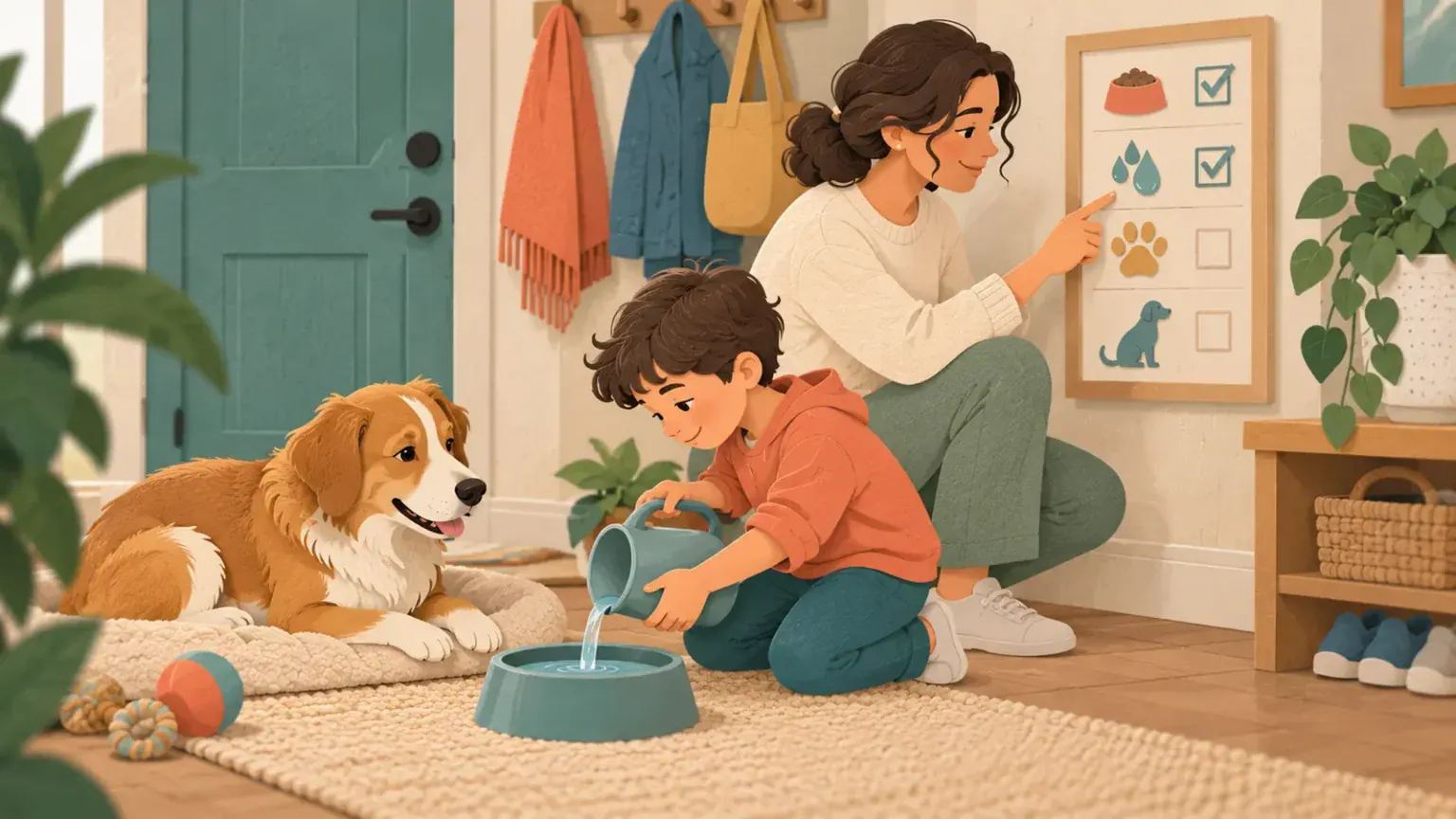
Beside every child task, write the adult backup and the time of the check. For example: “Water bowl—Sam after breakfast; Dad checks by 8:00.” This prevents the common gap where everyone assumes somebody else noticed.
Use a clear status such as not started, done, adult checked. A tick from the child shows participation; the adult check confirms welfare. If your household already uses a whole-family contribution chart, give pet care its own small section rather than scattering the steps across different pages.
Teach one routine at a time
- Show the whole sequence slowly.
- Do it together while describing the important details.
- Let the child lead while the adult stays close.
- Review the result and correct any missed step without shaming.
- Repeat for several days before adding another responsibility.
Use exact language: “Fill to this line,” “Latch the gate, then pull once to check,” or “Put the brush back in this basket.” A photo sequence can reduce memory demands. The approach in teaching one chore without running commentary works well here because it separates instruction from repeated criticism.
Make a missed-task plan before you need it
Agree that the adult completes any overdue essential task immediately. The child can still repair later by refilling supplies, cleaning the bowl or joining the next routine, but the animal does not wait for a consequence to teach the lesson.
Try: “The water check was missed, so I filled it. After school, we will look at what blocked the reminder and reset it.” Avoid threatening to give away a beloved pet for an ordinary lapse. If the family truly cannot provide safe, consistent care, adults need to make that decision separately and responsibly.
Respect the pet’s choice too
A chart is not permission to force handling, cuddling or play. Include “notice and pause” as a step. If the animal moves away, hides, stiffens, growls, scratches, bites or otherwise signals distress, the child should stop and get an adult. Adults supervise contact and set limits that fit the species and individual animal.
Review when life changes
School schedules, the child’s capacity and the pet’s needs can all change. Review the chart monthly and after illness, travel or a new routine. Ask: Is the task still safe? Is the adult check happening? Is the animal receiving care on time? Is the child learning or merely being reminded?
An accessible chore chart can help if reading, mobility, sensory needs or variable energy affect participation. The contribution may change, but the child can still belong in the care team.