“Help with dinner” is too vague to be a useful responsibility. It can mean carrying napkins, using a peeler, draining a hot pan or cleaning a surface that touched raw food. A kitchen helper chart works better when it shows not only the job, but also the level of adult support required.
Create three visible safety zones: I can do, we do together and adult only. The zones are not permanent age rankings. A task moves only when the child has the size, coordination, judgment and practice to do it safely in your particular kitchen.
Map the kitchen before assigning jobs
Walk through one ordinary meal. Note the steps from setting up to putting food away. Then mark hazards adults must control: heat, flames, hot liquids, sharp blades, heavy appliances, cleaning chemicals and raw foods that require careful handling. Keep those steps adult-owned or directly supervised.
Choose a few low-risk contributions that genuinely help. Depending on the child, these might include:
- placing napkins or unbreakable cups;
- washing whole fruit or vegetables with an adult nearby;
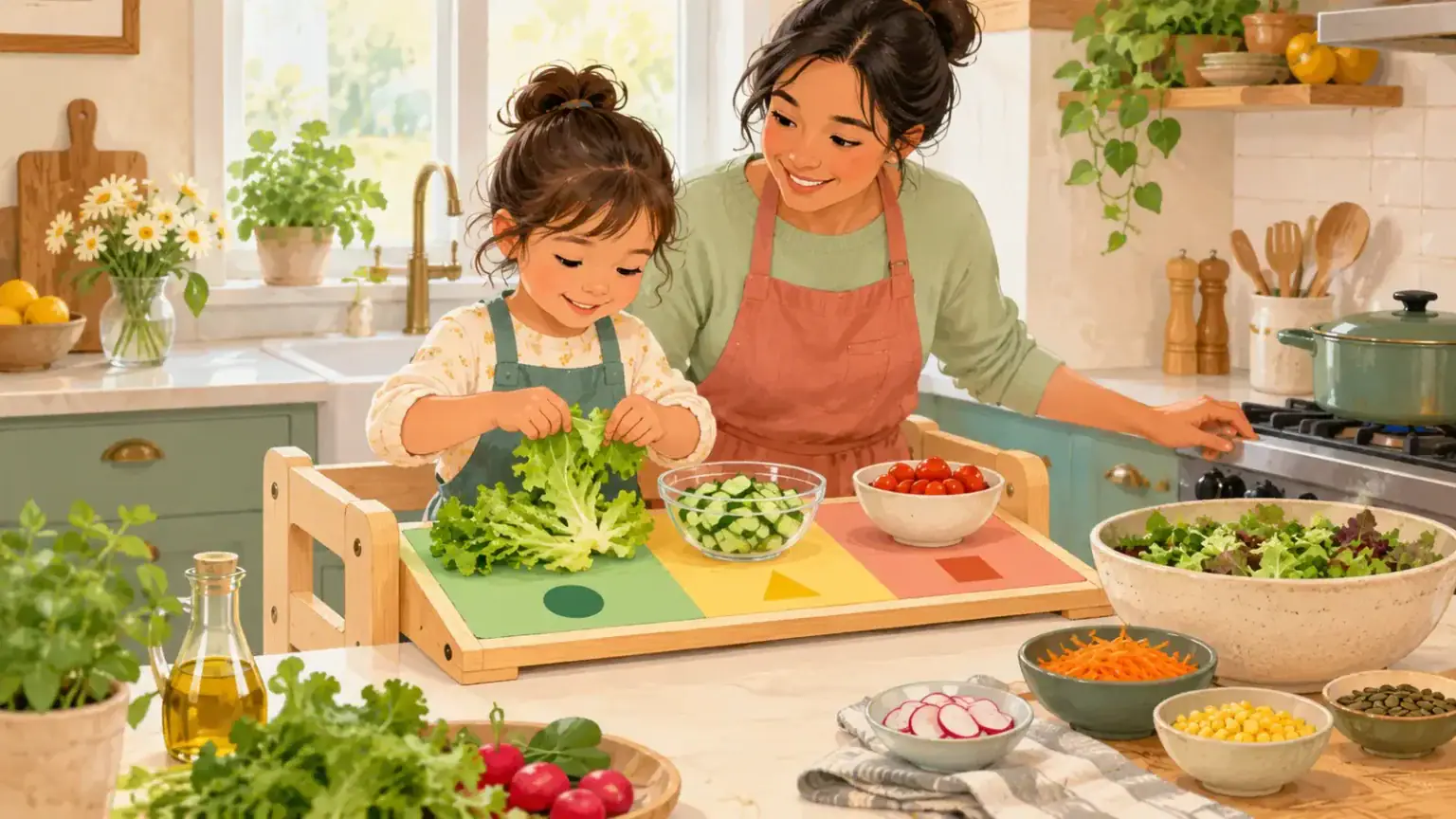
- tearing lettuce or mixing cool ingredients;
- matching lids to containers;
- wiping a safe surface with the right cloth;
- returning lightweight items to a low shelf.
Do not put a task on the independent list simply because a child has done it once. Repetition under calm supervision comes before independence.
Make the chart describe the action
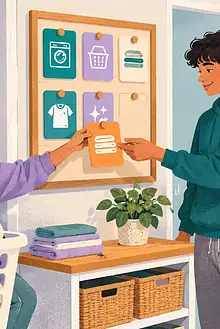
Use a small card for each task. Add a picture, the finish line and the support zone. “Set the table” could show four place settings and say, “plates, cups, napkins—no knives.” “Mix salad” might sit under “we do together” with a picture of the bowl placed away from the cooker.
For children who benefit from visual structure, arrange three to five cards from left to right. The guidance in using a now-and-next board can be adapted for a short kitchen sequence. Keep the board away from splashes and heat.
Teach the kitchen stop rules
Before the first shift, agree on a few rules that always mean pause and ask:
- something is hot, sharp, heavy or broken;
- food spills on the floor near people’s feet;
- a child is unsure whether a surface or utensil is clean;
- an appliance behaves unexpectedly;
- the child feels rushed, tired or overwhelmed.
Use calm wording: “Hands off, step back, call an adult.” Practise this when nothing is wrong. Safety instructions are easier to follow when they are familiar rather than shouted for the first time during a problem.
Run one short kitchen shift
- Choose: offer one or two suitable task cards.
- Prepare: tie back hair if needed, wash hands and clear the work area.
- Do: the child works while the adult provides the level of support shown.
- Finish: check the task against the picture or short description.
- Reset: return tools, wipe the area safely and move the card to “done.”
Ten useful minutes are enough. A child does not need to stay for the whole meal preparation to make a real contribution. If dinner is hurried, choose a different time to teach rather than expecting new skills during the busiest moment.
Keep contribution separate from appetite
Helping prepare or serve food should not require a child to taste or finish it. The job is participation in household work, not pressure to eat. If shared meals have become tense, the article on family meals without pressure offers a calmer framework.
Review and move cards carefully
At a brief weekly check-in, ask which task felt easy, confusing or unsafe. Demonstrate again if needed. Move a card from “together” to “independent” only after consistent safe practice. Move it back without shame if the kitchen changes, the child’s capacity varies or the task becomes more complex.
Adults remain responsible for the environment, supervision and final food-safety decisions. A whole-family chart can show that the child’s small kitchen role sits alongside the many adult jobs that keep a meal safe and available.