By EdCaptain editorial desk · Published
“Empty the dishwasher” sounds like one job. In practice, it may mean opening a hot appliance, spotting a knife hidden among spoons, lifting a heavy stack and reaching a cupboard above your child’s head.
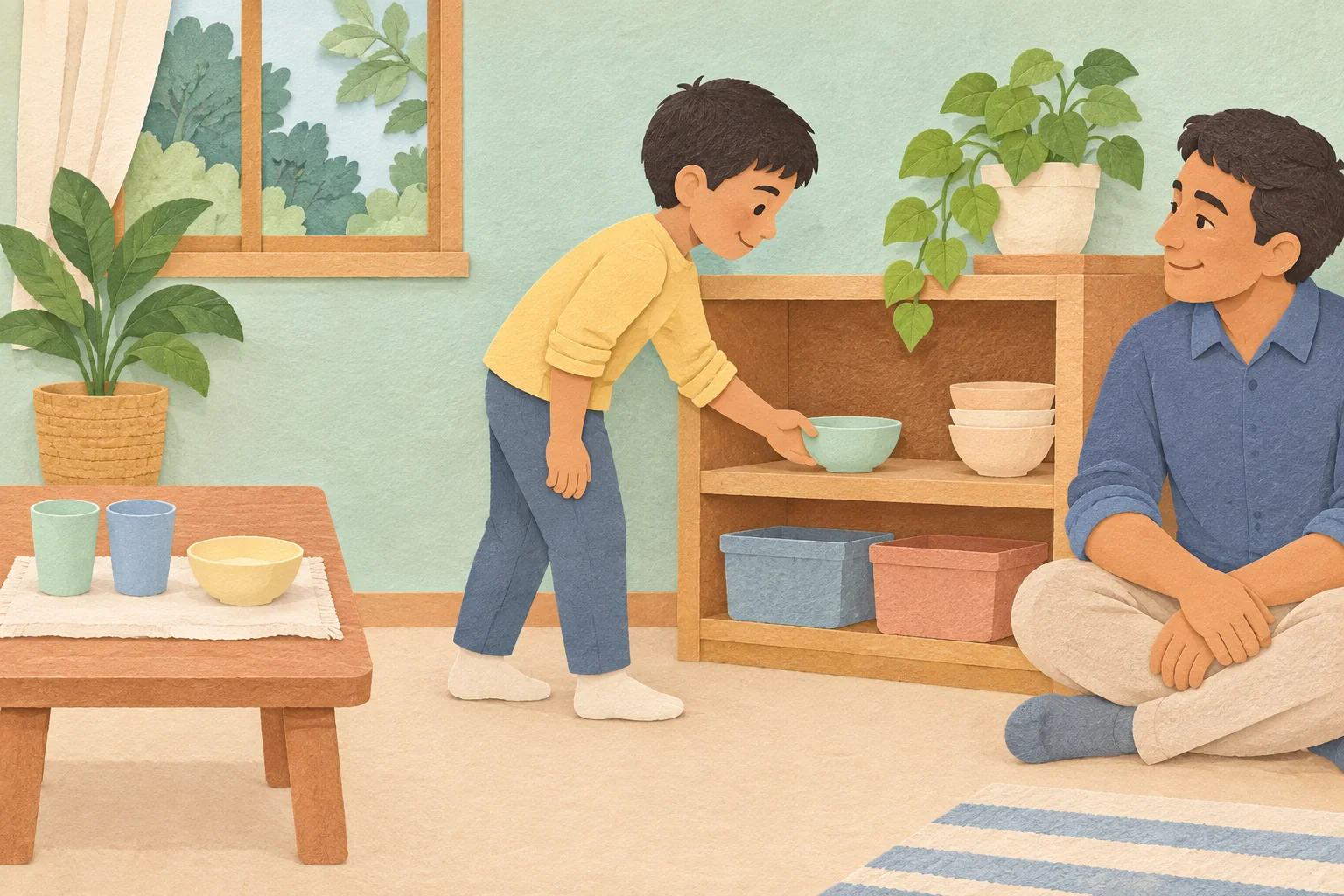
You can teach a useful part of the work without handing over all of it. For children aged 6–12, try a clean-dish put-away station: an adult sets out a few clean, dry, cooled, unbreakable items, and the child returns those items to reachable storage. This also works after washing dishes by hand.
The child is learning where things belong and how to complete a household contribution. They do not need access to the appliance, detergent or every dish in the kitchen to do that.
Separate this job from unloading
For this routine, the adult opens and unloads the dishwasher, checks the contents and closes it before inviting the child over. Follow your own appliance’s instructions, including child-access restrictions. An age suggestion on a chore list does not override the manufacturer’s directions or your child’s readiness.
If you wash by hand, the adult handles the sink, washing products, sharp items and drying setup. The child starts only after the selected dishes are ready at the station. Washing and putting away are separate jobs; there is no need to teach both at once.
The American Academy of Pediatrics’ kitchen-safety guidance recommends separating sharp instruments from safe utensils and securing dangerous products. Keep those boundaries in place while giving your child something real to do.
Choose the destination before choosing the dishes
Look at the cupboard or shelf from your child’s working position. Can they reach it without stretching overhead, climbing, leaning on an open drawer or passing a hot cooking area? Can they see where the item lands?
A low shelf for everyday unbreakable bowls and cups may be more useful than expecting a child to reach adult-height cupboards. Adults should assess the furniture’s stability and the opening and closing arrangements. Do not create a new climbing opportunity or move cleaning products into reach to free storage space.
If you cannot provide safe reachable storage, make the finish line a stable low table where the child sorts selected items for an adult to store. Call that job “sort the clean dishes”, rather than pretending the child can independently put everything away.
Set up a small first batch
You need no special equipment: a clear stable surface, a clean dry cloth or mat, and a few lightweight unbreakable dishes already used in your household. Check them for damage. Start with two or three familiar items, such as the child’s cups or small bowls.
Leave out glass, ceramics, knives, forks, heavy cookware and anything hot, chipped, sharp or difficult to grip. An adult decides whether an item is suitable; the child should not be asked to test its temperature or judge whether a crack is safe. Keep the floor dry and the route clear. Teach this away from busy cooking, not while someone carries hot food through the same space.
Show the complete route once
- Get ready. Wash hands and look at the prepared station together. Say, “These three items are your job. Everything else stays for me.”
- Match one item. Pick up one cup and show its place. A photograph inside the storage area can help; it does not need to become another large chart.
- Carry one at a time. Demonstrate the comfortable grip your child can use, including two hands if helpful. Keep the item low enough to see the route.
- Place, rather than drop. Put it securely on the shelf. Show a modest stack that stays easy to lift; do not turn the task into building the tallest pile.
- Check the finish. The selected items are stored safely, the station is clear, and the child tells the adult. The adult handles any awkward cabinet door or final safety check.
Next, let the child lead while you stay nearby. Describe the step that needs help: “That bowl belongs on this shelf.” Avoid a running commentary about speed or neatness.
Make the limits part of the chore card
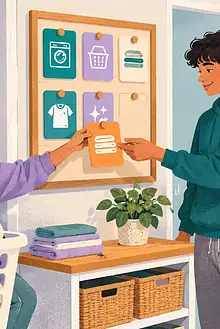
A simple card can say: “After the adult says ready: put these cups and bowls on their shelf; leave anything unfamiliar; tell the adult when finished.” This fits alongside other jobs on a whole-family contribution chart.
Agree on a stopping phrase: “This isn’t in my batch.” Practise with an ordinary unfamiliar item while nothing is urgent. The right response is to leave it and ask, not improvise. If a prepared item turns out to be warm, damaged, slippery or uncomfortable to carry, the child puts it down safely and gets you.
If something breaks, stop the task and keep children away while an adult deals with the debris. Do not have a child collect fragments to prove responsibility. A spill or dropped cup is a reason to secure the space first and talk afterward.
Change support as the child learns
Ages 6–9: use a tiny batch and stay alongside the child. Point to the destination or use a matching photograph. One successful route with a cup may be enough for the first lesson.
Ages 10–12: the child can help choose the safe storage arrangement, notice when the assigned shelf is full and check the agreed batch against the card. Keep the adult preparation boundary. A birthday does not automatically add appliance access, glass or heavy stacks.
A seated child may work between a reachable table and shelf, or direct a partner who carries the items. If gripping is difficult, choose one easier item or use the sorting version. Ask what works instead of moving the child’s body or equipment without agreement. Our accessible chore-chart guide offers more ways to adjust participation.
When the job keeps stalling
Check the practical barrier before adding reminders. Is the shelf crowded? Did someone move the cups? Is the batch larger than agreed? Does the child have to guess which items are theirs?
The AAP’s advice on chores supports clear expectations, one new task at a time and realistic support. Try changing one obstacle, then practise again. If the adult cannot prepare the station that day, the child has not failed a job they were never given safely.
Once the route is familiar, ask, “What made that easier?” Keep the answer in the setup. A few dishes safely back where the family needs them are a worthwhile contribution; the rest can remain adult work.
Sources and further reading
- AAP HealthyChildren: kitchen safety for families.
- AAP HealthyChildren: age-appropriate chores, teaching and expectations.
Read our editorial policy.