A teenager can be capable of many individual steps and still rely on an adult to notice when the task needs doing, gather supplies, issue reminders and check the result. In that arrangement, the teen performs the final action but the adult still carries most of the mental load.
Ownership means something more specific: the teen knows when one household task is due, plans the steps, completes it and communicates when there is a genuine obstacle. The adult remains available and responsible for safety, but stops being the live notification system.
Choose one complete, suitable responsibility
Start with a task that matters but can tolerate learning. Good candidates depend on your home: managing the household recycling, resetting a shared room twice a week, preparing one simple family breakfast, or tracking and replacing a routine low-risk supply.
Avoid assigning work that requires adult legal authority, risky tools, unsafe lifting, driving, medication management or responsibility for another person’s essential care. Do not quietly turn an older child into a substitute parent. The task should be household contribution, not adultification.
Define the whole job together
Write down five parts:
- Trigger: how the teen knows it is time.
- Steps: what needs to happen.
- Finish line: how both people can tell it is done.
- Deadline: the realistic window, not an unspoken expectation.
- Escalation: what the teen does if supplies, time or safety become a problem.
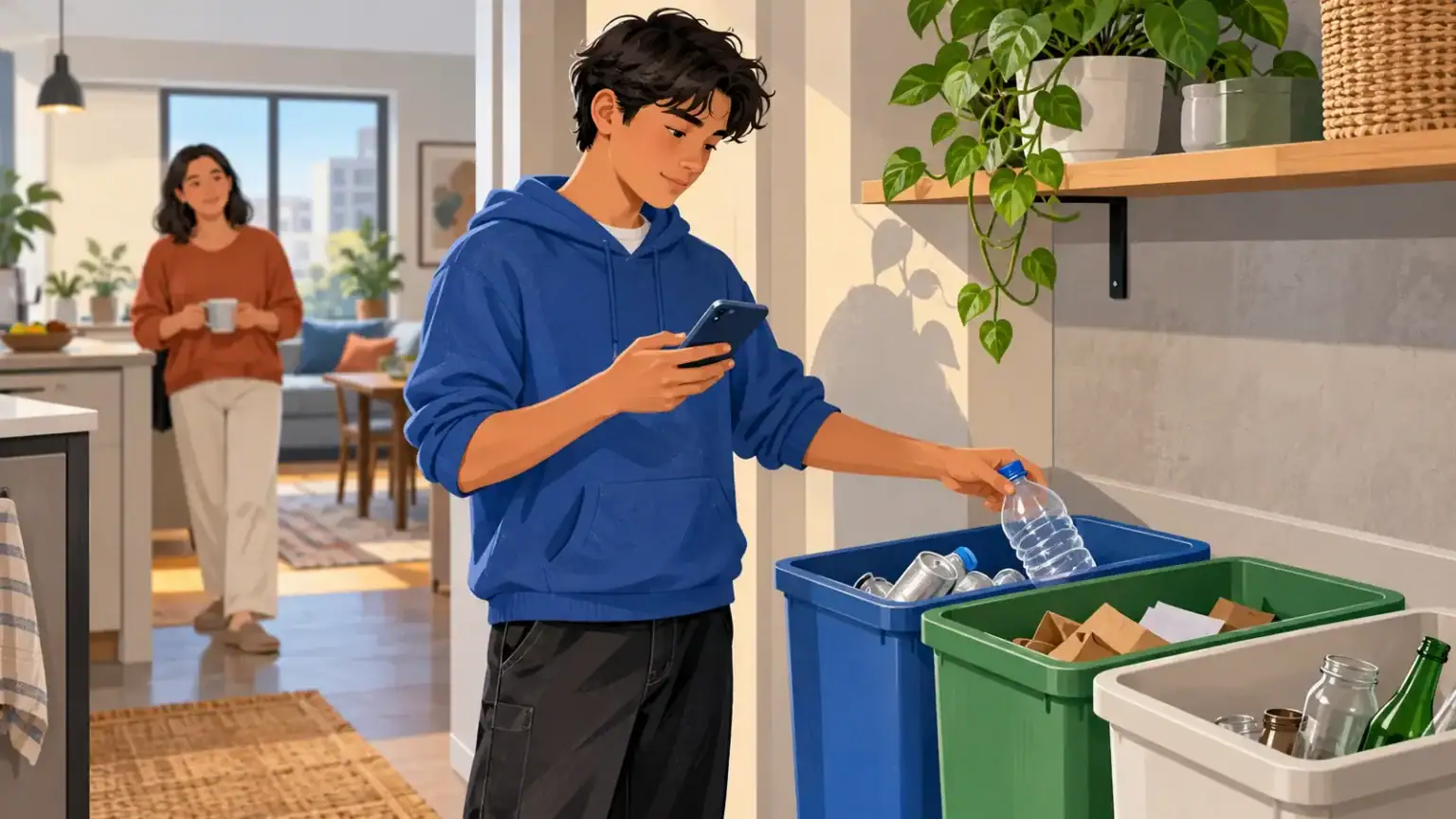
For recycling, ownership might include noticing the container is nearly full, sorting according to local rules, moving it to the collection point by the agreed evening and replacing the liner. The adult still handles hazardous items and any task that is not safe.
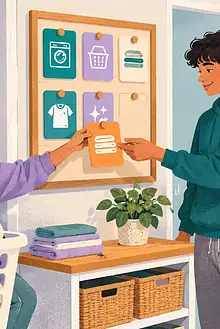
Keep the agreement visible but age-respectful. A private phone reminder or a simple household dashboard may work better than a brightly illustrated chart. The teen daily dashboard offers ideas for creating a discreet system.
Teach the parts adults usually do invisibly
Do the task side by side once and narrate the planning, not just the movement: “I check whether we have bags before I start,” or “If collection day changes, I look here.” Then let the teen lead while you observe.
Ask, “What is your plan for remembering?” rather than prescribing five reminders immediately. If the teen wants one calendar alert, a note on the door or a link to an existing routine, test that choice. Independence grows through supported practice, not sudden withdrawal of help.
Use one check-in, not a stream of commentary
Agree on a single review point: “I will check the shared space at 7:30,” or “Let me know by Sunday evening if you need help.” Before that time, resist reminders unless safety or a serious consequence requires intervention.
If the task is not done, state what you observe and return ownership: “The recycling is still inside and collection is tomorrow. What is your next step?” This is different from sarcasm, lectures or doing it silently and later exploding. The approach in building one chore habit without nagging can help the whole family reduce running commentary.
Plan repair for ordinary misses
A missed task is information. The teen should complete a reasonable repair when possible, such as finishing the job, cleaning a spill or updating the reminder. Then review the system briefly:
- Was the trigger easy to notice?
- Was the deadline realistic?
- Was a tool or instruction missing?
- Did the teen overcommit?
- Does the task still fit?
Do not rescue every time, but do step in when delay would harm a person, animal, essential household function or safety. An adult can solve the urgent problem and still return to learning later.
Notice ownership, not perfection
Specific feedback is more useful than a character judgment: “You saw the supplies were low and added them to the list before they ran out.” Avoid “Finally” or “See, you can do it when you try.” Those comments turn success into another criticism.
If the task is consistently manageable, ask whether the teen wants to keep it, rotate it or take on a new level. A whole-family contribution chart can show that adults also own complete tasks rather than handing every undesirable job downward.
The aim is not a teenager who never forgets. Adults forget too. The aim is a young person who can notice, plan, communicate and repair—with support that becomes lighter as the skill becomes stronger.