By EdCaptain editorial desk · Published
“Wipe the table” sounds like a simple chore until a child reaches for the bottle beside the sink. The task needs a clearer boundary: what can they do, which tools can they use, and when does an adult take over?
For children aged 6–12, one useful starting point is a small housekeeping job that uses no cleaning product at all. Clearing ordinary dry crumbs or putting lightweight items away contributes to the household. It does not make the child responsible for chemical use, food hygiene or infection control.
Keep disinfectants off the child’s task list
The US Environmental Protection Agency explicitly advises that children should not apply disinfectants, including disinfectant cleaning wipes. A pre-moistened wipe still contains a product; it is not an exception because it looks easy to use.
For the routine below, adults retain all cleaning products, sanitizers, disinfectants, concentrates and refills. Do not turn “no spray” into permission to use an unlabelled liquid, a different bottle or a homemade mixture. Gloves and an adult watching do not change the EPA’s advice about children applying disinfectants.
The CDC distinguishes cleaning, sanitizing and disinfecting. Cleaning with soap or detergent and water removes dirt and germs; disinfection is a different process with specific directions. A child’s plain-water cloth or crumb brush is not a substitute for a required cleaning or disinfection step.
Choose a job with a visible finish
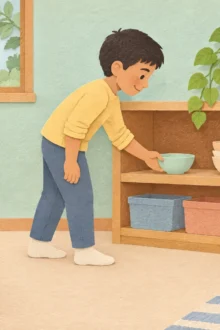
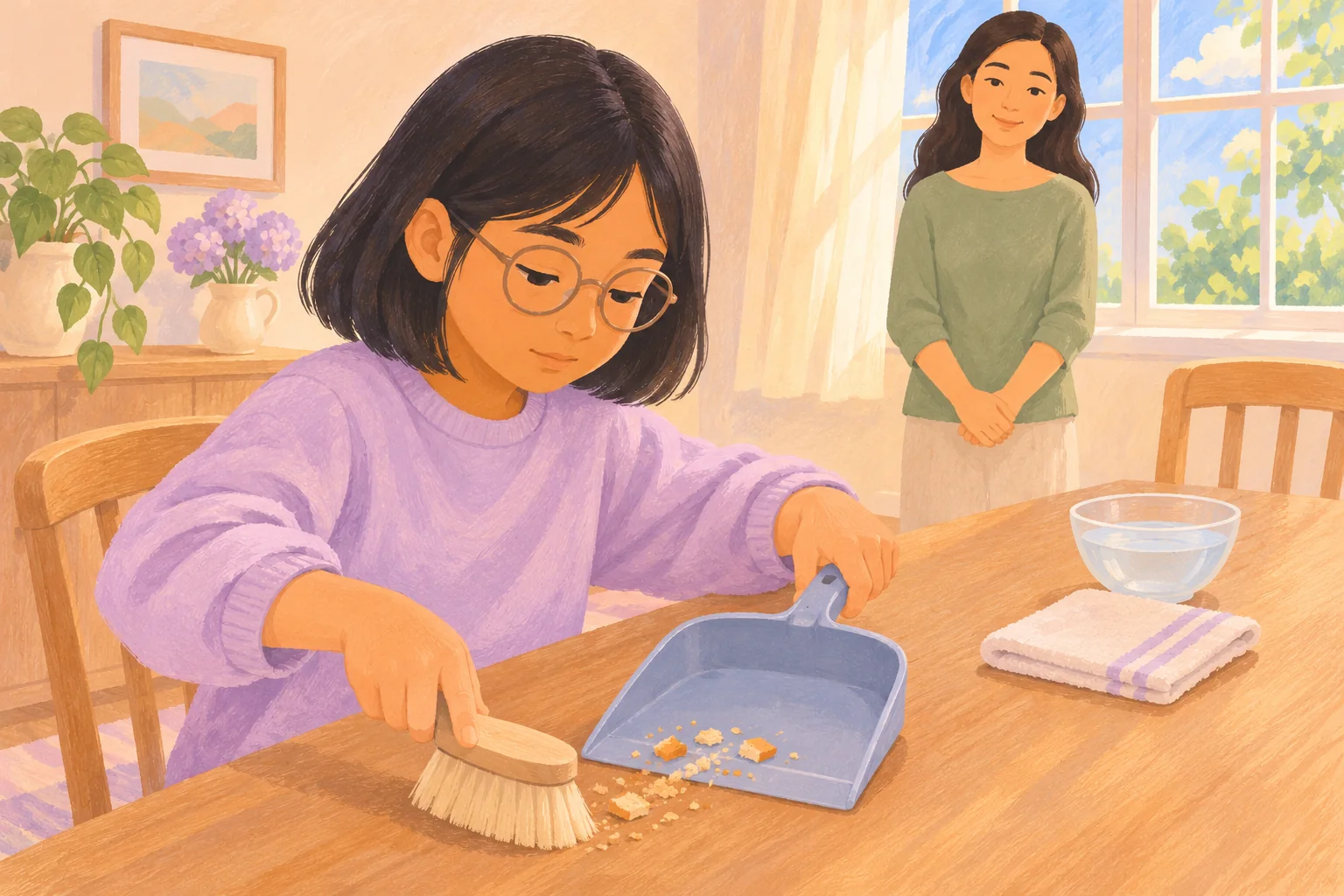
Start with an ordinary, low-risk task on a stable surface the child can reach comfortably. Examples include collecting dry crumbs with a hand brush and dustpan, returning unbreakable place mats to their storage spot, or putting clean, lightweight items back on a low shelf.
Avoid vague instructions such as “clean the kitchen” or “do the bathroom.” Those rooms contain tasks that look similar but involve very different hazards. A child who can put a toothbrush cup away is not automatically ready to handle toilet cleaner.
Keep these jobs adult-owned:
- cleaning body fluids, animal waste or surfaces contaminated by raw meat or its juices;
- handling broken glass, sharp waste, unknown spills or mould;
- using cleaning chemicals, disinfectant wipes or sprays;
- working around hot surfaces, plugged-in equipment or electrical sockets;
- climbing, lifting heavy objects or moving appliances to reach dirt.
These are boundaries for this family routine, not a claim that age alone establishes readiness for every other task. Match the job to the child’s abilities, access needs and experience.
Try a short crumb-clearing shift
You need a small rounded hand brush, a broad dustpan, a stable work surface and an adult nearby. For an optional wipe afterwards, have the adult provide a clean cloth dampened with plain water only, and first check that the surface tolerates it. Skip the water if it adds difficulty or is unsuitable for the material.
- Inspect together. The adult checks that the area contains only ordinary dry crumbs, with no sharp objects, chemicals, hot items or concerning contamination. Move breakables and electronics away.
- Demonstrate a small section. Rest the pan on the surface and brush crumbs into it slowly. Show where the brush belongs and how to avoid sweeping debris onto someone else or the floor.
- Let the child try. Give them a reachable area. Hold the pan if that support helps, or let them choose which part to do. Keep the brush away from faces.
- Use the optional cloth. If appropriate, wipe the same small area without pouring water or leaving it wet. This is removal of visible residue, not a germ-killing step. An adult handles greasy, sticky or uncertain marks.
- Finish and hand back. Dispose of crumbs in the agreed bin, return the tools, put a used cloth in the agreed laundry place and wash hands. The adult checks the surface and completes any necessary cleaning before its next use.
Keep the first attempt small. A slower job with a clear finish is more useful than a race that scatters crumbs and makes stopping feel like failure.
Write the safety boundary onto the chore card
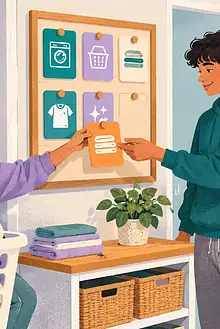
A task card can use a photograph, drawing, large print, audio or familiar symbols. Make it specific enough that another caregiver understands the same job:
- My part: brush the dry crumbs from this table into the pan.
- My tools: this brush and pan; an adult supplies any plain-water cloth.
- Done: crumbs in the bin, tools returned, hands washed, adult told.
- Stop and ask: anything wet, sharp, hot, strange-smelling, unfamiliar or hard to move.
Practise saying, “This is outside my job.” Calling an adult is completion of a safety step, not a reason to lose praise or a reward already earned. Our kitchen helper chart can show how this limited task fits beside adult-only jobs.
Adapt the work, not the chemical boundary
Ages 6–9: begin with one small patch and demonstrate each step. An adult can hold the pan, manage the bin or provide a simpler alternative such as gathering place mats.
Ages 10–12: invite the child to prepare their brush and pan, explain the stopping rules and check against the agreed finish. More ownership of this task does not mean permission to fetch a disinfectant when a mark is stubborn.
For either age group, use seated work, an accessible table height, lightweight equipment or an easier grip where helpful. Break the sequence into separate contributions. Do not require a child to stand, tolerate an uncomfortable texture or complete every step to make their contribution count.
Keep the adult side dependable
Store products securely and out of children’s reach, in their original labelled containers. Do not leave wipes or a filled spray bottle with the child’s tools. Adults should follow product and surface instructions, including ventilation, protective equipment, contact time and any rinsing requirement. The CDC advises against mixing cleaning products or chemicals.
Keep children away from the adult chemical work and follow the label before letting them use the area again. If a spill or suspected exposure occurs, stop the chore and seek prompt local poison or medical advice; severe symptoms such as breathing difficulty need emergency help. Do not improvise a remedy or ask the child to finish first.
For wider storage planning, use our household poison-prevention guide. Then review this one chore with your child: Could they reach the tools? Was the finish clear? Did they know when to stop? Change the setup before adding more work.
Sources and further reading
- EPA: Children and disinfectant use
- CDC: Cleaning and disinfecting at home
- National Capital Poison Center: Getting help for an exposure (US guidance)
Read our editorial policy and health-information guidance.