By EdCaptain editorial desk · Published
Your child has remembered the watering can three days running. That sounds like the chore chart is working—until you discover the pot is still wet. “But it says water the plant,” they explain.
Change the job before asking for more effort. For children aged 6–12, a useful houseplant responsibility is check the plant and follow its care plan. Sometimes the right action is to leave it alone. That should count as a completed contribution too.
Start with one suitable, established plant
You do not need a new collection or a gardening kit. Choose one existing plant whose identity and care requirements an adult knows. Before giving it a child-care role, check that the exact plant is suitable around children and any pets, including contact hazards. A nursery or appropriate poison-information service can help clarify uncertainty. Skip an unidentified plant, one with sharp spines, or one that may be chewed by someone in the household.
Put it in a stable, reachable place suited to its growing needs, away from electrical equipment. Use an unbreakable pot with drainage and a suitable saucer or tray. Adults move heavy pots; nobody climbs to reach one. An expensive or treasured specimen is a poor first assignment if a mistake would cause a family argument.
The Royal Horticultural Society’s houseplant guide recommends checking whether a plant needs water rather than watering routinely. Its requirements and growing conditions matter; there is no single watering interval that suits every household pot.
Prepare a small care station
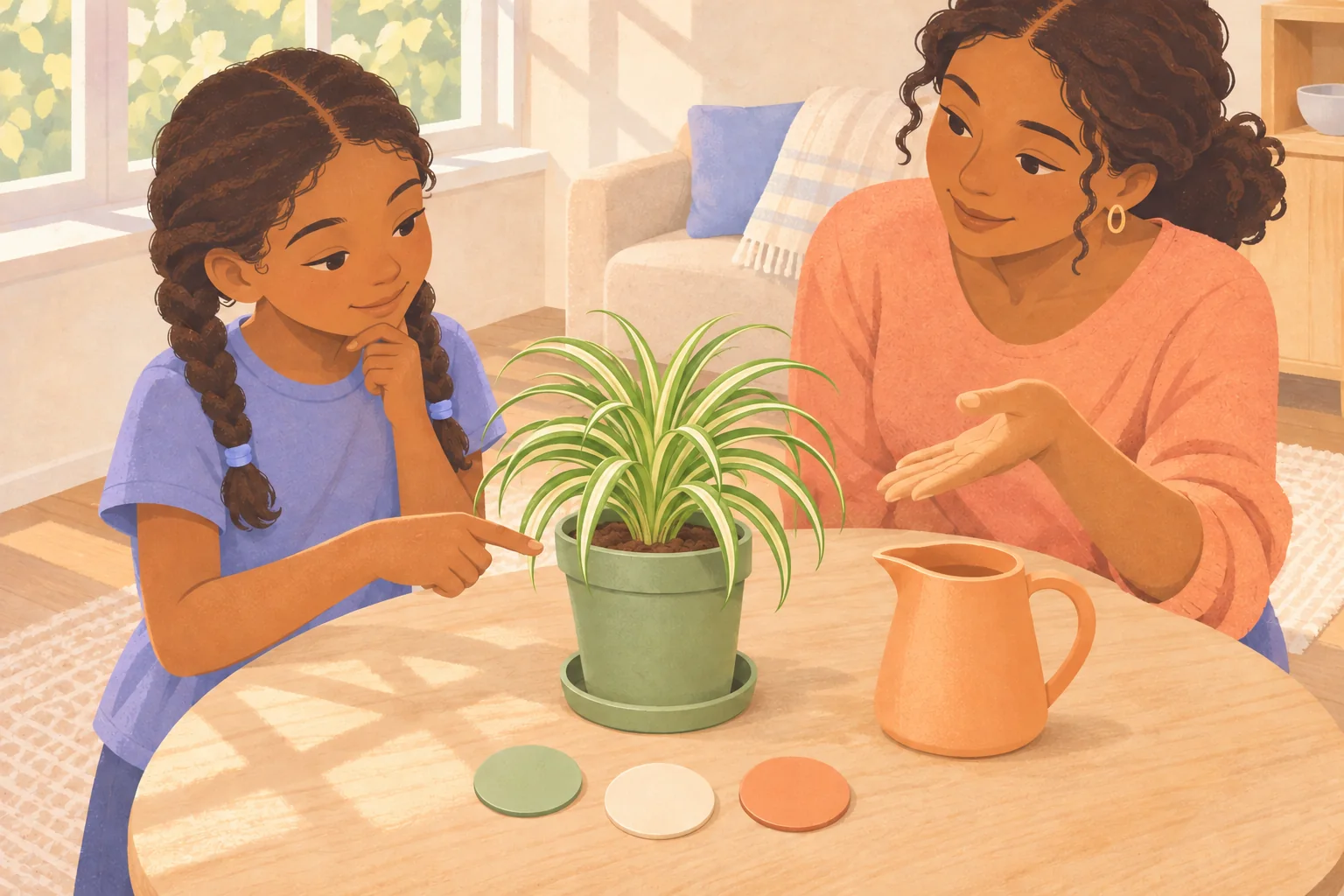
Keep a lightweight jug, a cloth for small water spills and the plant’s instruction card nearby. An adult supplies plain water appropriate for that plant. Do not leave a large water container accessible to younger children. Fertilisers, pest treatments, pruning tools, repotting and loose potting mix stay outside this child’s job.
Make a card with the actual pot’s photograph or a simple drawing. Add:
- What to notice: collected water, a changed leaf or something different from the last check.
- Who checks moisture: the named adult, using the plant’s care instructions.
- Three possible finishes: left alone; watered together; adult taking over.
The child need not dig into or handle potting mix. Here, the adult checks moisture and explains the finding. The child’s real contribution is noticing, asking for that check, carrying out the agreed safe step and recording the outcome.
Teach the decision before handing over the jug
- Look without pulling. Together, observe the plant and tray. Ask, “What looks the same? What looks different?” The child reports what they see rather than diagnosing a plant problem.
- Request the moisture check. The adult checks as appropriate for this plant. Say, for example, “It still has enough moisture. Today we leave it.” A pale-looking surface alone is not a sufficient instruction to pour.
- Choose the finish. If water is needed, an adult sets up the amount and method for that plant, supervising the child’s gentle pour. Do not make a particular cupful a rule for every pot.
- Complete the adult part. Let excess water drain as the plant requires; an adult empties collected water and makes sure the pot is not left standing in it. The child can point out water in the tray without lifting the pot.
- Record and reset. Mark the outcome, put the jug away, wipe a small plain-water spill if safe, and wash hands. A large spill or slippery floor goes to an adult.
Practise a “no water needed” check before expecting the child to understand it. Try: “You noticed it didn’t need anything added. That was doing the job properly.” Avoid rewarding the amount poured or the number of leaves produced.
Write the chart around checking
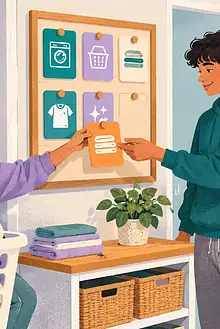
Replace “water plant daily” with “plant check with an adult at our agreed time”. Choose check times around this particular plant’s needs and your household routine; an adult still checks outside those times when necessary. A calendar is a reminder to assess, not permission to add water.
A completed entry might read: “Saturday: checked with Dad; still moist; left alone.” Another might say: “Tuesday: watered together; Dad drained tray.” If someone else has already watered it, record that and stop. Nobody needs to repeat the action to earn their own tick.
You can add this small job to a whole-family contribution chart, with the adult’s moisture and drainage checks visible alongside the child’s role.
Adjust the role, not the value of the contribution
Ages 6–9: stay together for the whole check. Offer the three finish choices as pictures and let the child point or say which matches the adult’s finding. Pour together if needed; the adult keeps control of weight and flow.
Ages 10–12: invite the child to bring the reminder, compare today’s observations with the last entry and write the outcome. Keep moisture decisions and any change of care plan shared with the adult. Reading instructions does not automatically mean readiness to manage every part alone.
A seated child can direct a partner at a reachable table. A child who dislikes wet hands can record the outcome or request the adult check through their usual communication method. Our accessible chore-chart guide offers more ways to keep a contribution meaningful.
When something goes wrong
A drooping leaf does not automatically mean thirst: the RHS guide to poorly houseplants notes that overwatering can also cause wilting. Stop adding water and let an adult investigate or seek horticultural advice. Unfamiliar insects, mould, broken pots or a plant that suddenly looks unwell are handover points, not extra child jobs.
If the child poured without checking, handle the plant first. Then say, “The chart made pouring look like the goal. Let’s practise the checking part.” If a check was forgotten, an adult provides care; the plant does not wait for a lesson in consequences.
Keep ornamental plants out of mouths. Following RHS plant-safety guidance, seek medical or poison-service advice promptly if someone may have eaten a doubtful plant; do not induce vomiting. Severe breathing difficulty needs emergency help.
After a week, ask: “Could you tell when the job was finished? Was anything awkward?” Keep the role small enough to repeat. A correctly checked, untouched pot can be the clearest sign that your child understood.
Sources and further reading
- RHS: growing requirements, watering and drainage for houseplants.
- RHS: investigating a poorly houseplant.
- RHS Schools: plant hazards and safety precautions.
Read our editorial policy.