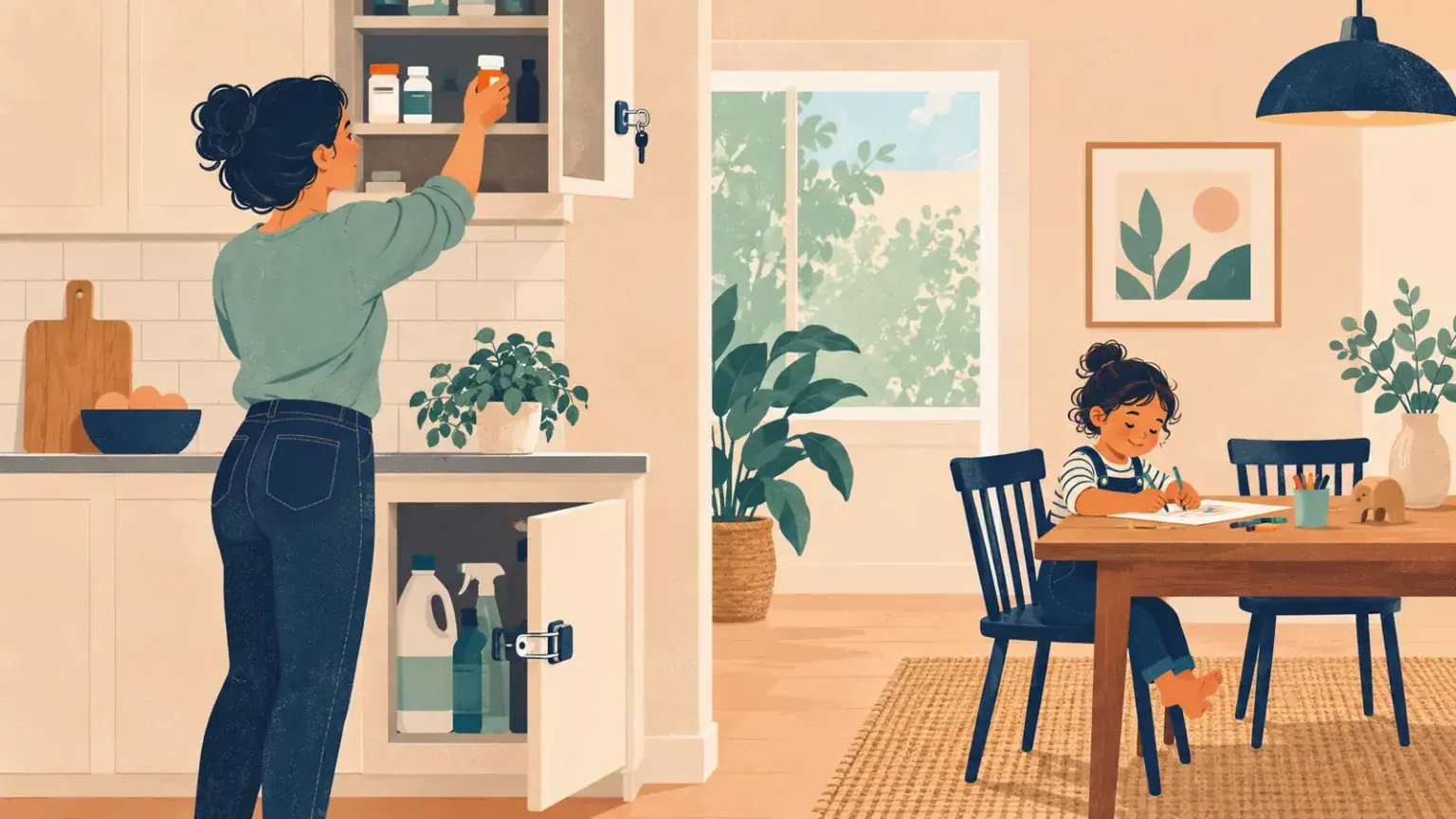
Poison prevention works best when adults change the environment rather than expecting a young child to remember a warning. Medicines, cleaners, nicotine products, alcohol, cosmetics, fuels and pesticides can all cause harm. Familiar packaging and bright liquids can look ordinary, while “child-resistant” packaging is not childproof.
Follow the child’s route
Begin at the front door and move at the child’s height. Check handbags, backpacks, coat pockets, bedside tables and sofa gaps for tablets, nicotine products or hand sanitiser. Continue through bathrooms, kitchens and utility spaces. Under sinks, in laundry areas, garages and sheds, identify concentrated cleaners, fuels, antifreeze and pesticides.
Repeat the walk in grandparents’ homes, holiday rentals and other places the child uses. A home without resident young children may keep medicine on a bedside table or cleaner beside a toilet. A portable lockable pouch can help temporarily, but hosts should still move larger hazards.
Build storage that survives a busy day
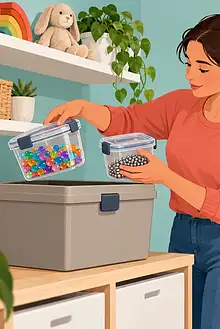
Keep medicines and hazardous household products in locked or reliably latched storage, high and out of sight. Separate medicines from food and cleaners from drinks. Return each item immediately after use, including between doses or cleaning tasks.
Keep chemicals in original containers with labels intact. Never use a cup, drink bottle or food jar. Close child-resistant caps fully, then lock the product away. Dispose of unwanted medicines and chemicals through locally recommended routes rather than a bag left for later.
Reduce medicine mix-ups
Read the label every time and use the supplied dosing syringe, cup or spoon—not a kitchen spoon. Make clear which adult is responsible for a dose and record essential information on a current medication list. Do not call medicine candy. Visitors should put bags, pill organisers and hearing-aid supplies into the safe storage area when they arrive.
School-age children can learn that medicine is only taken with a responsible adult and that unknown berries, mushrooms, liquids and powders are never tasted. Older children who start self-managing medication need a plan agreed with a health professional and storage that still protects younger siblings.
Prepare for a suspected exposure
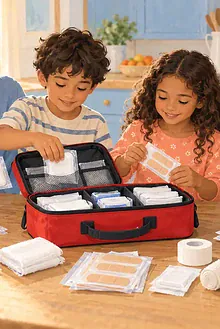
Save the local poison service number in every caregiver’s phone and post it near the first-aid area. In the United States, Poison Help is 1-800-222-1222; elsewhere, record the appropriate regional service and emergency number.
Do not make a child vomit or give food, drink or a home remedy unless a poison specialist or clinician instructs you. Call promptly even if the child looks well. For collapse, trouble breathing, a seizure, severe symptoms or inability to wake, call emergency services immediately. Keep the package available if it is safe to do so, but do not delay urgent help to search.
Make prevention repeatable
Attach a five-minute reset to grocery unpacking or rubbish collection: return products to locked storage, clear bags from the floor, check caps and remove expired items. Recheck after visitors, travel or household work, when normal storage routines are most likely to break.
Coordinate adults with EdCaptain’s family medication list guide and one-page caregiver handover sheet.
Include less obvious products
Extend the check to concentrated laundry capsules, essential oils, e-cigarette liquid, cannabis products where present, cosmetics, vitamins, supplements, pet medicines and pest-control products. “Natural” does not mean safe to swallow. Keep each in its original labelled container and follow local disposal advice. Check hotel rooms and borrowed bags during travel, when routines and storage are unfamiliar.
If a product splashes on skin or into eyes, move away from the source and contact the poison service or emergency pathway for product-specific instructions. Do not neutralise one chemical with another. Fresh-air or rinsing advice depends on the exposure, so follow the label and qualified guidance.