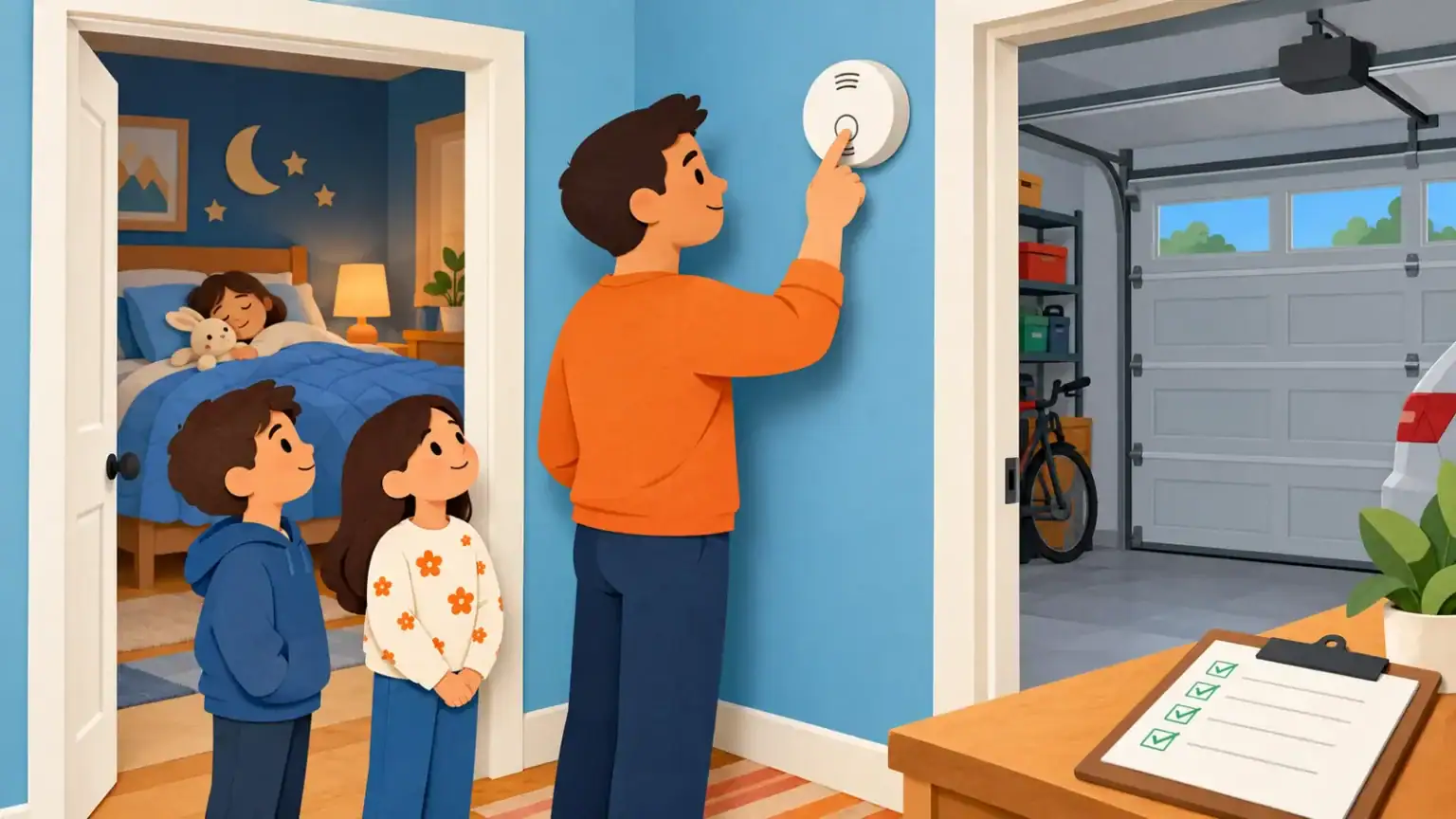
Carbon monoxide cannot be seen or smelled, so a family cannot rely on its senses to notice a problem. It can come from incomplete fuel burning in appliances, generators, charcoal or vehicle engines. A workable safety plan combines correctly placed alarms, safer use of fuel-burning equipment, professional maintenance and a response everyone can follow immediately.
Place alarms where they can protect sleep
CPSC advises CO alarms on every level of the home and outside sleeping areas, following the manufacturer’s instructions. Choose devices that meet the current safety standard required where you live. Do not hide an alarm behind furniture or curtains, and do not place it next to a heating vent unless the instructions direct that location.
Test alarms as the manufacturer says, replace batteries and the unit on schedule, and note the replacement date. Interconnected alarms can help people hear a warning throughout a larger home. A CO alarm adds protection but does not replace correct appliance installation and maintenance.
Remove preventable sources
Have fuel-burning appliances, heating systems, chimneys and flues inspected by qualified professionals as appropriate. Never use a gas range, oven or clothes dryer to heat the home. Never burn charcoal in a house, garage, vehicle or tent.
A portable generator or gasoline engine should never run in or near an enclosed space such as a house or garage; open doors and windows do not make that safe. Never leave a vehicle running in an attached garage, even with the garage door open. During renovation, keep vents and chimneys clear and have equipment checked before reuse.
Teach one response to the alarm
When a CO alarm sounds, do not search for the source. Move everyone outside to fresh air, call emergency services or the fire department, and count every person. Stay out until responders say it is safe to return. Tell them if anyone is missing or has symptoms.
Give young children one short instruction: “When this alarm sounds, go outside with the adult.” Older children can know the meeting point and that they must never go back for possessions or pets. Assign an adult to help each baby, young child or person who needs assistance.
Recognise possible exposure
Headache, fatigue, dizziness, nausea and shortness of breath can occur with exposure; higher levels may cause confusion, vomiting, poor coordination, loss of consciousness and death. Symptoms can resemble flu but without fever and may affect several people in the same place.
If exposure is possible, get outside immediately and seek urgent help. Do not re-enter to open windows or collect items. Prompt medical assessment matters, and suspected appliances should not be used until qualified personnel have checked them.
Extend the plan beyond home
Ask about alarms and fuel-burning equipment in holiday rentals, relatives’ homes and temporary accommodation. Carry a travel CO alarm only if local guidance and the product instructions support its use; it does not compensate for an unsafe generator, heater or cooking arrangement.
Review the response with every caregiver and include the outdoor meeting place in the household emergency plan. A calm practice can focus on moving to the exit without imitating an actual emergency.
Use EdCaptain’s calm safety-drills guide and family emergency communication card to make the response easier to remember.
Plan for power outages and cold weather
Outages often tempt families to move generators, grills or fuel-burning heaters into unsafe places. Decide in advance which equipment is permitted, where it can operate and who is responsible for following its manual. Never improvise indoor heating with an oven, grill or camping device. If safe heat is unavailable, use the household emergency plan to relocate rather than creating a CO source.
Landlords and building managers should be told promptly about alarm faults or suspected appliance problems. Keep documentation of service dates, but never stay inside waiting for maintenance when an alarm sounds or symptoms suggest exposure.