A safety drill is practice for adults and children, not proof that danger is about to happen. Children cope better when they know what the sound means, which adult leads them and when practice is finished. Families can support that without rehearsing frightening scenarios at home.
Learn the actual procedure first
Ask the school, childcare setting or programme what drills occur, how families are notified, where children go, how attendance is checked and how reunification would work. Find out whether the drill uses alarms, announcements, darkness, silence or physical movement. Do not promise “this will never happen” or invent details.
Use plain, limited language
For a young child: “Sometimes everyone practises leaving or staying quietly in a safe place. Your teacher tells you what to do. Practice ends, and the day continues.” For an older child, explain purpose, expected steps and how to ask questions. Give small amounts and follow cues.
Avoid dramatic footage, pretend attackers or surprise drills at home. Repeatedly asking what a child would do can sound like a test they might fail. The main instruction is to follow the responsible adult and the setting’s procedure.
Prepare for access needs
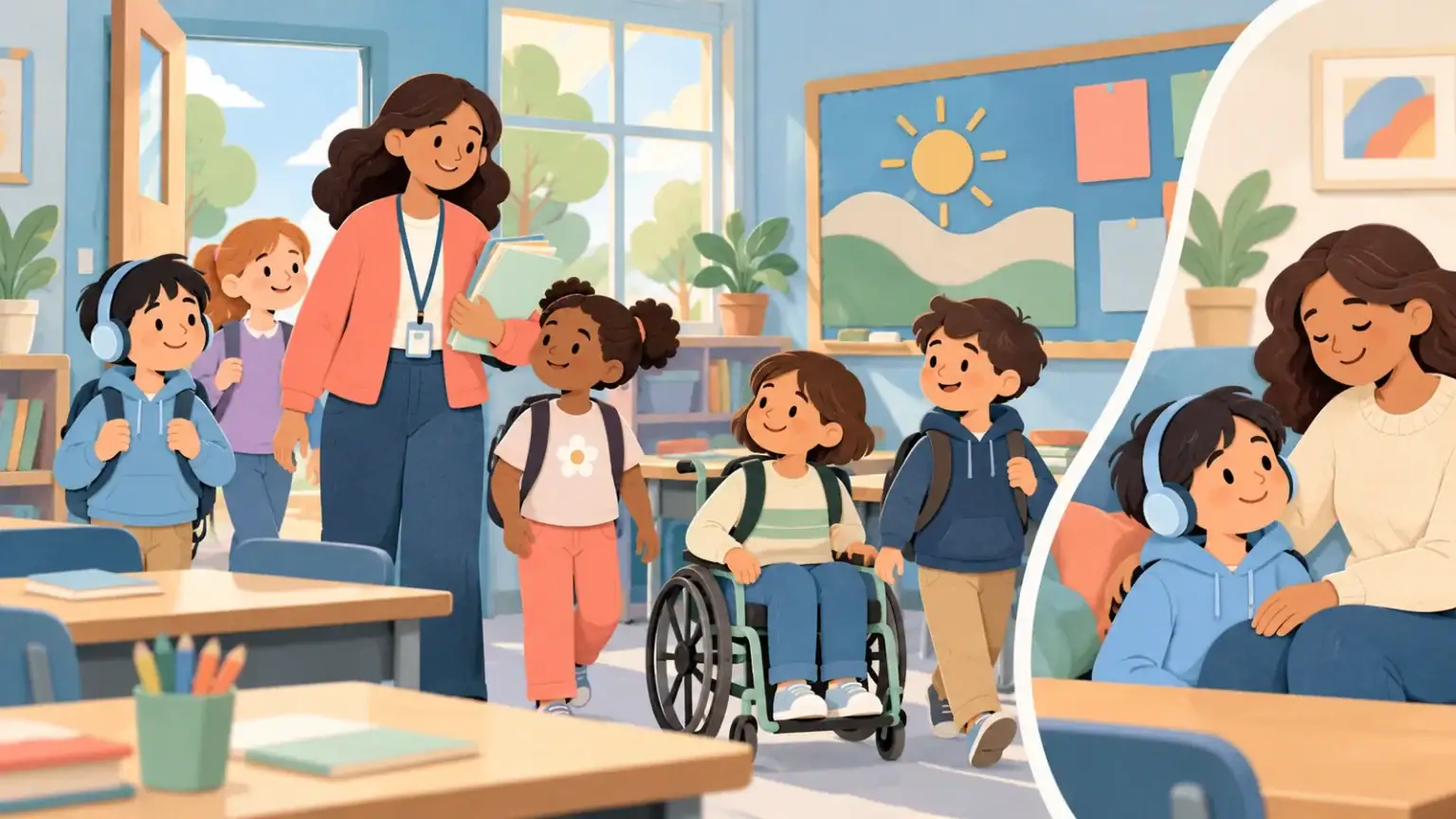
- Ask how alarms reach a child who is deaf or hard of hearing.
- Plan guiding, mobility equipment and evacuation support without unnecessary separation.
- Keep AAC and communication available.
- Discuss sensory protection that does not block instructions.
- Clarify medicines, medical equipment and backup power.
- Provide a simple visual sequence if the child uses one.
Agree adjustments with the setting. A parent-created plan that staff do not know may fail when needed.
Offer a before-and-after routine
Before a scheduled drill, name the time if known, the sound, trusted adult and ending: “After the all-clear, you return to class.” Afterward, reconnect with ordinary activity—a drink, movement, familiar task or brief check-in. Do not demand a detailed retelling immediately.
Ask later: “Was any part confusing?” “Was the alarm too loud?” “Did you know where to go?” A child may answer with speech, drawing, gesture or not at all. Listen for practical problems the setting can fix.
Respond to fear without feeding it
Say, “That sound was startling. Your body is settling now.” Confirm what is true: practice ended, the child is with a trusted adult and there is a plan. If asked whether emergencies happen, answer honestly and briefly: adults practise because preparation helps.
Keep contacts on a communication card, but tell children not to leave staff to use it during a drill. Try a one-minute check-in. If alarms trigger overload, adapt this sensory recovery plan.
When distress stays
Prior trauma, separation fears or sensory responses can make drills hard. If distress persists or affects attendance, sleep or daily life, contact the school and a qualified health or mental-health professional. Seek an individual plan rather than removing all preparation or increasing exposure without support.
Review the system, not the child
After each drill, ask whether the alert was accessible, the route worked, staff knew the child’s needs and recovery was supported. Fear may reveal a practical weakness. The goal is not a perfectly calm child; it is a setting that keeps every child informed and included.
For siblings, explain each setting separately. Their procedures may differ, and an older child should not believe they must leave their own group to find a younger sibling. Adults and institutions manage reunification; children follow the trained adult where they are.
Sources and further reading
Keep adult conversations away from children
After a drill, adults may need to discuss weaknesses, news or frightening possibilities. Hold that conversation privately and use the setting’s official feedback route. Children should not overhear speculation presented as fact. If a child catches part of the discussion, correct misunderstandings directly: name what happened, what did not happen and what adults are doing next. Calm language does not mean hiding relevant truth; it means matching the information to the child’s question and developmental level.