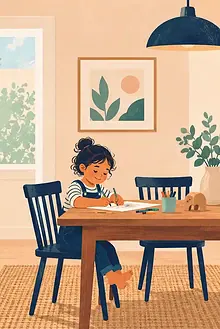
A child can listen while rocking, drawing, standing or turning the same page repeatedly. Shared reading is a relationship and meaning-making activity, not a test of sitting posture. When adults loosen the picture of what reading should look like, many children can participate more comfortably.
Begin with access, not compliance
Notice what gets in the way. Is the book hard to hold? Is print too small, the room noisy, the language unfamiliar or the story too long? Does the child need movement, AAC, signs, objects to touch or a better view of the reader’s face? Change the environment before asking the child to change.
Offer two or three choices: a rhyme, factual book, comic, audiobook, tactile book or familiar favourite. Repetition is not failure. A child may notice new patterns, practise joining a refrain or enjoy knowing what comes next.
Use a five-minute invitation
Say, “I’m going to read this for five minutes. You can listen here or nearby.” Start at a natural pause, not necessarily page one. If the child leaves, continue briefly while they play and notice whether they respond. Stop without disappointment when interest is gone. A positive two-minute exchange beats finishing through conflict.
Let movement belong in the story
- Act out a verb, animal or journey between pages.
- Give the child a prop connected to the story.
- Place picture cards around the room to find in sequence.
- Invite drawing or building while listening.
- Use an audiobook while following pictures or objects.
Movement should help participation, not become a reward earned by sitting. If a child uses a wheelchair or supportive seat, position the book for comfortable viewing and access to a switch, page turner or communication system.
Make conversation optional
Instead of a stream of comprehension questions, comment: “That dog looks unsure,” or “The storm is closer.” Pause for any response—speech, gaze, gesture, sign, movement, drawing or AAC. Ask one genuine question when it adds interest. Accept “I don’t know” and silence.
For limited vision, describe images, improve lighting and add objects or textures. For a child who is deaf or hard of hearing, make your face and page visible and use established communication. In a multilingual family, use the language that makes connection richest; translating and mixing languages can support meaning.
Adapt as children grow
Babies may mouth a sturdy book or attend for seconds. Preschoolers may repeat one line and skip pages. School-age children can alternate reading, listen while creating or choose nonfiction. Older children may enjoy being read to after they read independently. Comics, magazines, manuals and recipes can sit alongside novels.
Try these low-pressure reading prompts. Remember comics are real reading. For vision access, use this accessible-reading guide.
When to seek support
Movement during reading alone does not identify a disorder. If a child consistently cannot access books because of vision, hearing, language, motor or learning concerns, raise the pattern with their teacher, health professional or specialist. Ask what formats improve access rather than forcing longer sitting.
A gentle measure of progress
Look for shared attention in any form, anticipation, choice, laughter, a repeated phrase, a question later or a request for the same book. Those are meaningful signs. The aim is a durable relationship with stories and information, not a performance on the sofa.
Keep a small “worked today” note: format, time, setting and the child’s chosen way of joining. Use it to offer better choices, not to score attention. If one day brings no interest, close the book warmly and try another time.
Sources and further reading
Build a small menu instead of one fixed routine
Write three options the child can choose from: “listen while moving,” “look at pictures together,” or “hear one page and tell the story another way.” Keep books in more than one place so reading can happen at breakfast, on transport or during a quiet wait. If the child refuses, respect the no and keep access available. Choice reduces the sense that every book is schoolwork. Over time, note which formats, topics and times invite spontaneous return.