- Write down the two activities precisely
- Use the actual markings to check a common combination
- Try this check before the next outing
- Separate certification, fit and condition
- “Multi-use” does not mean unlimited impacts
- Give the child a useful role without handing over the decision
- Sources and further reading
By EdCaptain editorial desk · Published
The helmet looks like the ones at the skatepark, and the shop calls it “multi-sport.” Can your child use it for a bike ride and then take it skateboarding? The useful answer comes from the exact helmet’s labels and instructions, not its shape or the photograph on the box.
This guide helps caregivers of children and teens aged 6–18 check that question. It does not establish that a child is ready to skateboard, ride in traffic or attempt tricks. Follow the equipment’s age and use limits, local rules and the supervision appropriate to the rider.
Write down the two activities precisely
Start with what your child actually plans to do: ordinary cycling and unpowered skateboarding, for example. Do not quietly expand that to downhill racing, motorised riding, skiing or climbing because all involve helmets.
The U.S. Consumer Product Safety Commission’s activity guide separates helmet types and standards by activity. A useful family check therefore has two questions: “What is this helmet approved for?” and “Is that what we are doing?”
If a lesson or venue has equipment requirements, ask for them before paying or arriving. “A helmet is required” may leave the relevant type unclear. Ask: “Which activity certification must it have, and do you need to check the helmet before the session?”
Use the actual markings to check a common combination
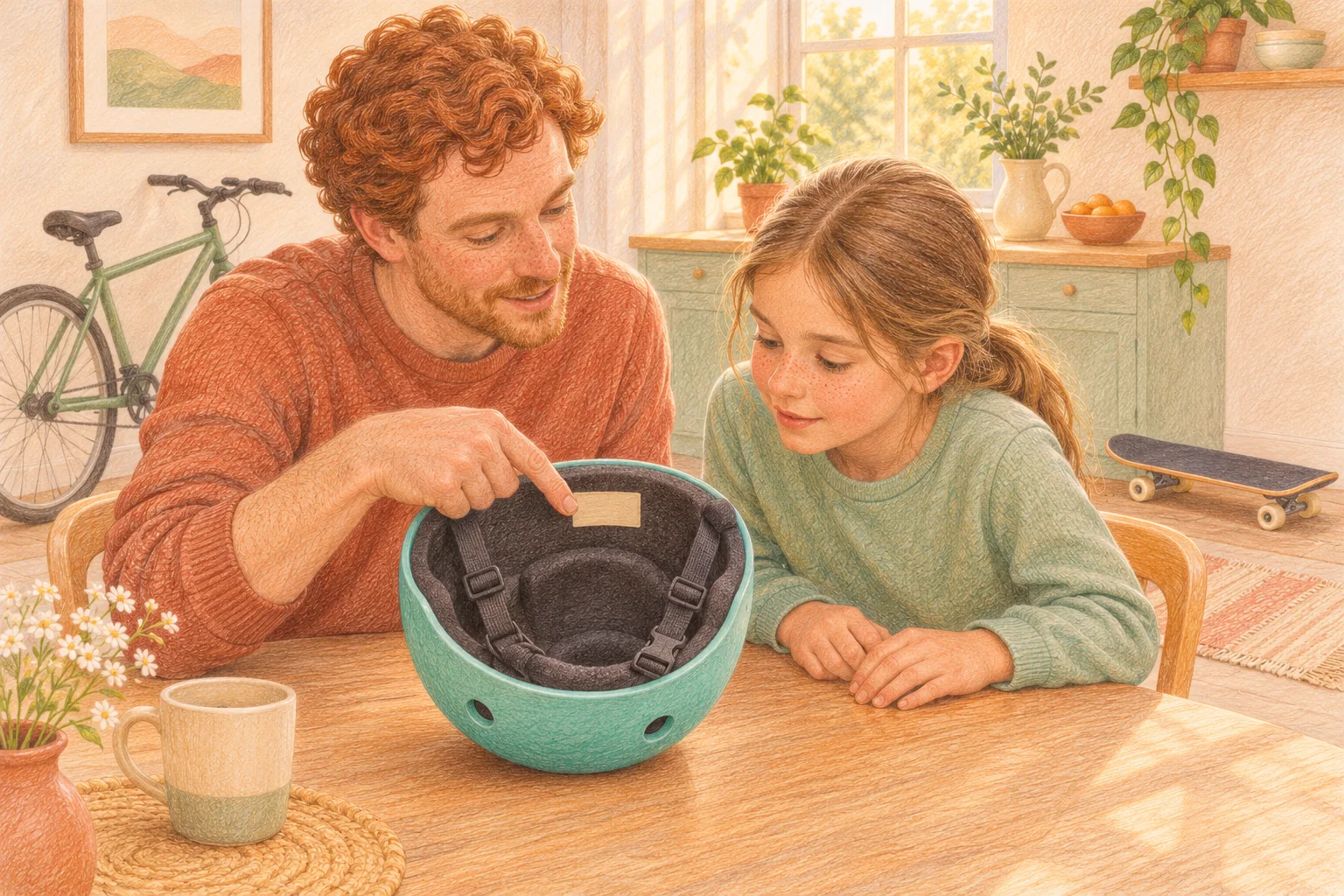
For a common U.S. bike-and-skateboard combination, look for both bicycle certification to CPSC 16 CFR Part 1203 and skateboard certification to ASTM F1492. These refer to different activity requirements; one marking does not silently supply the other.
The CDC’s bicycle helmet factsheet says a multi-use helmet needs a CPSC label certifying it for biking. Its skateboard factsheet says to check for an ASTM label certifying skateboard use.
This is one practical certification route, not an exhaustive worldwide list. The CPSC guide also lists other standards for some activities. If your helmet uses different markings, ask its manufacturer and the relevant local safety authority or programme to confirm the exact intended uses. Do not treat an unfamiliar standard as proof of either suitability or failure.
Try this check before the next outing
- Find the exact model. Look for the manufacturer, model, size and manufacture information. Compare the helmet in your hands with its official instructions, including the market or version where relevant.
- Find the activity markings. Read inside the helmet, on its attached labels and in the instructions. Do not peel labels away or remove structural padding to search.
- Match both activities. For the U.S. combination above, identify the bicycle certification and the skateboard certification separately. “ASTM” without a clear relevant standard or activity is not enough to settle your question.
- Resolve a mismatch. If the seller’s description says “bike and skate” but the markings do not establish that, pause use for the unconfirmed activity and ask the manufacturer. Keep a photograph of the label for that enquiry.
- Check the remaining conditions. Confirm the rider fits the stated size and age limits, the helmet fits correctly and its condition and history do not rule it out.
A saved product screenshot can help explain what you bought. It cannot make an unreadable or contradictory label on a different model disappear. If you cannot establish suitability, use another correctly certified, properly fitted helmet for that activity rather than trying it “just once.”
Separate certification, fit and condition
Passing one check does not pass the other two. A helmet can have appropriate activity markings and still be too large, uncomfortable, damaged or missing parts. Equally, a comfortable helmet is not automatically certified for skateboarding.
Ask the child how it feels and follow the exact manufacturer’s adjustment instructions. The CDC factsheets recommend bringing the rider when buying so fit can be checked; sizes can vary between brands. Our bicycle helmet-fit guide covers the fit routine separately.
Do not add homemade padding, modify the shell or assume tightening everything will fix the wrong size. If the child cannot tolerate a particular shape or fastening, ask a knowledgeable retailer or manufacturer about a different suitable model. The aim is an appropriate helmet the rider can wear correctly.
“Multi-use” does not mean unlimited impacts
Do not confuse covering two activities with remaining protective after every fall. The CDC distinguishes very minor hits from serious crashes and says a multi-use helmet must be replaced after a serious crash or damage. Follow the manufacturer’s replacement instructions, and stop using a helmet with cracks, broken parts or missing padding.
If the helmet’s history is uncertain, do not let its clean appearance settle the decision. Keep a retired helmet away from the ready-to-ride equipment so another caregiver does not select it by mistake. A replacement decision about equipment also cannot assess whether an injured child needs medical attention.
There is no concussion-proof helmet. If you suspect a concussion, stop the activity and seek medical advice; a new helmet is not permission to resume. After a head blow, get emergency medical help for a seizure, repeated vomiting, a worsening headache, increasing confusion or inability to recognise people or places, slurred speech, weakness or reduced coordination, unequal pupils or double vision, or difficulty waking or staying awake. See the CDC’s concussion danger signs; symptoms may appear later.
Give the child a useful role without handing over the decision
For ages 6–9, the adult reads the markings and explains the result: “This label is for bikes; we still need to confirm skateboarding.” The child can help find the label and describe fit or discomfort without being expected to interpret standards.
For ages 10–12, check the two activities together. Let the child point to the relevant information and practise asking an adult when a borrowed helmet has unclear markings. The adult confirms the decision.
For teens aged 13–18, include rental and borrowed gear in the same routine. A teen can record their model and approved activities and ask a venue about its requirements. Agree that a missing label, uncertain history or unsuitable fit means pausing, even when friends are already starting.
The scooter, skateboard and skating guide addresses the separate questions of practice space, protective equipment and supervision. Keep the helmet check as a clear part of that wider plan: right activity, confirmed markings, correct fit and usable condition.
Sources and further reading
- CPSC: Which Helmet for Which Activity? (March 2026)
- CDC: bike helmet labels, fit and replacement
- CDC: skateboard and multi-use helmet guidance
Read our editorial policy and health-information guidance.