A first-aid kit is useful only when people can find it, open it and trust what is inside. A stuffed bathroom drawer is not the same thing. Build one portable kit around common immediate needs, keep medicines managed separately, and add a simple review routine so opened or expired supplies do not quietly remain for years.
Choose the location before the container
Pick a dry, easy-to-reach place known to adults and older children, but inaccessible to young children. Avoid a humid bathroom or a locked location nobody can open quickly. A portable box with internal pouches works better than loose items spread across cupboards. Consider a smaller travel or car kit suited to local temperatures and journeys.
Post emergency numbers and the home address nearby. Include a card with allergies, health conditions, emergency contacts and any clinician-advised personal items. Review it when circumstances change.
Start with practical supplies
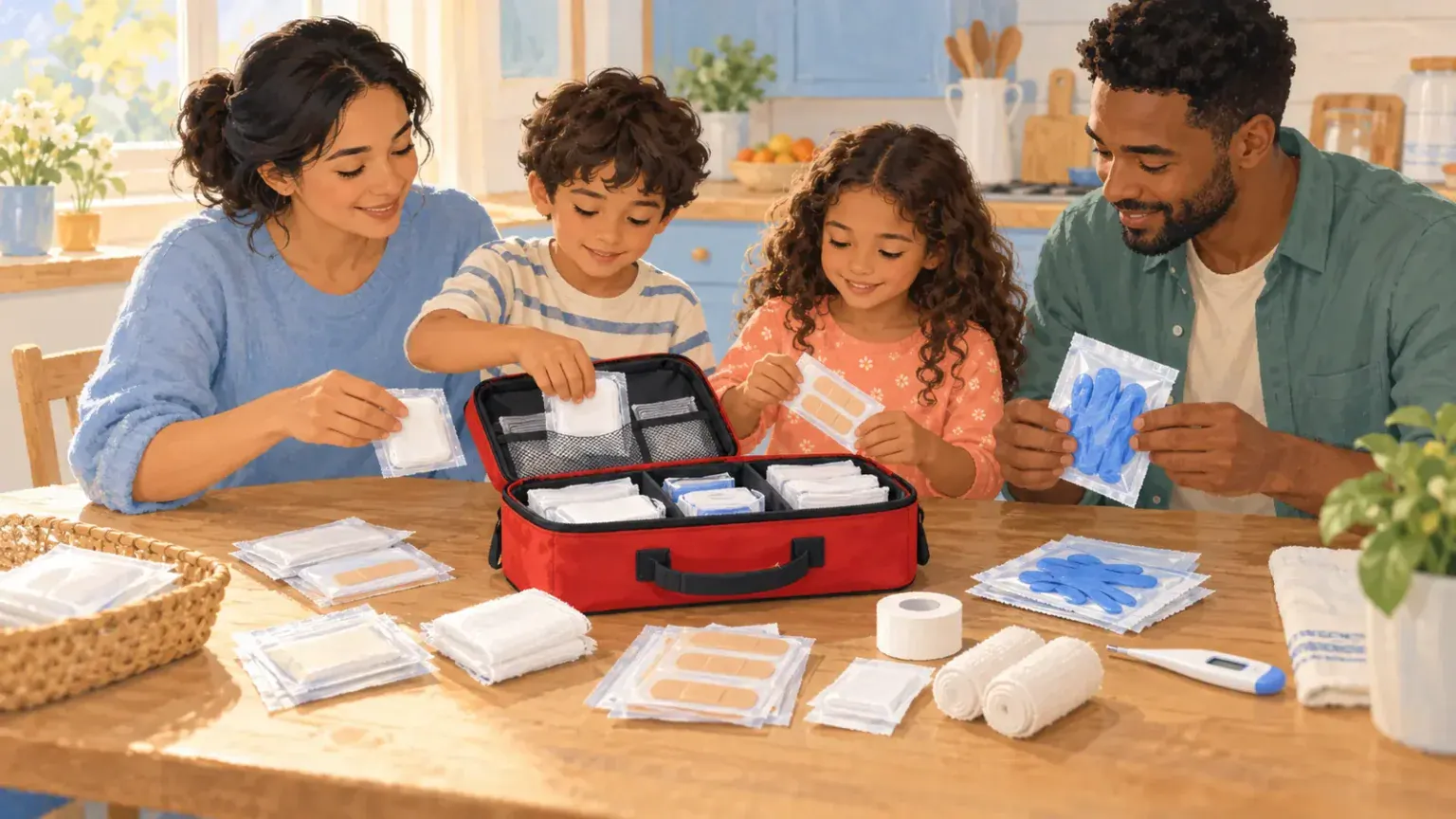
- Adhesive bandages in several sizes, sterile gauze pads and a roller bandage.
- Adhesive cloth tape, an absorbent compress and a triangular bandage.
- Non-latex gloves, an emergency blanket and a cold pack.
- A non-glass thermometer, tweezers and blunt-ended scissors.
- A breathing barrier and current first-aid instructions appropriate to your country.
Keep each item in intact packaging. Add household-specific supplies only after considering instructions from a qualified health professional. A kit is not a reason to stock or give medicines without knowing the person, dose, contraindications and expiry.
Organise for a stressed moment
Group items by purpose—bleeding, protection, tools and information—rather than by purchase date. Put gloves and the first-aid instructions on top. Use transparent pouches or simple picture labels. Make a short inventory that says what belongs in each pouch and where replacement stock is kept.
For a child who can help, practise fetching the kit and finding the emergency card without opening sterile packages. Older children may learn age-appropriate first aid through a recognised course; possession of supplies is not a substitute for training.
Create a maintenance rhythm
Check the kit after every use and on a fixed date several times a year. Replace used, expired, wet, torn, discoloured or leaking items. Test that the container closes, scissors work and adhesive still holds. Update contact and health information. Keep a small note of the review date rather than trusting memory.
Do not combine decanted tablets or unidentified creams in the kit. Store prescribed medicines according to their labels and household safety plan. If a clinician recommends an emergency medicine, make sure trained caregivers know its location and plan, while keeping it secure from children.
Know the kit’s limit
Call emergency services for severe bleeding, breathing difficulty, unconsciousness, seizure, serious burns, suspected poisoning, major injury or any situation that feels life-threatening. Follow dispatcher instructions. A first-aid kit supports immediate care while appropriate help is arranged; it does not diagnose injuries or replace professional assessment.
If your family travels between homes, keep a basic kit in each regular location rather than assuming one box will always be carried. Tell babysitters and visiting caregivers where it is during handover.
Pair the kit with EdCaptain’s caregiver handover sheet and three-day family emergency checklist.
Make access inclusive
Adults with limited vision, dexterity or reading ability may need high-contrast pouch markers, easy-open inner sections or a spoken inventory stored on a phone. Keep the outer container secure from young children while making it usable by the adults expected to respond. If the household uses more than one language, include emergency instructions and contacts in the languages caregivers understand best.
After using the kit, note what was hard to find rather than simply replacing the missing item. Reorganise around real use. If several homes share care, agree on a common layout so a caregiver does not have to learn a different system during an emergency.