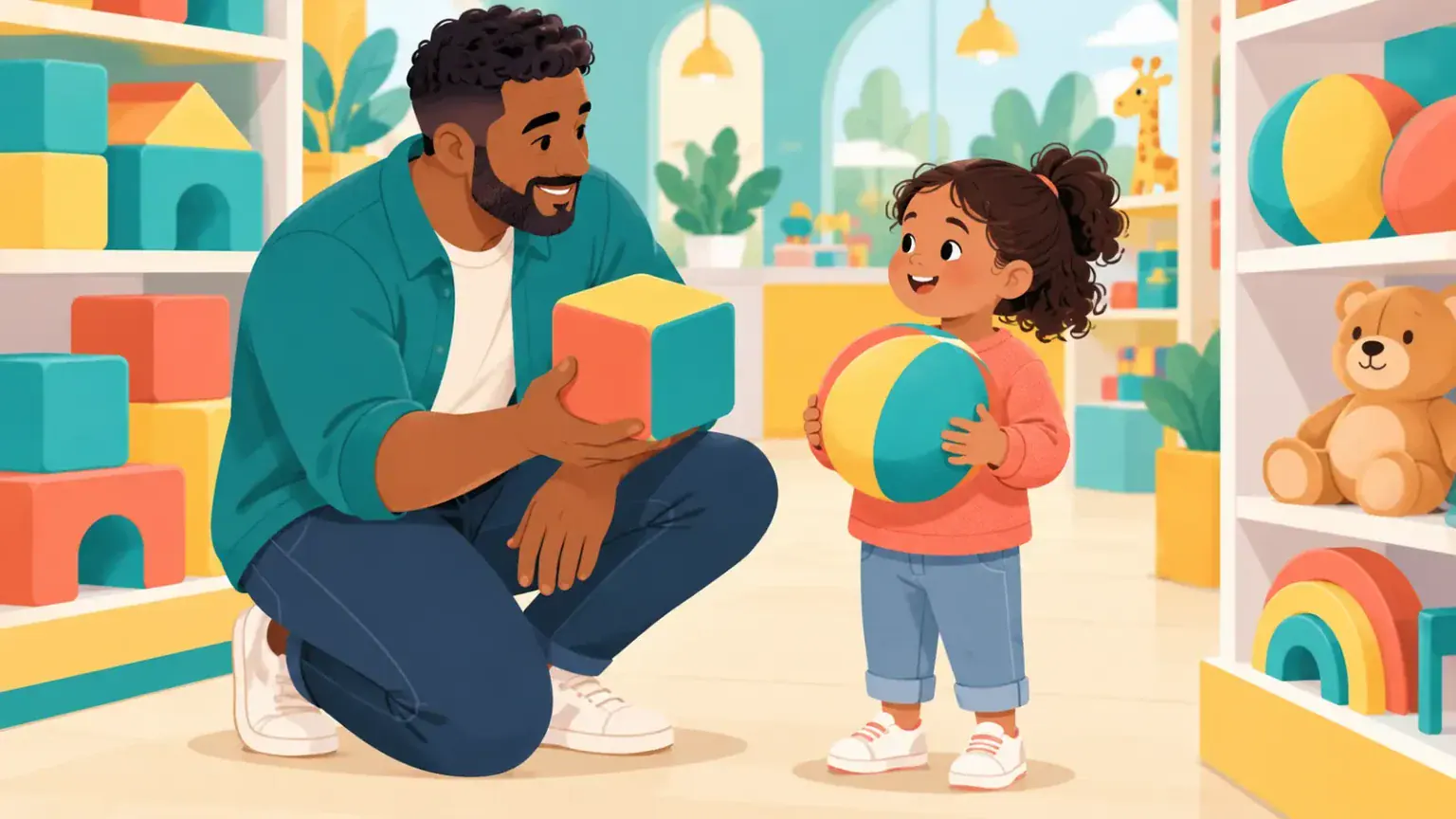
A toy can meet a standard and still be wrong for a particular child or home. Age labels and warnings narrow the risk, but caregivers also need to consider how the child plays, who shares the space and what happens when pieces scatter. Treat the package as evidence, not as the entire decision.
Age guidance is about safety, not intelligence
A toy marked for older children may contain small parts, stronger magnets, projectiles or instructions that assume mature judgement. Do not “age up” to challenge a child. Find more complexity within the safe range through open-ended materials, richer pretend play or additional ways to build.
For children under three, avoid small parts and small balls. Broken or uninflated balloons also need special care and should be kept away from children under eight. A household tube can raise awareness of choking size, but it is not a substitute for official testing or package warnings.
Turn the box over
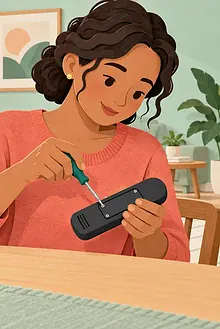
Check how the toy is powered and assembled. Button or coin battery compartments should be secured against child access. Avoid loose high-powered magnets. Add the correct helmet and protective gear to the true cost of scooters and riding toys.
Look for cords, projectiles, heat, loud sound, sharp points and pinch spaces. For online listings, identify the manufacturer, age guidance, warnings, return route and recall information. Vague photos and missing safety details are reasons to pause.
Match the child’s real play
A child who mouths objects needs larger, robust pieces even if peers have moved on. A child who throws when excited needs materials that will not become heavy projectiles. For limited hand strength or vision, seek large graspable pieces, useful contrast and simple switches without adding detachable adaptations.
Ask whether the child can start and stop the action, participate seated or with one hand, and use the toy without constant correction. Sound and flashing that overwhelms a child can make a technically suitable toy unusable.
Check everyone who shares the space
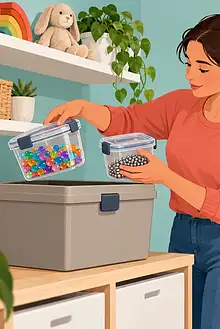
A construction set for a ten-year-old may create a choking risk for a toddler. Decide where small-part play will happen and where it will be stored before purchase. Use a tray or defined table so cleanup is visible; count critical batteries or magnets afterward.
Inspect second-hand toys for missing covers, cracks, frayed cords, damaged seams and absent instructions. Search the relevant national recall database. Do not use an unknown second-hand helmet or a vintage electrical toy whose history and compliance cannot be established.
Open and maintain it well
Remove plastic wrapping and ties promptly. Assemble exactly as instructed and keep the manual. Supervise until you know how the child uses the toy. Recheck for loose hardware, splinters, leaking batteries, worn fabric and pieces that have broken small. Stop using damaged items until repaired according to the manufacturer or discarded safely.
For practical alternatives, see EdCaptain’s small-parts-free play pack and mixed-age sibling play pack.
Use a five-question buying pause
Before paying, ask: Is it within the marked age range? Can any piece, battery or magnet become accessible? Does the child have a safe place to use it? Can the household store every piece away from younger children? Can you identify the maker and check recalls? If one answer is unclear, pause rather than relying on the excitement of the moment.
Gifts need the same review. It is reasonable to thank the giver and delay opening until an adult checks the package. Keep gift receipts, and explain household rules without blaming the giver: “We check every toy for the children who share this space.”
Before buying, keep the receipt and photograph the model information privately so an adult can identify the exact product if a recall or safety notice appears later.