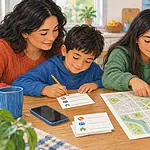
Preparing for several days without usual services can be practical rather than frightening. Start with the hazards and official advice where you live, then build a household checklist around real people: babies, children, disabled family members, older relatives, pets and anyone who depends on medicines or powered equipment.
Use local guidance as the authority
Ready.gov’s child and parent checklists suggest supplies for at least three days, including water, food, lighting, communication, hygiene, first aid, clothing and comfort items. That is a useful planning framework, but quantities, emergency numbers, climate needs and recommended duration may differ. Check local government, disaster-management and public-health guidance before finalising the list.
Organise the checklist by need
Water and food
- The locally recommended amount of safe water for drinking and hygiene
- Non-perishable foods the household can actually eat
- A manual can opener if needed
- Infant feeding supplies or allergy-safe foods where relevant
Health and access
- First-aid supplies and required prescription medicines managed by adults
- Copies of essential health information stored securely
- Glasses, hearing-device supplies, mobility items and backup plans for powered equipment
- Menstrual, toileting and hygiene supplies
Communication, light and warmth
- Charged phone power banks and appropriate chargers
- Battery-powered or hand-crank radio where recommended
- Safe flashlights
- Weather-appropriate clothing and blankets
- Paper contact plan and local map
Comfort and occupation
- A familiar comfort item
- Books, paper, pencils or one compact game
- Ear defenders or other regulation tools if used
Keep adult-only items adult-only
Medicines, matches, fuel, knives, chemicals, loose batteries and tools should be selected, stored and used by adults according to official instructions. Do not put hazardous supplies in a child’s personal backpack to make them feel responsible. Check expiration dates and damaged packaging away from children.
Give children bounded roles
A young child can choose one book or comfort item. A school-age child can help count sealed water containers, label a games pouch or check clothing sizes. A teen can help compare the household list with current local guidance while an adult verifies decisions. No child should be told that family safety depends on their memory or performance.
Build in short rounds
- List household-specific needs before shopping.
- Gather what is already safe and usable.
- Mark gaps by priority rather than buying everything at once.
- Pack items in containers household members can physically access.
- Write the review date on the outside.
For families with limited budgets, prioritise local official essentials and community support information. Do not shame people for an incomplete kit. Preparedness advice must remain realistic about housing, storage, money and water access.
Store, inspect and rotate
Choose a place protected from children, heat, moisture, pests and theft while still accessible to the adults who need it. Review food, water, medicines, batteries, clothing sizes and contact details on a regular schedule. Rotate usable food before it expires. Replace leaking or damaged items promptly.
Talk about the plan calmly
Explain: “This box helps us if power, water or travel is interrupted. Adults will decide what to do.” Answer the question asked without adding frightening detail. Practise finding the kit and contact card, not a dramatic disaster scene. If preparedness discussion causes persistent distress, pause and seek appropriate support.
Pair the supplies with EdCaptain’s family emergency communication card once published. For a broader travel health list, see travel with a child’s medicines.
Plan for separation as well as sheltering
Some emergencies happen while family members are at work, school or elsewhere. Store smaller appropriate supplies where local guidance and policies allow, and make sure each setting has current contacts. Do not send prohibited items to school. The household checklist should connect to the communication plan, meeting places and authorised pickup arrangements rather than assuming everyone will be home with the main kit.
After each review, record the date and one unresolved gap. Address that gap before adding optional extras.