- Open the official notice before forwarding the warning
- Use a six-line response record
- Pause serving while you resolve a possible match
- Trace portions that left the kitchen
- Clean according to the hazard and instructions
- If someone may be unwell
- Close the loop without building a surveillance system
- Sources and further reading
By EdCaptain editorial desk · Published
A recall message arrives while someone is packing lunch. The brand looks familiar, but the packet in the cupboard is a different size. Another portion may already be in a reusable container at a grandparent’s home.
A short response record helps the adults answer two questions: Which food is affected, and who is making sure it is not served? This is a caregiver resource, not a task to delegate to children. The current official notice for the exact product always takes priority over a general checklist.
Open the official notice before forwarding the warning
Follow the alert back to the food-safety authority for the country concerned or the manufacturer’s genuine recall page. For imported food, check information for the place of purchase and where it is being used. A cropped social-media image may omit the batch details or an expansion of the recall.
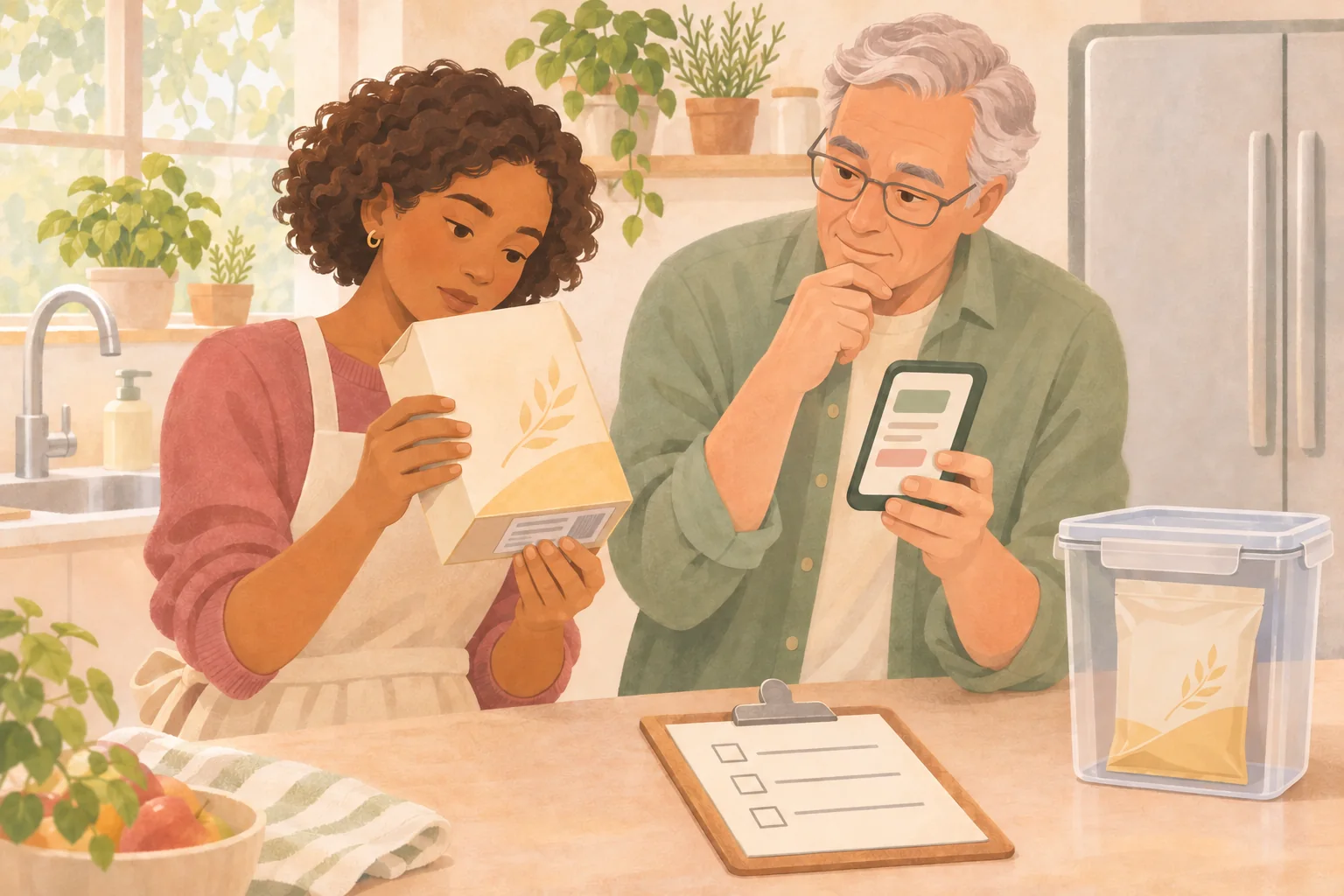
The FDA’s consumer recall guidance describes the identifiers that notices can include: product and brand, pack size, barcode, lot or batch code, dates and distribution details. Compare the actual item, not just a familiar-looking picture.
Save the notice URL and the time you checked it. Reopen that page for updates rather than treating a screenshot as the final version. Do not assume a whole brand is affected, or that a similar item is safe without reading the scope.
Use a six-line response record
Copy these headings onto paper or into a private shared note. One adult owns the record; another can take over when needed.
| Record | What to put here |
|---|---|
| Official alert | URL, issuing authority, notice date and latest check time. |
| Our product | Name, pack size and exact batch/date codes; a clear label photo if available. |
| Where it went | Cupboard, fridge, freezer, decanted container, packed meal or another caregiver. |
| Immediate action | What was removed from use, by whom and when; any uncertainty still being checked. |
| Next instruction | The notice’s return, disposal, cleaning or contact direction, with an adult responsible. |
| Closed or follow-up | Action completed, people informed, unresolved questions and next check. |
Keep medical details in the appropriate private care record, not a widely shared shopping note. Plain words such as “batch not confirmed” are more useful than a confident tick beside an unanswered question.
Pause serving while you resolve a possible match
Keep a suspected item out of meals while an adult checks the notice. If it matches, follow the recall’s instructions. Do not taste it to decide, or treat normal smell and appearance as clearance. Do not try to make a recalled item usable by cooking, freezing, washing or removing one ingredient unless the official notice explicitly provides that remedy.
Keep it inaccessible to children and pets while arranging the directed next step. Record the packaging information before disposal where safe, but never open a product or handle a spill merely to obtain a better photograph. Follow the notice’s return or secure-disposal instructions. The FDA specifically says not to give recalled food to other people, a food bank or pets.
If the original packet has gone, write what you do know: purchase date, retailer, receipt and remaining product. Ask the retailer or manufacturer using verified contact details. Do not invent a batch code from another packet or mix uncertain contents with a fresh supply.
Trace portions that left the kitchen
Check the actual places this food might have gone: a lunchbox, a freezer portion, a dish made for visitors or a container at another household. Keep the search proportionate to what you bought and prepared. You do not need to broadcast private family details or accuse a school of using the same product.
Send the relevant adult a precise message:
“Please do not serve the snack from the blue container while I check a recall. I’m sending the official notice and a photo of the packet code. Can you confirm whether that container is still there and keep it out of use? I will send the confirmed instruction.”
Include the actual notice URL and product identifiers when you send the message. Ask for confirmation rather than assuming a message was read. If food has already been eaten, say so plainly and follow the notice’s health advice; do not suggest that illness is inevitable. Update the household’s caregiver handover sheet when it affects food currently available.
Clean according to the hazard and instructions
Recalls have different causes, so read the notice’s specific directions. For possible germ contamination, the CDC’s refrigerator-cleaning guide covers containers, shelves, counters and other contact areas. It also addresses food that touched the recalled item.
Adults handle cleaning. Protect the remaining food while working: CDC says not to leave it unrefrigerated for more than two hours. Let cold glass shelves reach room temperature before washing so hot water does not crack them. Follow appliance and cleaning-product instructions, keep chemicals away from food and children, and never mix cleaning products. Wash hands afterward. Use the linked guide and recall directions for the complete procedure rather than improvising a stronger chemical mix.
A recall check is separate from a temperature decision. If the power also failed, use the power-outage food checklist for that additional problem.
If someone may be unwell
Contact a healthcare professional promptly if symptoms occur after a possible exposure, and tell them the product, when it was eaten and the recall information. Seek urgent medical care for bloody diarrhoea, vomiting that prevents keeping liquids down or signs of dehydration such as very little urine. CDC’s food-poisoning guidance explains that symptoms and timing vary; this checklist cannot identify the cause. Seek advice early for an infant or anyone at higher risk, and follow any individual care plan. Call local emergency services for a life-threatening emergency; do not finish the record first.
Close the loop without building a surveillance system
Mark the directed action complete, confirm the other caregivers received the update and note any official follow-up still required. Keep receipts or label photos needed for the response, then remove unnecessary personal information when it is no longer needed.
Choose one reliable official alert route relevant to where you buy food. The useful habit is checking an actionable notice carefully—not asking children to inspect every meal or keeping the family in constant alarm.
Sources and further reading
- FDA: Food Recalls—What You Need to Know.
- CDC: cleaning a refrigerator after a food recall.
- CDC: food-poisoning symptoms and when to seek help.
Read our editorial policy.