A flood checklist should not predict exactly what the family will do. Floods can be slow or sudden, roads may close and authorities may order evacuation or sheltering. A useful plan says where official instructions come from, what can be collected quickly and what the family will never do.
Map risk before rain starts
Use the local authority’s flood maps and warning service, not a generic social-media map. Mark home, school, childcare, work and two possible destinations outside the likely affected area. Record routes but label them “options subject to official direction.” A familiar road may become unsafe.
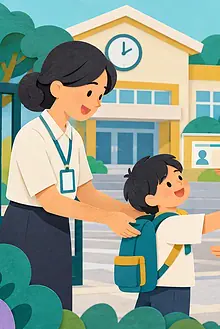
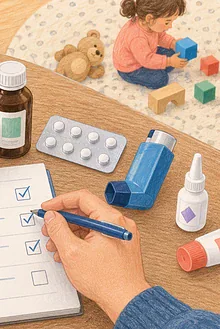
Ask the school how children will be protected and reunited. Update authorised pickup contacts. If a child uses medicines, mobility equipment, AAC, formula or specialised food, plan how essentials move with them. Keep suitable chargers or backup power for critical equipment.
Create a leave list and a stay list
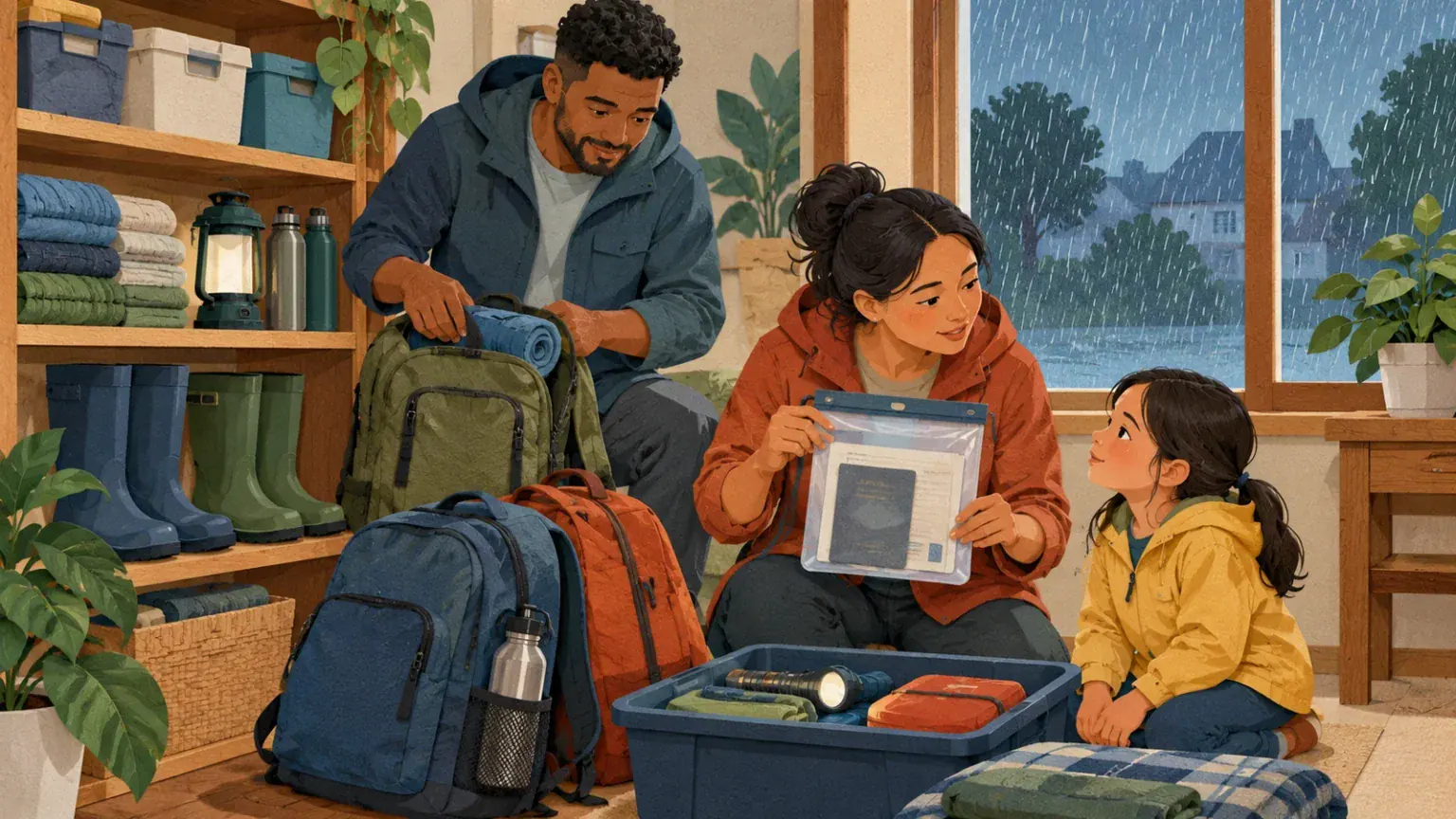
The leave list should fit in minutes: people, pets, medicines, communication aids, keys, phones, chargers, identification, essential documents, safe water, clothing and the prepared bag. The stay list covers moving to the safest instructed area, keeping alerts on and avoiding electrical hazards. Authorities decide whether and when to evacuate; the checklist supports, not replaces, that decision.
Protect information
Keep essential copies in a waterproof portable container and secure digital copies. Store only what is needed. A child’s pocket card may include first names and essential contacts, not a complete dossier. Photograph current family members and important equipment for identification and insurance.
Teach one non-negotiable rule
Never walk, swim or drive through floodwater. Ready.gov warns it may contain debris or contamination and may be electrically charged by downed lines. Moving water can knock a person down or sweep away a vehicle. A child moves away and tells an adult—not retrieves a toy, pet or bag.
Keep children away from wet electrical equipment, generators, drains, unstable ground and cleanup debris. Use fuel-powered equipment only as instructed and never indoors or near openings where fumes can enter.
Give children a safe role
A preschooler can keep a comfort item near the bag. A school-age child can carry their communication card and practise following the named adult. A teen can monitor an official alert or check supplies with an adult. No child should enter water, supervise younger children alone or decide when to evacuate.
Pair this with a communication card and three-day supplies. Swimming skill does not make floodwater safe; keep that distinction in water-safety conversations.
After water recedes
Return only when authorities say it is safe. Keep children away from contaminated water, mould, animals, sharp debris and damaged buildings. Follow local advice for water, food and cleanup. Debrief gently: what helped, what confused and what needs replacing?
Put a review date beside the warning service, destinations, routes and support contacts. Construction, family mobility and local risk change. A plan that has not been opened in two years may create false confidence, so practise locating the bag and receiving an alert at least twice a year.
Sources and further reading
Make the checklist usable when adults are apart
Give each responsible adult the same alert source, destination names and contact order. Decide who collects children only if local authorities and the school say travel is safe. If phones fail, use the agreed out-of-area contact and meeting place from the family communication plan. Do not send multiple adults on competing routes. Record who has transport, who supports a disabled family member and who takes the prepared bag, then name a backup for each role.
Keep sturdy footwear and weather-appropriate clothing accessible rather than buried in storage.