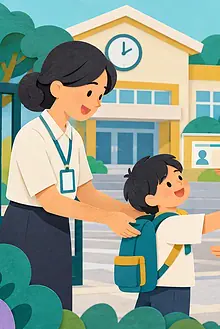
A child-facing emergency card should be small enough to carry and simple enough to use under stress. It is not a miniature family archive. The goal is to help a child reach a trusted adult, state who they are, and know the agreed meeting places if normal routines are disrupted.
Localise before you write
Find the official emergency number and disaster guidance for the country and community where the child lives. Do not copy 911 or another country’s advice automatically. Ask the school, childcare setting or transport provider how they communicate and who may collect a child in an emergency.
Ready.gov recommends a written family communication plan because phones, computers and power may be unreliable. Its guidance includes household contacts, an out-of-area contact, meeting places and practice. Adapt those principles to local services and the child’s access needs.
Put only essential information on the card
- Child’s preferred name and one family name
- Two trusted adult contacts with relationship and phone number
- One out-of-area contact, if useful locally
- A neighbourhood meeting place and an out-of-neighbourhood meeting place
- School or childcare contact
- The local emergency number and a plain-language note about when to use it
- Critical communication or medical information only when necessary for safety
Avoid social-security numbers, financial details, passwords, copies of identity documents and a full daily schedule. Store fuller records securely with adults. If the card could expose a protected address or family member, seek specialist safety advice before carrying it.
Design for the child who will use it
Use large print, strong contrast and short labels. Add symbols for call, text, school and meeting place. A child with low vision may need large print, braille or an accessible digital copy. A child who uses AAC can store an emergency message in their usual system. Include communication preferences such as “I understand more than I can say” only with the child’s involvement and when helpful.
Make three copies
- One in the child’s backpack, wallet or mobility-equipment pouch.
- One with the caregiver or trusted adult.
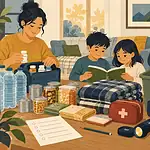
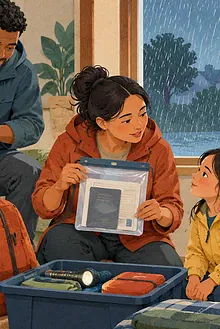
- One in the household emergency kit or another agreed secure location.
Do not attach the card visibly to the outside of a bag. Save contacts in devices too, but keep paper available in case batteries or networks fail.
Practise without staging a frightening disaster
Use calm, ordinary language: “Sometimes phones stop working or plans change. This card helps us find each other.” Practise locating the card, naming the trusted contact, and walking to the nearby meeting place when safe. Role-play one brief message: “I’m safe. I’m with my teacher at the library.”
Do not surprise-test the child, hide caregivers or use graphic scenarios. A child who becomes anxious can practise one step at a time or watch an adult demonstrate. The adult remains responsible for the plan.
Review after every change
Check the card at least annually and whenever phone numbers, schools, caregivers, addresses or access needs change. Replace every copy together. Tell the named contacts they are on the plan and confirm they agree.
Know the limits
A card cannot override school safeguarding procedures, evacuation orders or professional emergency instructions. Children should follow responsible adults at school and call emergency services only for situations that meet local guidance. The purpose is reconnection, not independent disaster management.
For appointment communication, see health-appointment question cards. For medicines during travel, use the child travel medicines plan.
Coordinate with other caregivers
Share the current plan with co-parents, relatives, personal assistants and other adults who may be responsible for the child, while respecting privacy and safeguarding arrangements. Agree on the same meeting-place names and who is authorised to collect the child. If adults give conflicting instructions, resolve that outside the practice session; the child should not have to decide which caregiver’s emergency rule is valid.