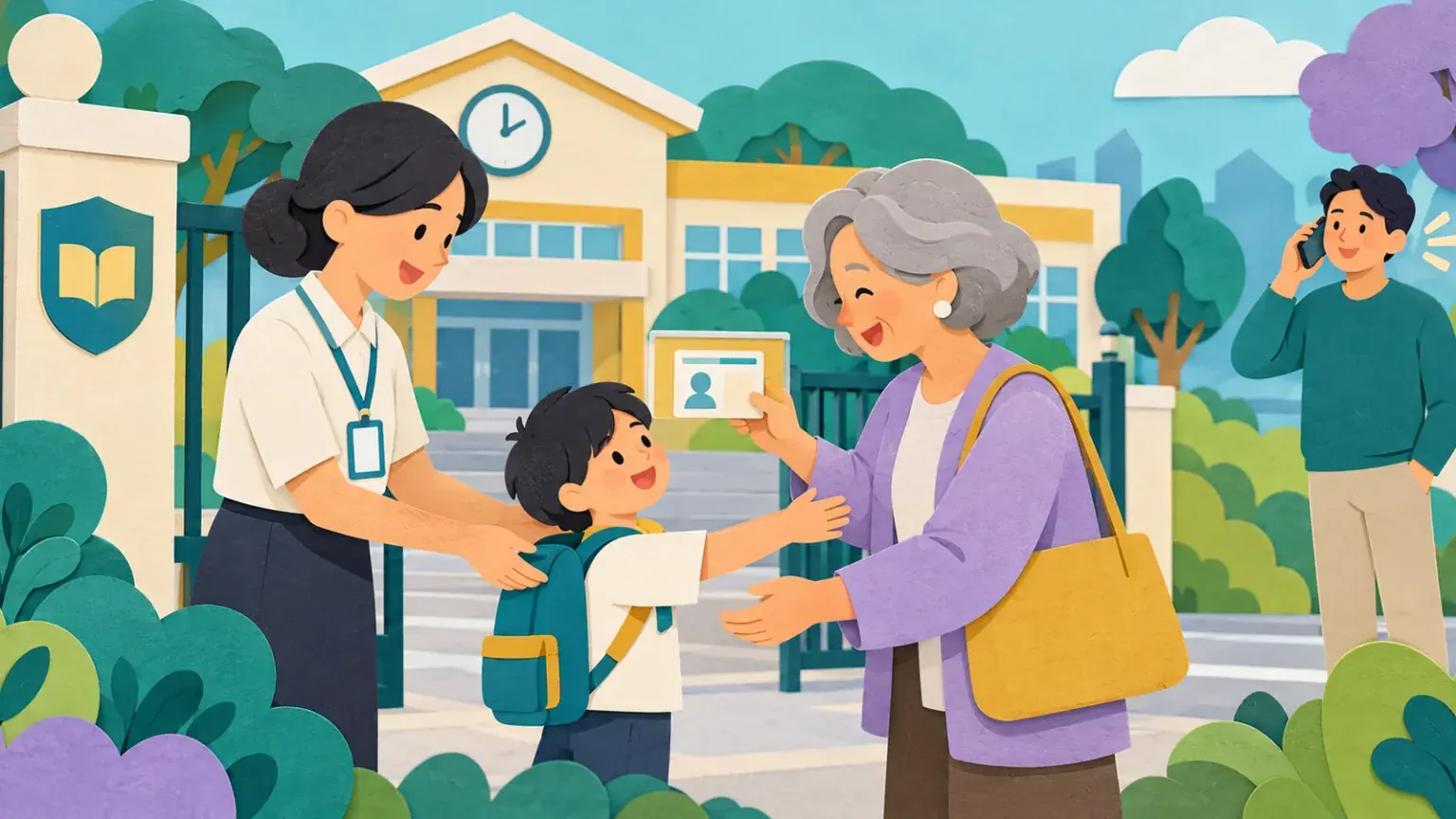
The worst time to decide who may collect a child is five minutes after the usual adult becomes stuck. A backup pickup plan should be agreed with the school, recorded through its official process and explained without asking the child to judge unfamiliar adults alone.
Learn the release rules first
Ask how authorised adults are added, what identification is required, how same-day changes must be reported and what happens when nobody arrives. Some schools will not accept a text, a note relayed by a child or a call from an unverified number. Follow the setting’s procedure rather than creating a workaround.
Choose at least two backup adults who are willing, reachable and close enough. Confirm they know the location, dismissal time, access arrangements and any car-seat requirement. A name on a form is not a plan if the adult cannot leave work or lacks safe transport.
Create a contact order
- The school calls the primary guardian.
- If there is no answer, it calls the second guardian or named backup in order.
- The authorised adult contacts the school using the official channel.
- The school verifies identity and releases the child under policy.
Write this sequence on the family planner. Keep sensitive details off a calendar visitors can see. Review contacts each term and after an address, number, employment or family change.
Give the child one memorable rule
Say: “If pickup changes, stay with your teacher or the school office until they tell you the authorised adult is here.” A younger child can practise finding the named staff member. For an older child travelling independently, agree on a safe place to wait and what to do if a phone dies. Never ask a child to leave the site to search.
A family password can be an extra cue but cannot replace verification. Passwords may be overheard, shared or forgotten. Responsible adults and the school still control release.
Plan for disability, health and two homes
Tell the setting what equipment, communication support, medicine or accessible transport must travel. A backup unable to manage those needs is not effective. If a child moves between homes, record authorised adults under current legal and school arrangements; do not make the child mediate at the gate.
Connect this to a backup childcare plan. If transitions are difficult, use calmer handovers. A pocket emergency communication card can help older children without displaying unnecessary private information.
Run a calm rehearsal
Once a term, ask a backup adult to describe the process back. With the setting’s knowledge, let the child meet them at pickup while the usual adult is present. Check identification, transport and phone battery. Rehearsal should make the plan familiar, not test or frighten the child.
If the plan fails
The child stays with staff. The adult contacts the school and never encourages departure with an unlisted person. If a child is missing or may have been taken without authorisation, contact the school and local emergency services immediately.
After a delay, review what failed: notification, contact order, transport or authorisation. Fix the system instead of blaming the child. Record when the school’s forms were last updated and keep each backup adult’s agreement current.
For teens, distinguish school release rules from independent travel permissions. Agree on when they may leave, what route they use, who they message and where they wait if plans change. Freedom should be explicit, not inferred from a parent being late.
Sources and further reading
Cover activities beyond the normal school day
Clubs, sport, tutoring and holiday programmes may use different release lists from the main school. Check each one separately. If siblings finish in different places, do not design a chain that depends on one adult being in two places at once. Write realistic travel time and a second option. Tell children which plan applies that day without asking them to carry the authorisation message. The institution and adult should confirm the change directly through the approved channel.