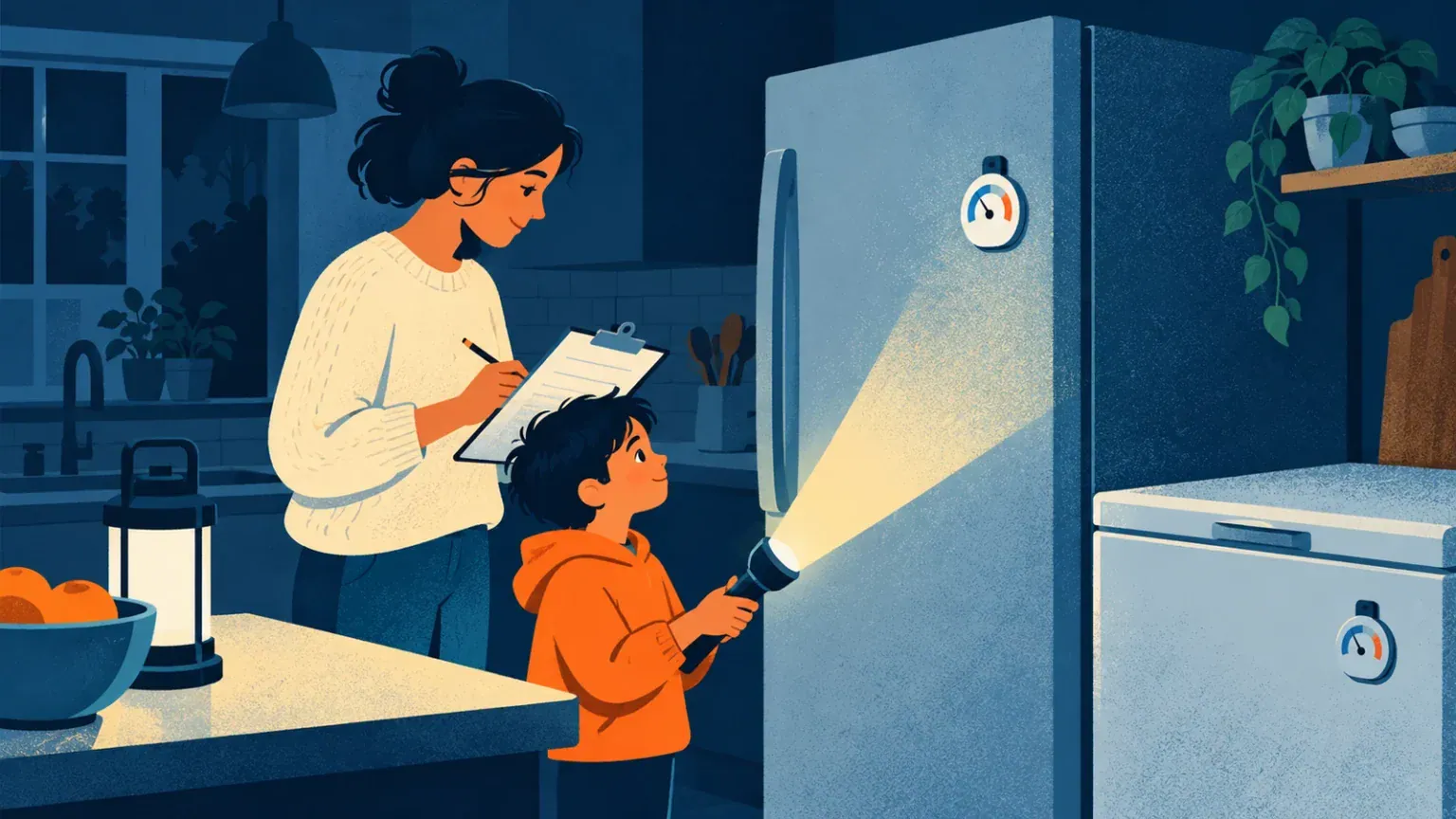
When power goes out, smell and appearance cannot reliably tell you whether perishable food is safe. A written checklist reduces repeated door-opening, records the time and keeps one adult responsible for decisions. Children can help with safe tasks but should never taste food to test it.
Prepare the tools
- Place an appliance thermometer in the refrigerator and freezer.
- Freeze water containers or cold packs, leaving expansion room.
- Keep a cooler, clean packs and marker near the kitchen.
- Print or save the official food-safety chart for your location.
- Know where shelf-stable food, safe water and a manual opener are kept.
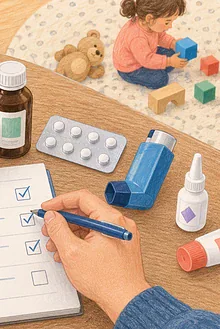
Write allergy needs and infant-feeding supplies on the checklist. Store raw meat so it cannot leak onto ready-to-eat items. If someone relies on refrigerated medicine or specialised nutrition, ask their pharmacist, clinician or supplier for a separate outage plan.
At the moment power stops
Record date and exact time. Keep doors closed. FoodSafety.gov says an unopened refrigerator keeps food safe about four hours. A full freezer may hold safe temperature about 48 hours, or 24 hours when half full, if closed. Those are planning windows, not permission to ignore actual temperature, contamination or local warnings.
Put a note on the door: “Do not open—outage began at ___.” Choose one adult to retrieve essentials quickly. Do not move food outdoors into snow, floodwater or an unsafe balcony where temperature, animals or contamination cannot be controlled.
Use evidence after power returns
- Record return time and appliance temperature.
- Check whether frozen food still has ice crystals or is at 4°C/40°F or below.
- Use the official chart for each category.
- Discard food exposed to floodwater, leaking packages or unsafe temperatures.
- Never taste food to decide whether to keep it.
Guidance advises discarding refrigerated perishables such as meat, poultry, fish, eggs and leftovers after four hours without power. Some hard cheeses, uncut produce and condiments differ, which is why a category chart beats one blanket rule. When history is unknown, choose safety.
Give children safe jobs
A young child can bring the marker or count sealed water bottles. A school-age child can note times with an adult. A teen can photograph the thermometer and help read the chart. Adults make final decisions and keep children away from spoiled food, broken glass, generators and electrical hazards.
Connect the checklist to emergency supplies. Review cold storage with safe lunch packing, and keep allergy decisions grounded in label practice.
Clean up and learn
Follow local health instructions about cleaning appliances and safe water. Photograph discarded food if an insurer requires evidence, without delaying disposal. Restock packs and note what the household wished it had.
Keep the checklist on the appliance or emergency folder. Include spaces for outage start, power return, temperatures, official alert source and final decision. That lets another adult continue if the person who started the record must leave.
If power returns briefly and fails again, do not reset the clock without evidence that food cooled safely. Record each change and rely on temperatures and official guidance. When in doubt, contact the local food-safety authority rather than improvising.
Sources and further reading
Plan meals that do not need risky improvisation
Keep a few familiar, shelf-stable foods that fit the household’s allergy, feeding and cultural needs. Rotate them into normal meals before expiry so the emergency supply is food people can actually eat. Never use a barbecue, camp stove or generator indoors to cook or power appliances; carbon monoxide cannot be seen or smelled. Follow manufacturer and local emergency guidance. If safe water is in doubt, use the official boil or do-not-use notice rather than relying on appearance.